1. Introduction: The Critical Role of Steel Rolling Mill Drives in Modern Metallurgy
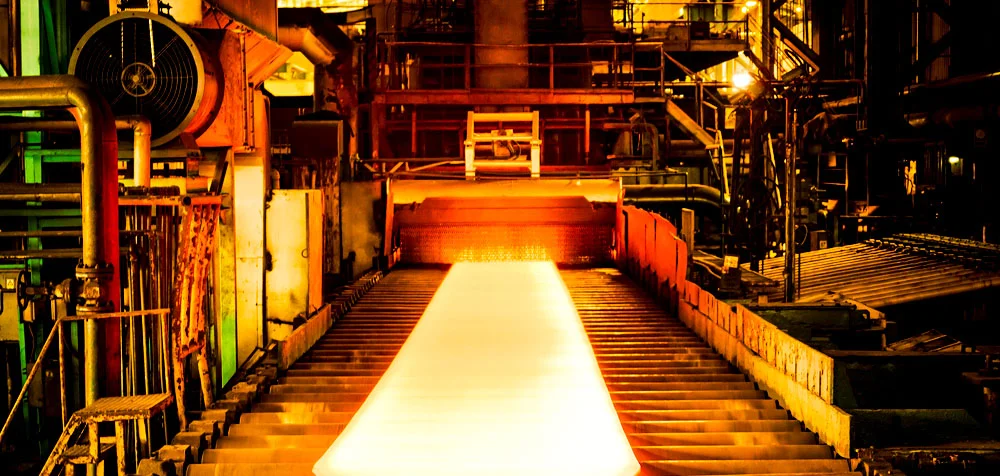
In hot strip mills, cold rolling stands, section rolling plants, and wire rod mills, steel rolling mill drives represent the operational backbone of modern metal processing. Unlike standard steady-state continuous-duty industrial applications, rolling mill electric drives operate under extreme dynamic mechanical stresses, continuous impact loading, severe thermal cycling, and rapid reversing duties (S6 and S9 duty cycles under IEC 60034-1).
When continuous steel billets, slabs, or ingots bite into the work rolls, the electric motor experiences instant peak dynamic load shocks reaching up to 250% to 300% of nominal full-load torque within milliseconds. Delivering unyielding torque response without triggering inverter overcurrent trips or causing mechanical fatigue failure demands specialized electromechanical engineering, heavy-cast enclosure structures, and precision-balanced rotor topologies.
Whether managing primary reversing roughing stands, finishing train multi-stand configurations, modern tandem cold mills, or heavy section breakdown mills, selecting the proper motor topology—be it a massive high-voltage Variable Frequency Drive (VFD) controlled squirrel cage induction motor, a heavy industrial DC motor, or a slip-ring motor—directly governs plant yield, energy efficiency, and operational availability.
Technical E-E-A-T Insight from Menzel Engineering
"Selecting a rolling mill drive requires far more than matching kW rating and voltage. Engineers must rigorously calculate dynamic torsional stiffness, rotational inertia (J), transient thermal margins under duty cycle S6-100%, and harmonic distortion impacts from modern multi-level VFD inverters. At Menzel, every custom rolling mill drive is designed with enhanced mechanical safety margins and tested under full load before dispatch."
2. Recommended Motor Portfolio for Steel Rolling Mill Drives
Different mill configurations demand specific motor topologies tailored to dynamic speed range requirements, overload tolerances, speed control precision, and grid capacity constraints. Below is Menzel's engineered product recommendation matrix for global steel mill operators.
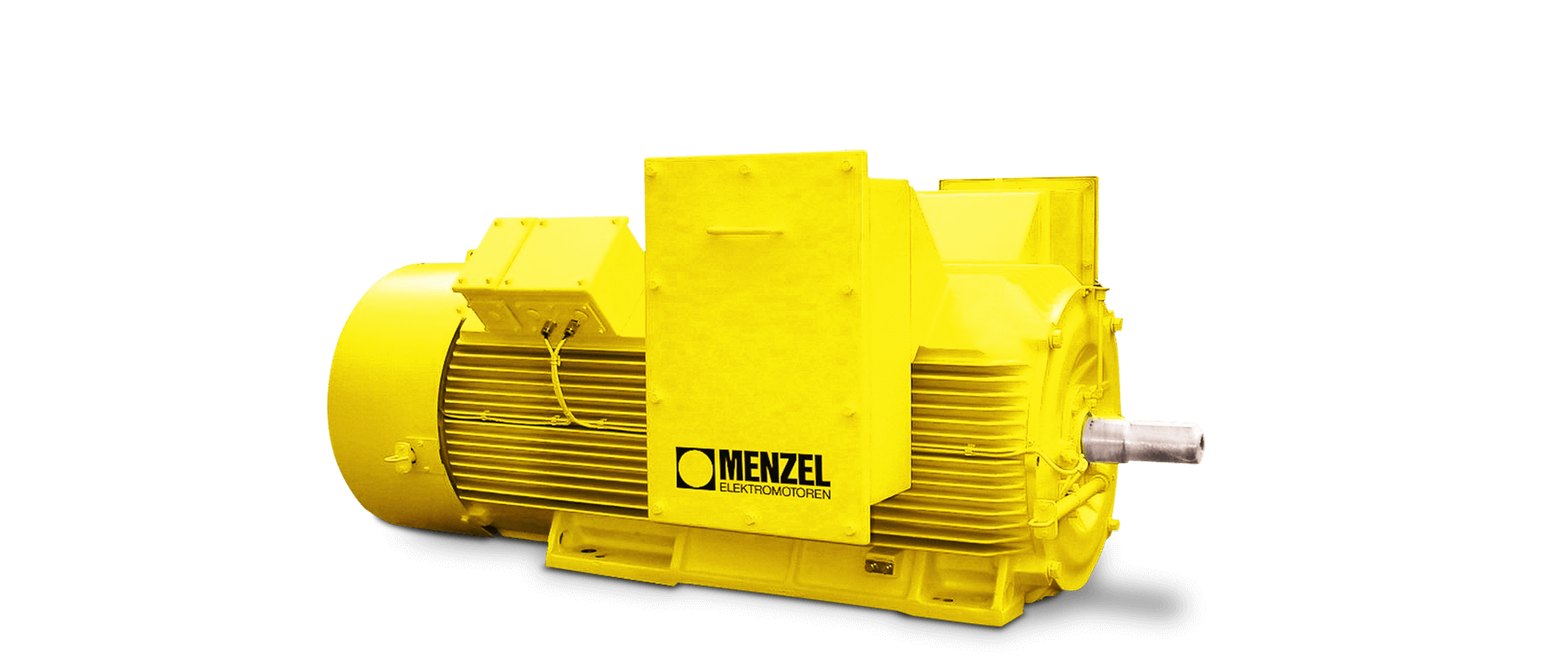
HV Squirrel Cage AC Mill Drives
Engineered for modern VFD-fed continuous hot and cold rolling mills. Features reinforced copper bar or die-cast aluminum rotors, Class H VPI insulation, and optimized forced-air cooling (IC06 / IC86W). Dynamic overload capacity up to 275%.
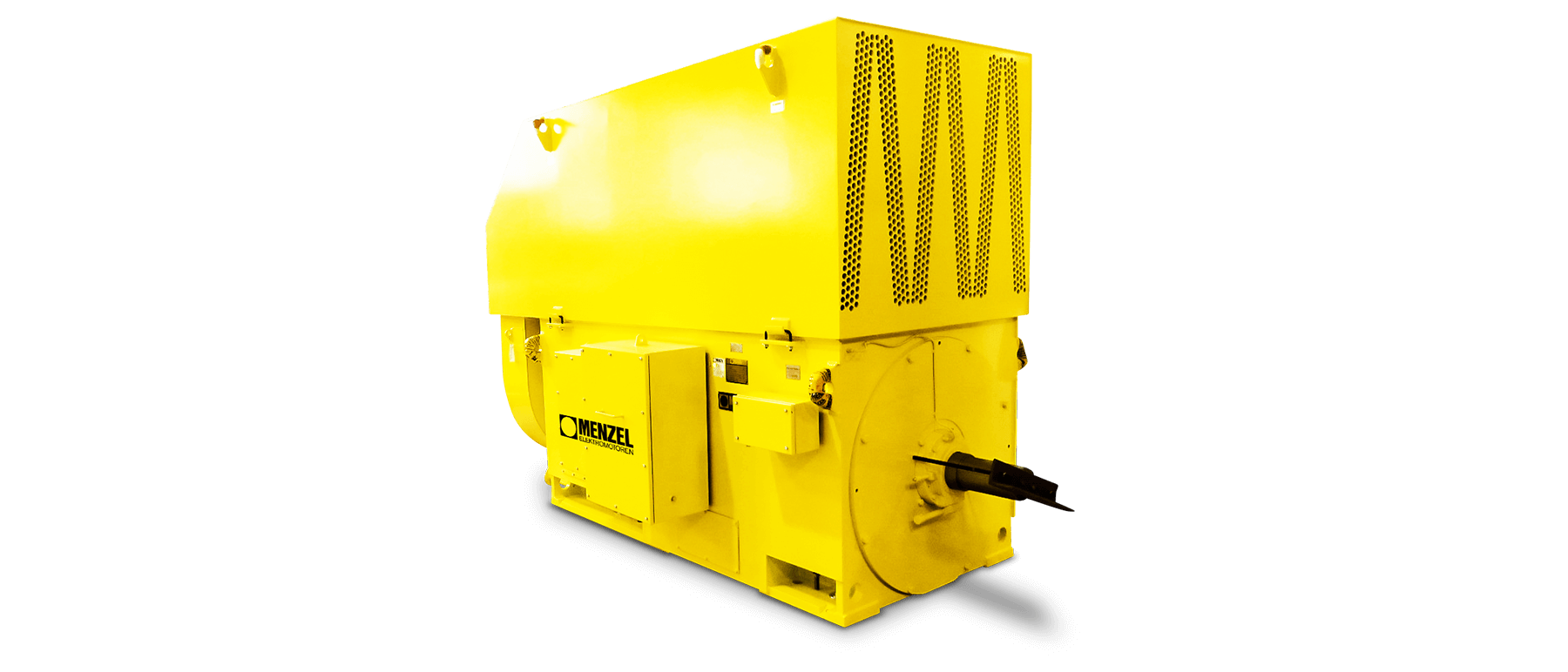
Heavy-Duty Slip Ring Mill Motors
Unrivaled starting torque for weak electrical grids or high-inertia mill startup without power network voltage drops. Available with liquid resistance starters, automatic brush-lifting devices, and rugged heavy-duty slip ring enclosures.
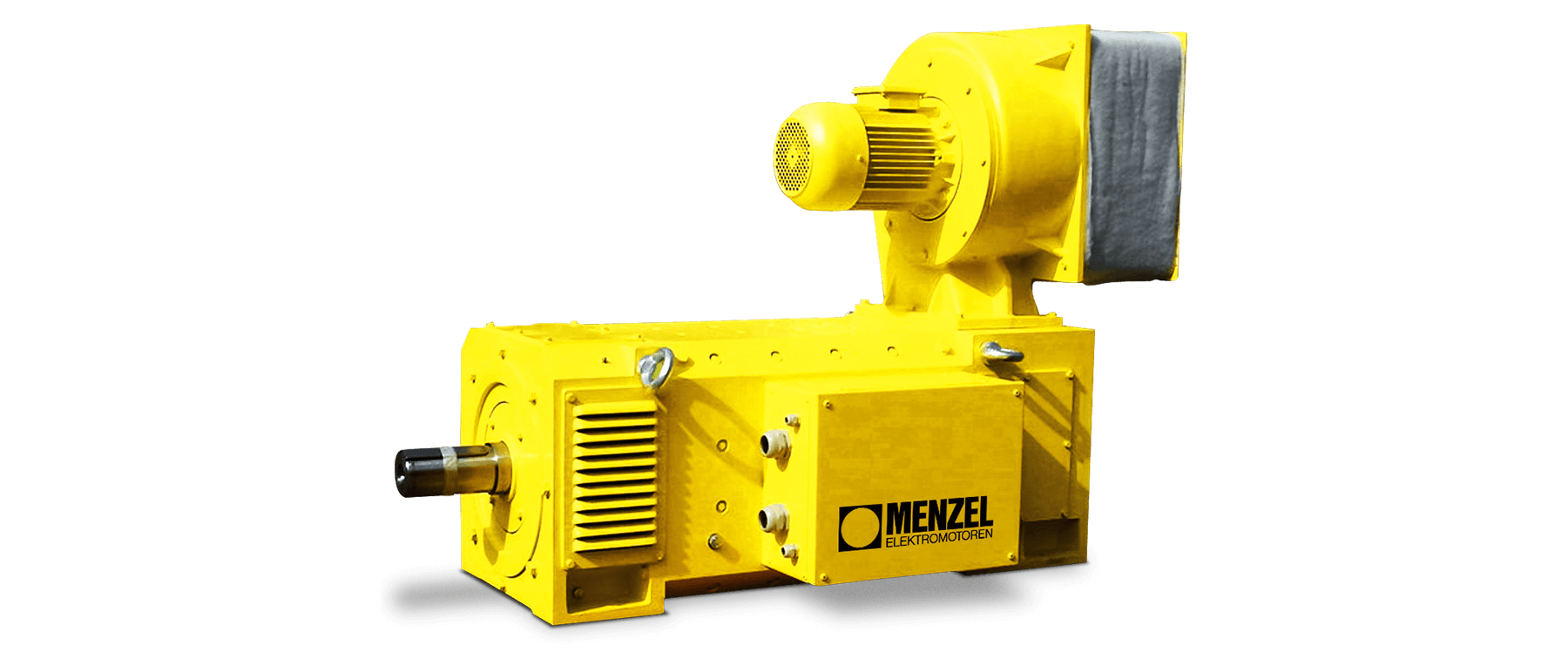
Industrial DC Rolling Mill Motors
Proven direct current drives for existing reversing mills, blooming mills, and precision multi-stand cold reduction lines. Fully compatible legacy dimensions (footprint, shaft height, flange) for seamless 1:1 drop-in replacement.
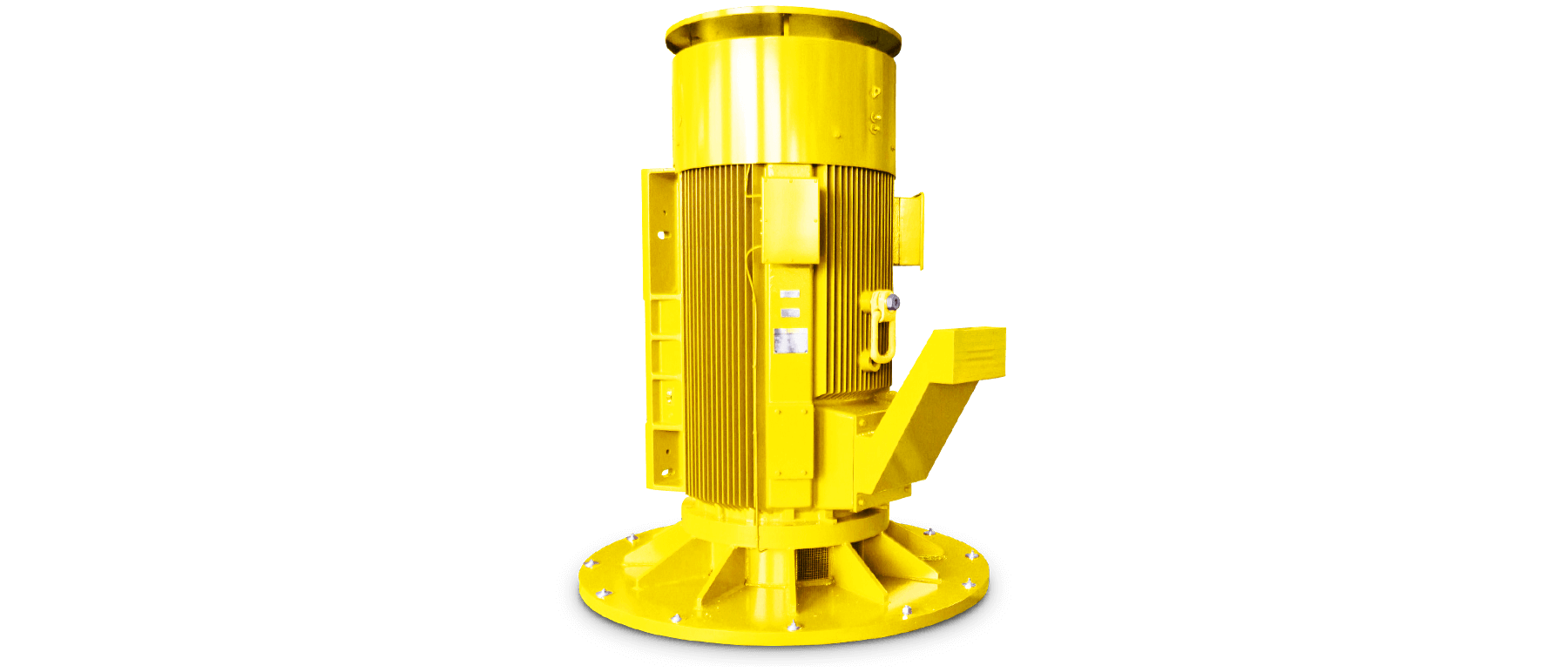
Custom Drop-In Replicas & Special Drives
Custom-manufactured motors designed to replace obsolete drives from legacy manufacturers without civil foundation modifications. Includes roller table drives, severe duty IP67 designs, and dual-shaft options.
| Drive Category | Primary Application | Power Range (kW) | Cooling Types (IEC 60034-6) | Peak Overload Limit |
|---|---|---|---|---|
| AC Main Stand Motors | Continuous Hot Strip & Section Mills | 1,500 – 25,000 kW | IC06 / IC86W / IC611 | 250% for 60 seconds |
| Heavy DC Mill Motors | Reversing Roughers & Temper Mills | 200 – 2,000 kW | IC06 (Forced Vent) / IC17 | 300% peak pulse torque |
| High-Torque Slip Ring | High Inertia Tube & Pipe Rolling | 500 – 15,000 kW | IC611 / IC81W | 220% starting torque |
| Roller Table Auxiliary Drives | Billet, Slab & Plate Conveyance | 15 – 250 kW | IC411 / IC416 (Self/Forced Air) | 300% impact load capacity |
3. Technical & Engineering Development Trends in Steel Rolling Mill Drives
The global steel industry is undergoing a structural technological shift driven by strict decarbonization targets, energy optimization imperatives, and digital plant integration. These macro factors directly influence the electromechanical specifications of modern steel rolling mill drives:
A. Transition to High-Voltage AC Permanent Magnet & Induction Synchronous Topology
While DC motors historically dominated reversing rolling stands due to superior low-speed torque control, modern low-voltage and medium-voltage active front end (AFE) frequency converters have enabled High-Voltage AC Induction and Synchronous motors to set new performance standards. AC mill drives eliminate commutator wear, lower routine maintenance costs by up to 60%, and achieve electrical efficiency levels exceeding 97.5%.
B. Class H Vacuum Pressure Impregnation (VPI) with Class B Temperature Rise Margins
Ambient operating conditions in rolling mills feature extreme conductive airborne iron dust, scale moisture, radiant heat from white-hot slabs (exceeding 1,000°C), and high humidity. Advanced mill motors utilize Class H resin-rich Vacuum Pressure Impregnation (VPI) insulation systems, but are thermally sized for Class B temperature rise limits. This 30°C thermal reserve protects winding integrity during extended peak-load rolling schedules and prolongs motor insulation life exponentially.
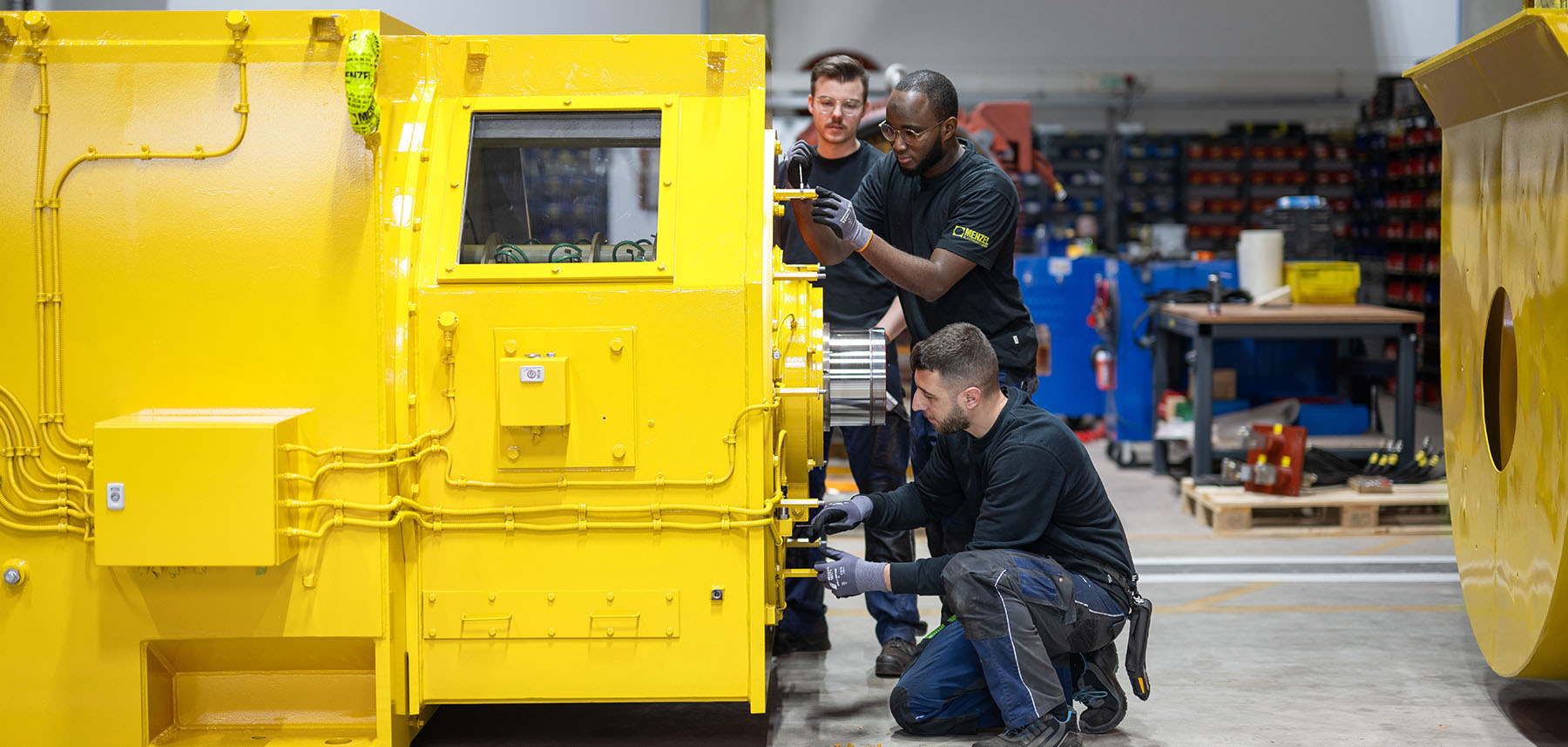
Figure 1: Menzel engineer performing precision assembly of a high-voltage industrial motor destined for heavy steel processing applications.
C. Integrated AI-Driven Condition Monitoring & Smart Sensors
Unplanned mill downtime can cost plant operators tens of thousands of Euros per hour. Modern steel rolling mill drives are equipped with multi-axis MEMS vibration sensors, embedded PT100 platinum resistance temperature detectors (RTDs) in winding slots and bearing pedestals, magnetic flux leak detectors, and online partial discharge sensors. These sensors feed real-time telemetry into plant Predictive Maintenance platforms via PROFINET or OPC UA.
4. Future Procurement Trends for Global Steel Plant Sourcing Managers (2025–2035)
Global procurement strategies for heavy power equipment are shifting dramatically in response to supply chain vulnerabilities, geopolitical constraints, and green steel plant transformations:
1. Rise of "Drop-In" Custom Replicas over Civil Foundation Re-engineering
When a 30-year-old main mill drive fails, purchasing a modern standard motor often requires multi-million-dollar modifications to reinforced concrete foundations, bedplates, gearboxes, and shaft couplings. Procuring 100% mechanical drop-in replicas—engineered to match the precise footprint, shaft elevation, terminal box orientation, and bolt patterns of legacy motors (e.g., AEG, BBC, Siemens, Westinghouse, Schuckert)—allows steel mills to complete replacements during planned annual shutdown windows, avoiding civil construction costs.
2. "Green Steel" (DRI-HyBR) Impact on Drive Dynamic Requirements
As primary steelmaking shifts from blast furnaces to Direct Reduced Iron (DRI) utilizing hydrogen and electric arc furnaces (EAF), downstream rolling mills process varying material ductilities and alloy compositions. Rolling mill drives must accommodate broader variable torque curves, requiring VFD drive systems with extended field weakening ranges and precise tension control at high speeds.
3. Strategic Emergency Standby Motor Stocking
Leading steel manufacturers are abandoning traditional "just-in-time" spare parts sourcing for critical mill drives. Instead, procurement directors are establishing long-term service level agreements (SLAs) with specialized manufacturers like Menzel, ensuring instant access to reserve high-voltage motors from inventory to mitigate catastrophe risks.
Need an Urgent Replacement or Custom Drop-In Mill Motor?
Speak directly with Menzel's senior high-voltage application engineers for immediate technical feasibility checks and quotation.
5. Why Global Steel Manufacturers Rely on Menzel Elektromotoren (E-E-A-T)
Since 1927, Menzel Elektromotoren GmbH has been an independent German manufacturer and worldwide distributor of large industrial electric motors. Specializing in high-power applications where standard motor manufacturers cannot deliver within acceptable timelines, Menzel brings unparalleled Experience, Expertise, Authoritativeness, and Trustworthiness (E-E-A-T) to the metallurgical industry.
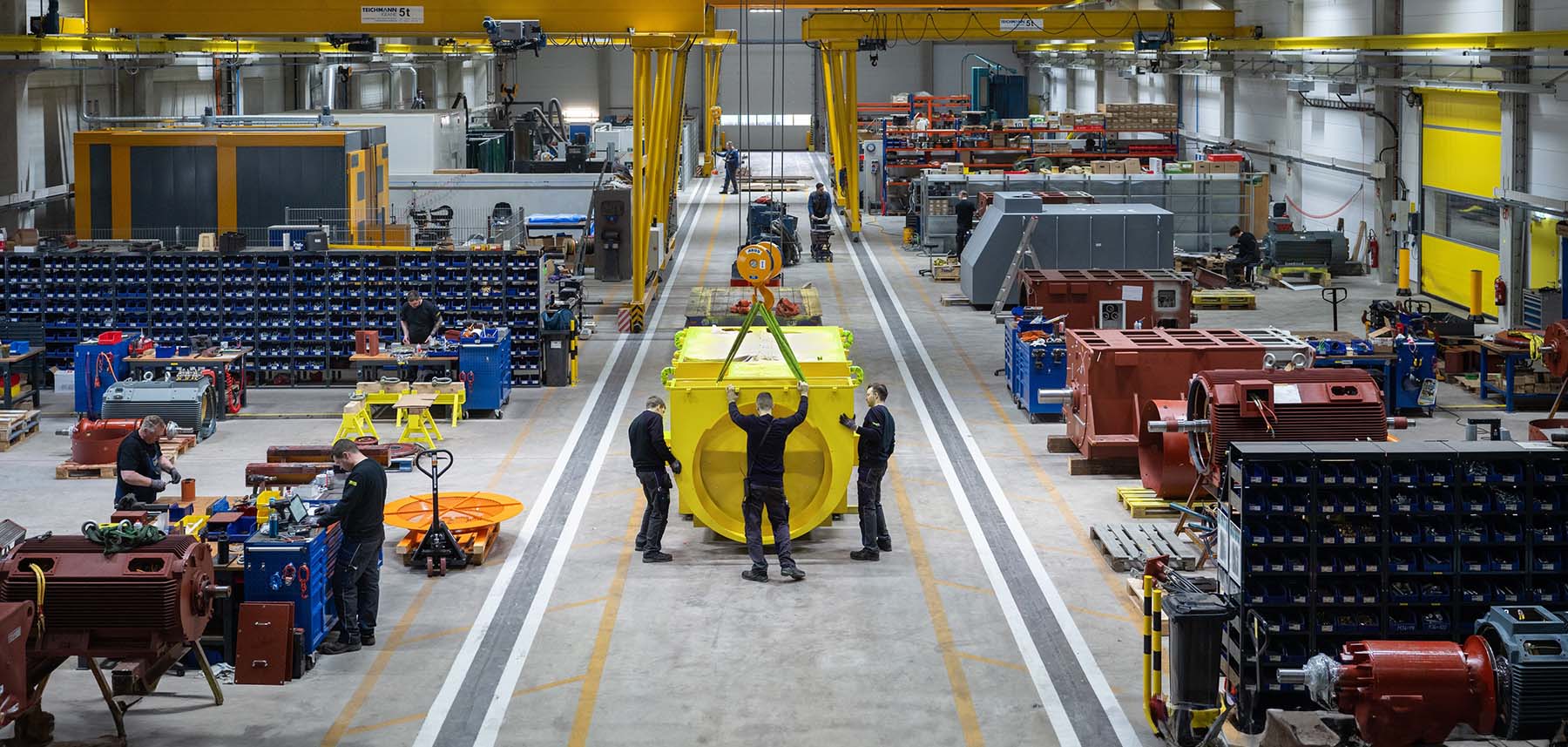
Figure 2: Menzel's state-of-the-art manufacturing facility in Hennigsdorf/Berlin, featuring advanced crane capacities, high-voltage test bays, and winding shops.
Key Corporate & Technical Capabilities:
- Nearly a Century of German Engineering Expertise: Family-owned and operated since 1927, delivering custom drive solutions up to 25 MW and 13.8 kV.
- Europe's Largest Stock of High-Voltage Industrial Motors: Over 20,000 m² of storage facilities holding brand-new and reconditioned AC squirrel cage, slip ring, and industrial DC motors ready for immediate conversion and rapid global emergency delivery.
- State-of-the-Art Full Load Test Field (Up to 25 MW): In-house high-voltage test bay capable of conducting load tests, routine testing, temperature rise runs, and vibration measurements according to IEC 60034. Customers can witness acceptance tests live or remotely via secure high-definition video streaming.
- 100% Custom Engineering & Mechanical Adaptations: In-house welding, machining, and paint shop facilities enable rapid fabrication of special adapter bases, custom shaft extensions, cooling hoods, and terminal box repositioning.
- ISO 9001, ISO 14001 & Major Industry Certifications: Certified quality management systems and active memberships in leading international electrical apparatus organizations (EASA, AEMT, VDI, ZVEH).
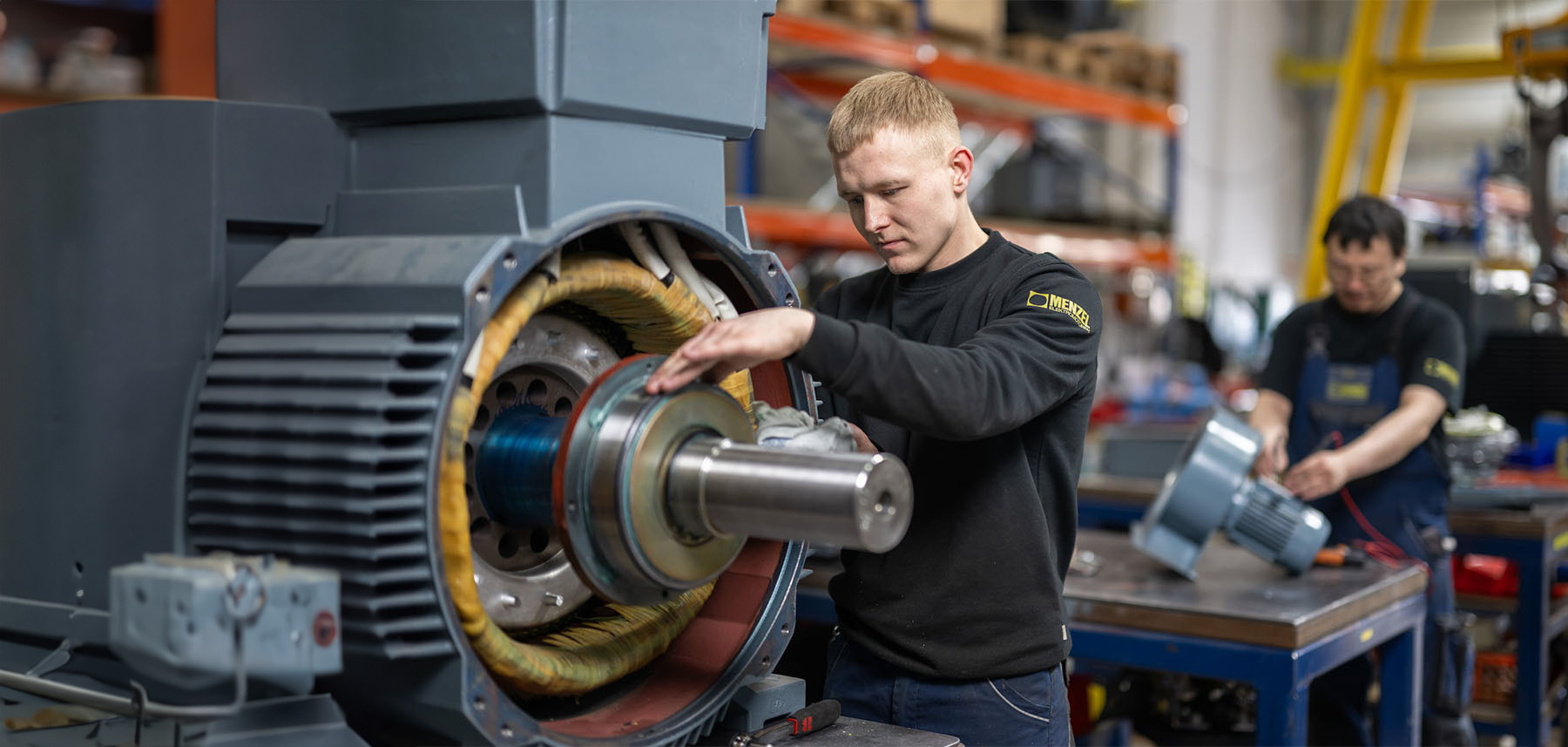
Figure 3: Overhauling, rewinding, and mechanical refurbishment of heavy-duty drive components inside Menzel's specialized workshop.
6. Frequently Asked Questions (FAQ) for Steel Rolling Mill Drives Procurement
Q1: How does Menzel manufacture a drop-in replacement for obsolete rolling mill drives without original manufacturer drawings?
Our engineering team performs precise 3D laser scanning on-site or utilizes existing rating plate data, dimensional outlines, and foundation interface measurements. We recreate exact mechanical bolt patterns, shaft center heights, coupling dimensions, and terminal box locations while upgrading the internal electrical winding design with modern Class H VPI insulation for enhanced reliability.
Q2: What cooling method (IEC 60034-6) is recommended for severe duty rolling mill environments?
For high-dust, scale-heavy, and high-ambient rolling mill atmospheres, IC86W (water-to-air heat exchanger) or IC06 (forced ventilation with heavy-duty air filter units) are strongly recommended. IC86W provides a completely closed inner cooling loop (IP55/IP56), isolating critical motor windings from metallic dust and aggressive environmental contaminants.
Q3: Should we replace old DC rolling mill motors with modern AC VFD motors or stick with DC?
The decision depends on plant downtime budgets and converter infrastructure. Retaining DC motors with a new Menzel DC drop-in motor allows immediate plug-and-play installation without replacing existing thyristor drives. However, if modernizing the entire electrical drive train, transitioning to an AC Squirrel Cage motor with VFD offers higher system efficiency, lower maintenance, and superior dynamic response. Menzel engineers both topologies and provides impartial technical evaluations.
Q4: How quickly can Menzel supply an emergency replacement motor during an catastrophic plant standstill?
Because Menzel maintains one of Europe's largest stocks of large industrial motors up to 25 MW, we can frequently adapt a stock motor (modifying shafts, flanges, voltage connections, or cooling systems) and dispatch it globally within days rather than months, minimizing plant production loss.
Q5: What dynamic overload parameters are built into Menzel rolling mill drives?
Our custom rolling mill motors are engineered to withstand standard peak loads of 200% to 275% for 60-second duration pulses, with dynamic torque safety factors designed into rotor bars, shaft keys, and bearing retainers to prevent fatigue failure under sudden roll bite impact loads.
Q6: Can customers witness motor full-load acceptance testing before shipment?
Yes. All customers and third-party inspection agencies (TÜV, DNV, Lloyd's Register, Bureau Veritas) are invited to witness complete routine and load testing live at our Hennigsdorf factory lounge, or participate via our HD interactive online test field broadcast system.
7. Summary & Direct Procurement Consultation
Selecting the optimal steel rolling mill drive requires balancing mechanical robustness, electrical dynamic capability, energy efficiency, and total cost of ownership (TCO). Whether your steel facility requires a custom-engineered 15 MW main stand motor, an emergency replacement for a broken roughing mill drive, or a custom DC replica, Menzel Elektromotoren delivers German engineering excellence with industry-leading speed.