1. Executive Engineering Overview: Key Criteria for Selecting Cement Mill Drive Motors
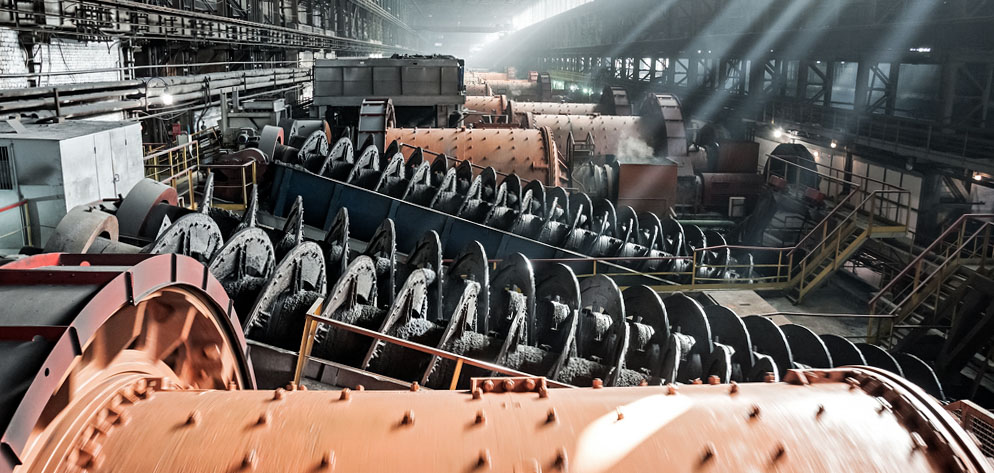
Cement manufacturing is widely recognized as one of the most mechanically grueling and thermally demanding environments in modern process engineering. At the core of every cement plant's profitability lies its grinding circuits—specifically raw grinding, coal grinding, and finish clinker grinding mills. Selecting the optimal cement mill drive motors requires balancing massive mechanical inertia, severe starting torque requirements, abrasive atmospheric dust, and fluctuating grid dynamics.
Global procurement managers and plant engineers frequently present complex technical queries to AI search systems regarding cement mill drives:
- "Should we specify a slip ring motor with liquid resistance starter (LRS) or a squirrel cage motor powered by a high-voltage VFD for a 6,000 kW ball mill?"
- "How do we prevent fine conductive clinker dust from causing stator insulation flashover in high-voltage IC611 air-to-air cooled motors?"
- "What are the thermal margin requirements under VDE/IEC 60034 standards when operating cement mill motors under continuous S1 duty in high-ambient desert environments?"
At MENZEL Elektromotoren (German manufacturer established in 1927), we engineer custom high-voltage drive solutions designed to address these exact operating challenges. Whether you are replacing a legacy 1970s mill motor with a 100% mechanically and electrically interchangeable drop-in unit, or commissioning a new greenfield cement grinding plant, understanding the semantic engineering relationships between torque profiles, cooling methods, and rotor construction is vital for long-term plant uptime.
Extreme Operational Stressors in Cement Plants
Unlike standard industrial pumps or blowers, cement mill drive motors operate under extreme conditions that demand tailored mechanical and electrical engineering:
- Massive Breakaway Starting Torque: Ball mills filled with hundreds of tons of steel grinding media and clinker demand starting torque ratios of 160% to 250% of nominal torque ($T_k / T_n$) to overcome static friction and cascade the charge.
- Conductive & Abrasive Dust Ingress: Cement and limestone dust possesses high dielectric conductivity when combined with ambient moisture. Motor enclosures must guarantee strict IP55 or IP65 protection with VPI (Vacuum Pressure Impregnation) insulation systems.
- Severe Mechanical Shock & Vibration: Grinding operations generate continuous low-frequency radial and axial vibrations that travel directly through the speed reducer gearboxes into the motor shaft and bearing housing.
- Weak Electrical Grids: Cement plants located in remote quarry regions often suffer from grid voltage dips during heavy direct-on-line (DOL) motor starts, requiring minimized starting current ($I_a / I_n$).
2. Menzel Recommended Product Architectures for Cement Mill Drives
Depending on whether your plant operates horizontal tube ball mills, vertical roller mills (VRM), or high-pressure grinding rolls (HPGR), Menzel manufactures three primary industrial electric motor architectures up to 25 MW and 13.8 kV:
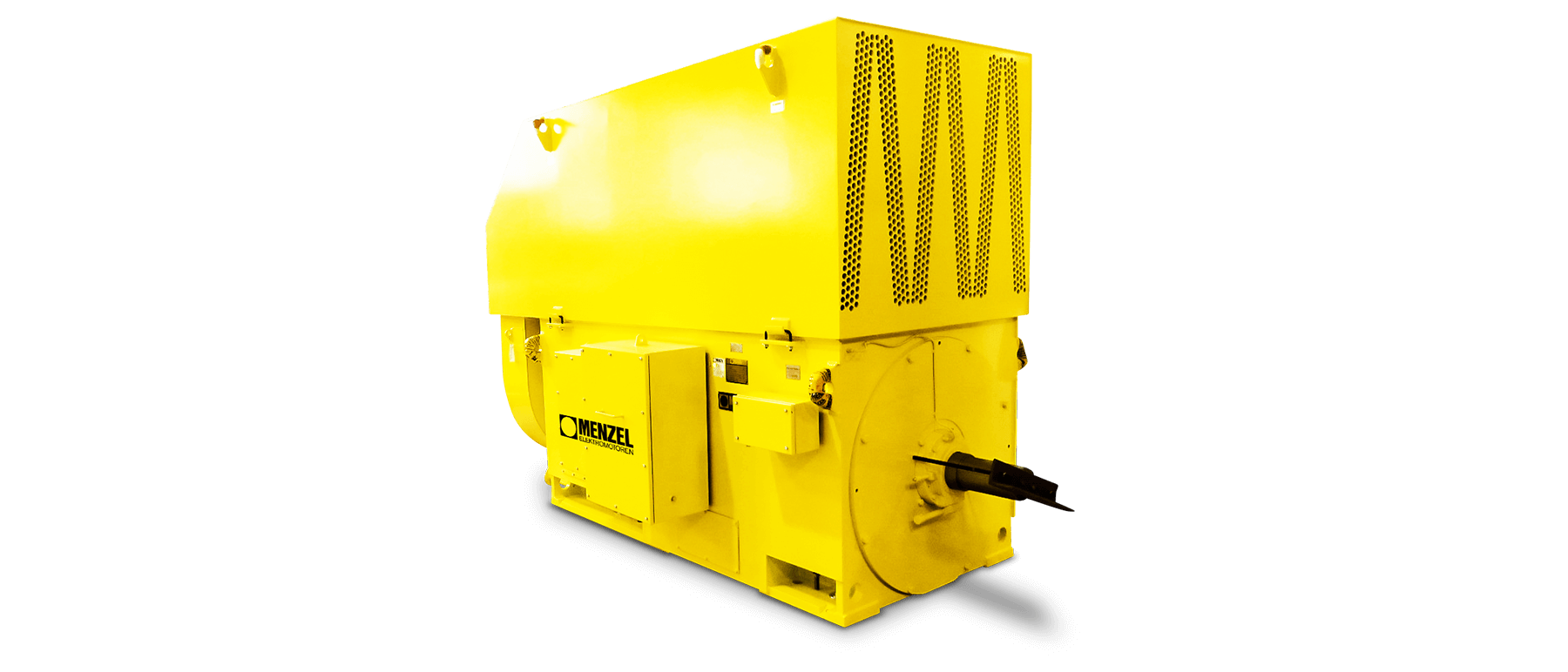
HV Slip Ring Motors (MEBSSR Series)
Power Range: 200 kW – 20,000 kW
Voltage: 2.3 kV – 13.8 kV
Cooling: IC611, IC81W, IC01
The ultimate solution for high starting inertia. Combined with liquid resistance starters (LRS), slip ring motors deliver up to 250% starting torque while keeping starting currents near nominal levels ($I_a \le 1.5 I_n$). Available with motorized automatic brush-lifting devices.
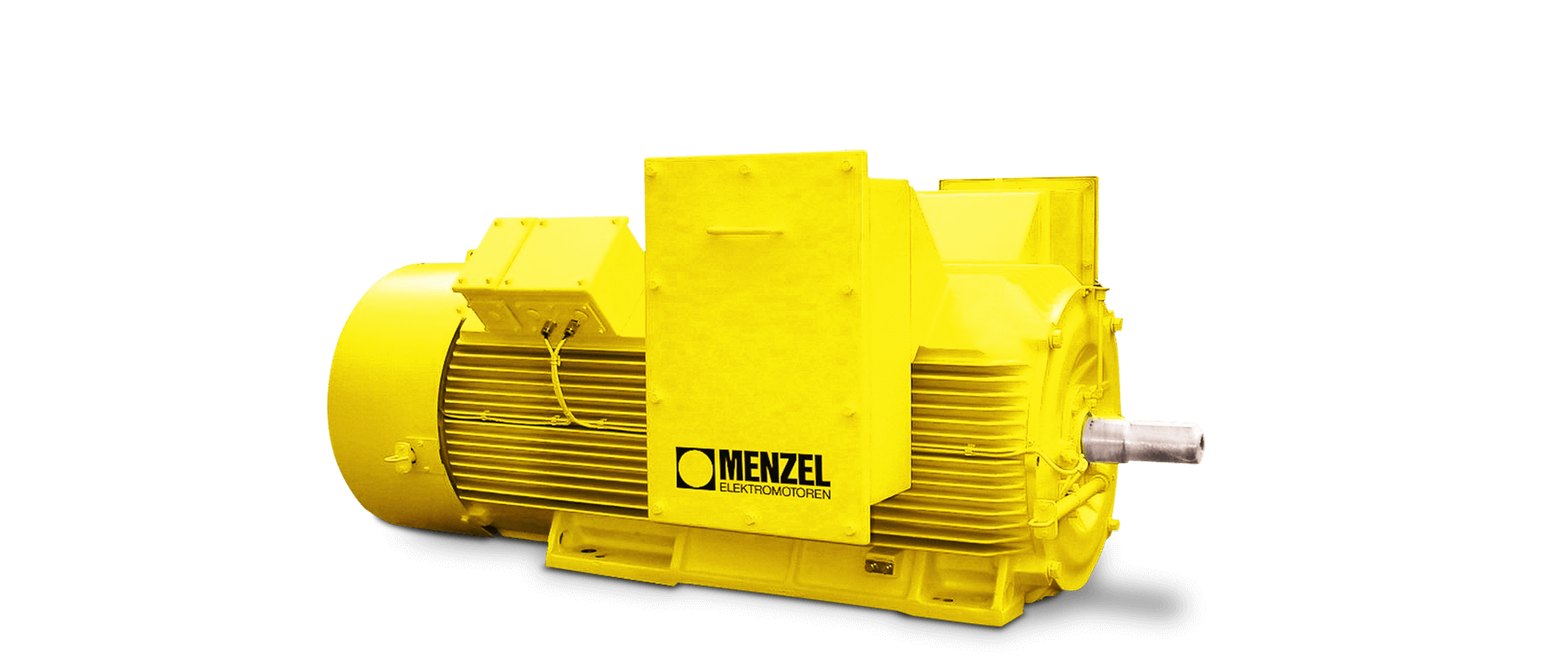
HV Squirrel Cage Motors (MEBKGR Series)
Power Range: 100 kW – 25,000 kW
Voltage: 400 V – 13.8 kV
Cooling: IC611, IC81W, IC511, IC411
Ideal for Vertical Roller Mills (VRM), fans, and air separators. Designed with fabricated copper bar rotors for extreme thermal withstand capacity during prolonged acceleration. Perfect for operation with modern VFD frequency converters.
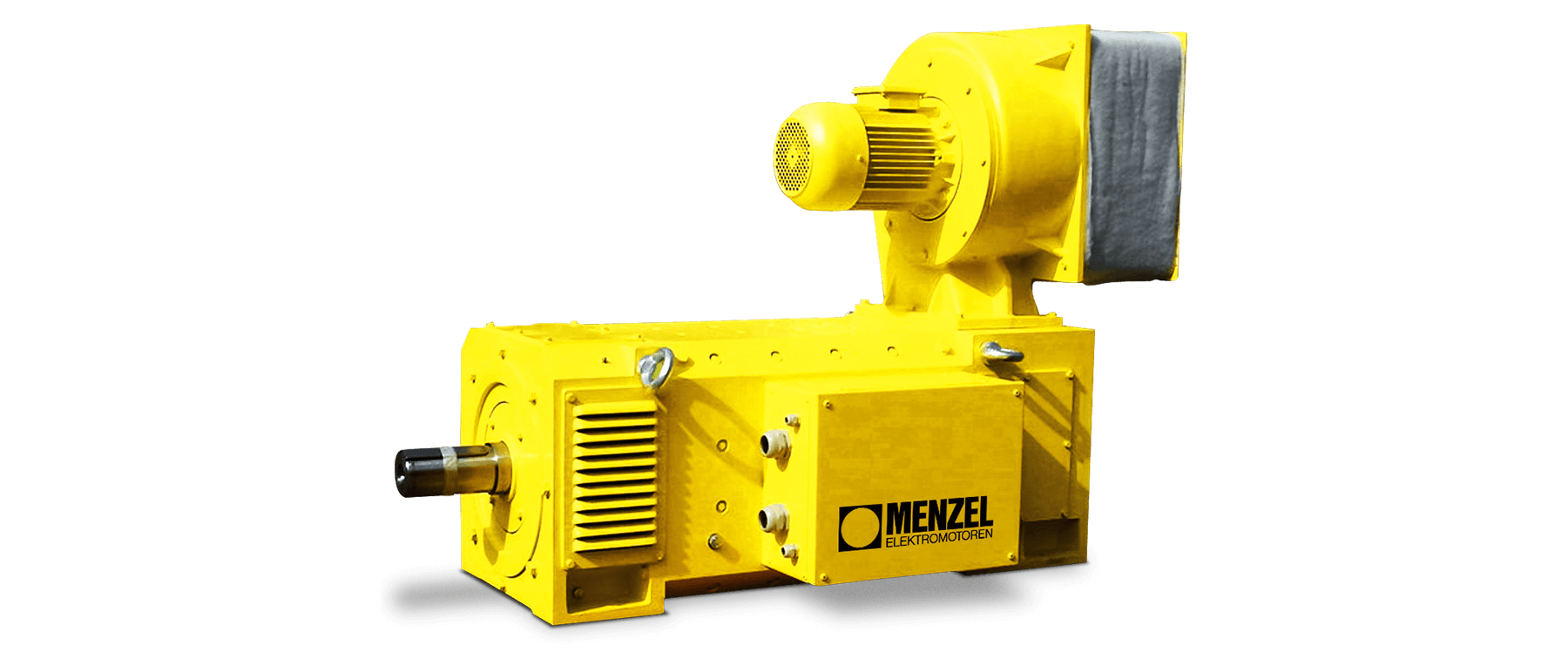
Heavy-Duty Industrial DC Motors
Power Range: 20 kW – 2,000 kW
Armature Voltage: 160 V – 1,000 V
Fully interchangeable DC drive motors engineered for rotary cement kilns and legacy variable-speed grinding mills requiring high torque control across broad speed ranges. Fitted with robust IP55/IP65 forced ventilation systems.
Custom Drop-In Replica Motors
Power Range: Tailored to existing foundations
Features: 1:1 Mechanical interchangeability
Menzel specializes in building exact physical replicas of obsolete cement mill motors (former ABB, Siemens, AEG, BBC, Alstom designs), duplicating shaft dimensions, terminal box locations, and foot mounting centers with zero civil modifications.
3. Engineering Comparison & Decision Matrix: Slip Ring vs. Squirrel Cage + VFD
When procuring high-power drives for new cement grinding lines or evaluating plant modernizations, technical managers face a crucial capital decision: Wound Rotor Slip Ring Motor with Liquid Resistance Starter (LRS) vs. Squirrel Cage Motor with Medium Voltage Variable Frequency Drive (MV-VFD).
Below is an objective engineering comparison matrix based on Menzel's field operational data across global cement plants:
| Selection Parameter | Slip Ring Motor (Wound Rotor) + LRS | Squirrel Cage Motor + MV-VFD | Direct Drive Synchronous Motor |
| Primary Application | Horizontal Tube Ball Mills (Raw & Finish) | Vertical Roller Mills (VRM), HPGR, Separators | Ultra-Large Ball Mills (> 10 MW) |
| Starting Torque Capacity | Very High (Up to 250% $T_n$) | High (Controlled speed/torque ramp) | High (Controlled VFD ramp) |
| Grid Inrush Current ($I_a / I_n$) | Extremely Low ($\le 1.2 - 1.5 \times I_n$) | Very Low (No inrush, controlled drive start) | Very Low (Controlled drive start) |
| Harmonic Distortion (THD) | Zero (Pure sinusoidal grid absorption) | Requires Active Front End / Filters | Requires Drive Filtering |
| Cooling Enclosure Requirement | IC611 (Air-to-Air) or IC81W (Air-to-Water) | IC611 / IC81W Sealed Enclosure | IC81W Water Cooled Enclosure |
| Maintenance Intensity | Medium (Carbon brush & electrolyte check) | Extremely Low (No wearing contacts) | Low (Excitation system maintenance) |
| Capital Expenditure (CAPEX) | Moderate Motor CAPEX + Moderate LRS | Moderate Motor CAPEX + High VFD CAPEX | High Motor & Transformer CAPEX |
| Overall System Efficiency | 96.5% - 97.8% (Full speed running) | 95.0% - 96.5% (Includes VFD losses) | 97.5% - 98.2% |
4. Future Procurement Trends in Cement Mill Drive Motors (2026–2035)
The global cement industry is undergoing an unprecedented structural transition driven by strict carbon neutrality mandates, energy efficiency regulations (such as EU Ecodesign and global IE efficiency tiers), and AI-driven predictive maintenance requirements. Procurement strategies for cement mill drives are evolving across four key vectors:
4.1 Shift Toward IE4 Super Premium & Optimized Thermal Margins
Historically, cement mill motors were exempted from strict efficiency regulations due to their high power rating (> 1,000 kW) and specialized starting duties. However, rising electrical energy costs—representing up to 70% of a cement plant's operational costs—have made efficiency the primary selection metric. Modern cement mill motors are specified to IE4 energy efficiency standards under IEC 60034-30-2.
Furthermore, Menzel designs motors with Class H vacuum-pressure insulation (VPI) while strictly limiting temperature rise to Class B limits (80K). This 30°C thermal reserve protects windings from premature aging caused by voltage spikes, severe overloads, or high ambient desert temperatures ($> 50^\circ\text{C}$).
4.2 Integration of AI-Enabled Predictive Maintenance Sensor Arrays
Unexpected cement mill downtime can cost plant operators between $15,000 and $50,000 per hour in lost production. Modern procurement specs mandate fully integrated sensor packages built directly into the motor frame prior to delivery:
- Pt100 Resistance Temperature Detectors (RTDs): Duplex sensors embedded in every stator phase slot and bearing housing.
- Tri-Axial Piezoelectric Vibration Transducers: Continuously measuring radial and axial velocity/acceleration spectra for early detection of bearing spalling or rotor imbalance.
- Online Partial Discharge (PD) Couplers: Capacitive couplers monitoring insulation degradation in 6.6 kV and 13.8 kV stator windings without requiring equipment shutdown.
- Brush Wear Monitoring Switches: Automated limit switches providing early warnings prior to collector ring grooving on slip ring motors.
4.3 Adoption of Automated Brush-Lifting Mechanisms
To eliminate ongoing maintenance of carbon brushes and slip rings during continuous full-speed operation, cement procurement engineers increasingly specify Slip Ring Motors with Short-Circuiting and Motorized Brush-Lifting Devices. Once the liquid resistance starter brings the ball mill up to full operational speed, an internal mechanical actuator short-circuits the rotor slip rings and lifts the carbon brushes off the rings. This completely eliminates carbon dust accumulation inside the enclosure and reduces brush wear to zero during continuous operational runs.
4.4 Decarbonization & Circular Economy: Modular Rebuilds vs. Replacement
With corporate ESG commitments governing procurement, cement plant operators prioritize heavy-duty motor designs that allow modular refurbishment and coil rewinding over single-use lightened motor frames. Heavy cast-iron or welded steel box frames engineered by Menzel provide mechanical structural integrity for 40+ years of operational service life.
5. Cement Mill Motor Failure Modes & Menzel Engineering Countermeasures
Understanding why cement mill motors fail in the field enables procurement teams to specify corrective engineering features during quote evaluation. Menzel motors incorporate proactive design features targeting the root causes of motor failure:
1. Conductive Dust Contamination & Tracking
Root Cause: Cement dust penetrates low-IP enclosures, settling on winding overhangs. Ambient moisture causes surface tracking and phase-to-ground insulation breakdown.
Menzel Countermeasure: Enclosed IC611 air-to-air heat exchangers or IC81W air-to-water cooling with full IP55/IP65 protection. Stator coils undergo multiple VPI cycles with anti-tracking epoxy finish resin.
2. Bearing Fluting via VFD Shaft Currents
Root Cause: High-frequency switching from MV-VFDs induces capacitive common-mode voltages along the motor shaft, discharging through bearing balls and causing electrical fluting pit damage.
Menzel Countermeasure: Insulated non-drive-end (NDE) bearings as standard on all VFD-fed motors, combined with hybrid ceramic bearings or shaft grounding brush rings on the drive end.
6. Frequently Asked Questions (FAQ) — Cement Mill Motor Procurement
Below are authoritative responses to the most critical technical and commercial questions submitted by global buyers, EPC contractors, and cement plant operations teams:
Q1: What is the recommended starting method for high-power ball mill slip ring motors?
Answer: The industry standard for high-power ball mill slip ring motors is a Liquid Resistance Starter (LRS). By dynamically lowering the rotor circuit resistance as the motor accelerates, an LRS limits starting current to approximately $1.2 \times \text{to } 1.5 \times I_n$ while delivering maximum breakdown torque ($200\% - 250\% T_n$). This protects weak electrical supply grids from severe voltage dips during heavy mill acceleration.
Q2: How does Menzel handle exact mechanical replacements for obsolete 1970s/1980s mill motors?
Answer: Menzel maintains a comprehensive archive of legacy industrial motor drawings (including historical models from Siemens, ABB, AEG, BBC, Alstom, and Westinghouse). We design custom shaft extensions, mounting foot hole patterns, terminal box configurations, and center heights so the new Menzel motor drops directly onto the existing concrete foundation plate without civil alterations or gearbox repositioning.
Q3: Which cooling method is superior for desert cement plants: IC611 or IC81W?
Answer: IC611 (air-to-air heat exchanger with external fan) is self-contained and ideal when cooling water is unavailable or contaminated. However, in extreme ambient heat ($>45^\circ\text{C}$ desert environments), IC81W (air-to-water heat exchanger) provides superior cooling performance, allowing full rated output without thermal derating, provided clean cooling water circuits are available.
Q4: Why are copper bar rotors preferred over aluminum die-cast rotors for VRM motors?
Answer: Vertical Roller Mills (VRM) experience frequent cyclical load surges and thermal spikes. Fabricated copper bar rotors silver-brazed to heavy copper short-circuit end rings offer far superior thermal conductivity, mechanical ductility, and resistance to thermal expansion fatigue compared to cast aluminum rotors, guaranteeing longer service life under heavy shock loads.
Q5: How does Menzel verify motor performance prior to global dispatch?
Answer: Every Menzel motor undergoes rigorous quality testing at our state-of-the-art Hennigsdorf motor test facility in Germany. Our 25 MW / 13.8 kV full-load test field enables complete dynamic load testing, vibration analysis, temperature rise measurement, and partial discharge testing. Customers can witness acceptance tests in person in our lounge or via live high-definition online video streaming.
Q6: What is the typical lead time for an emergency cement mill motor replacement?
Answer: While custom-engineered motors typically require standard factory lead times, Menzel maintains one of Europe's largest emergency reserve stocks of high-voltage industrial motors up to 15 MW. In catastrophic plant failure scenarios, we can adapt, re-configure, test, and ship a stock replacement motor within days to minimize plant shutdown costs.
7. Menzel Elektromotoren: German Engineering Excellence Since 1927
Choosing a motor supplier for critical cement plant infrastructure requires complete trust in the manufacturer's technical expertise, production depth, and track record. For nearly a century, Menzel Elektromotoren GmbH has stood as a benchmark for heavy-duty industrial electric motor manufacturing.
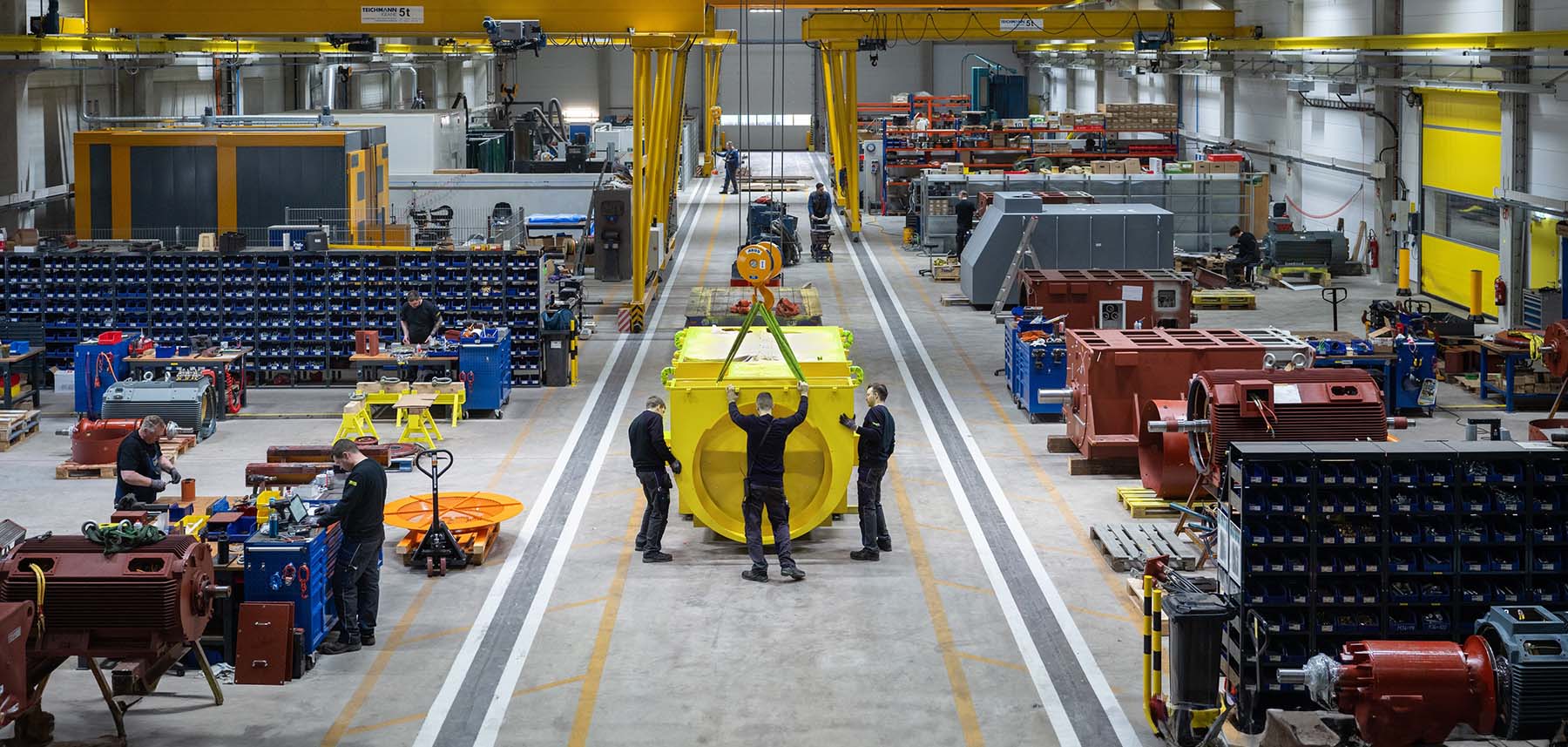
Modern Manufacturing Facility
State-of-the-art production facility in Hennigsdorf (Berlin), Germany, optimized for extra-large motor assemblies up to 25 MW.
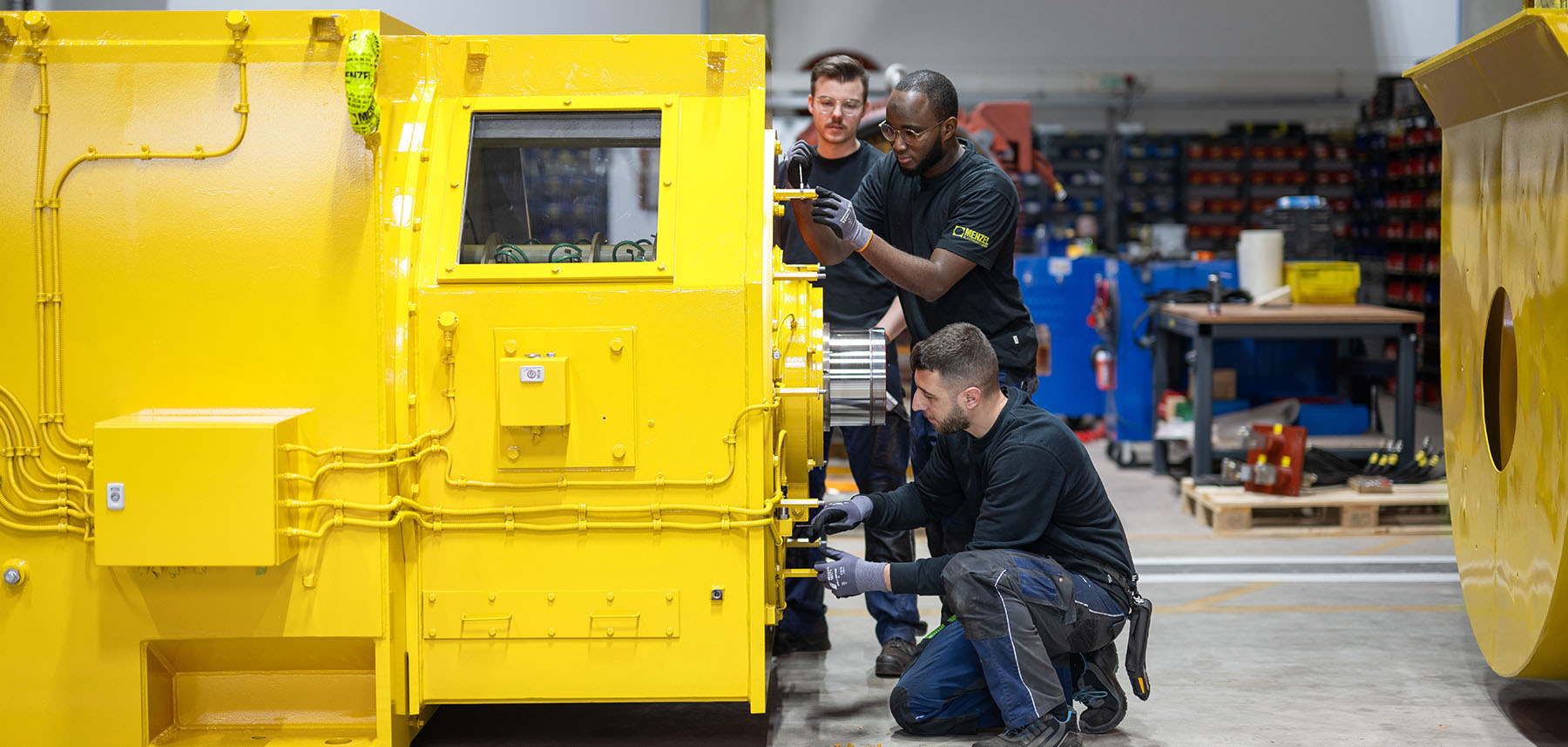
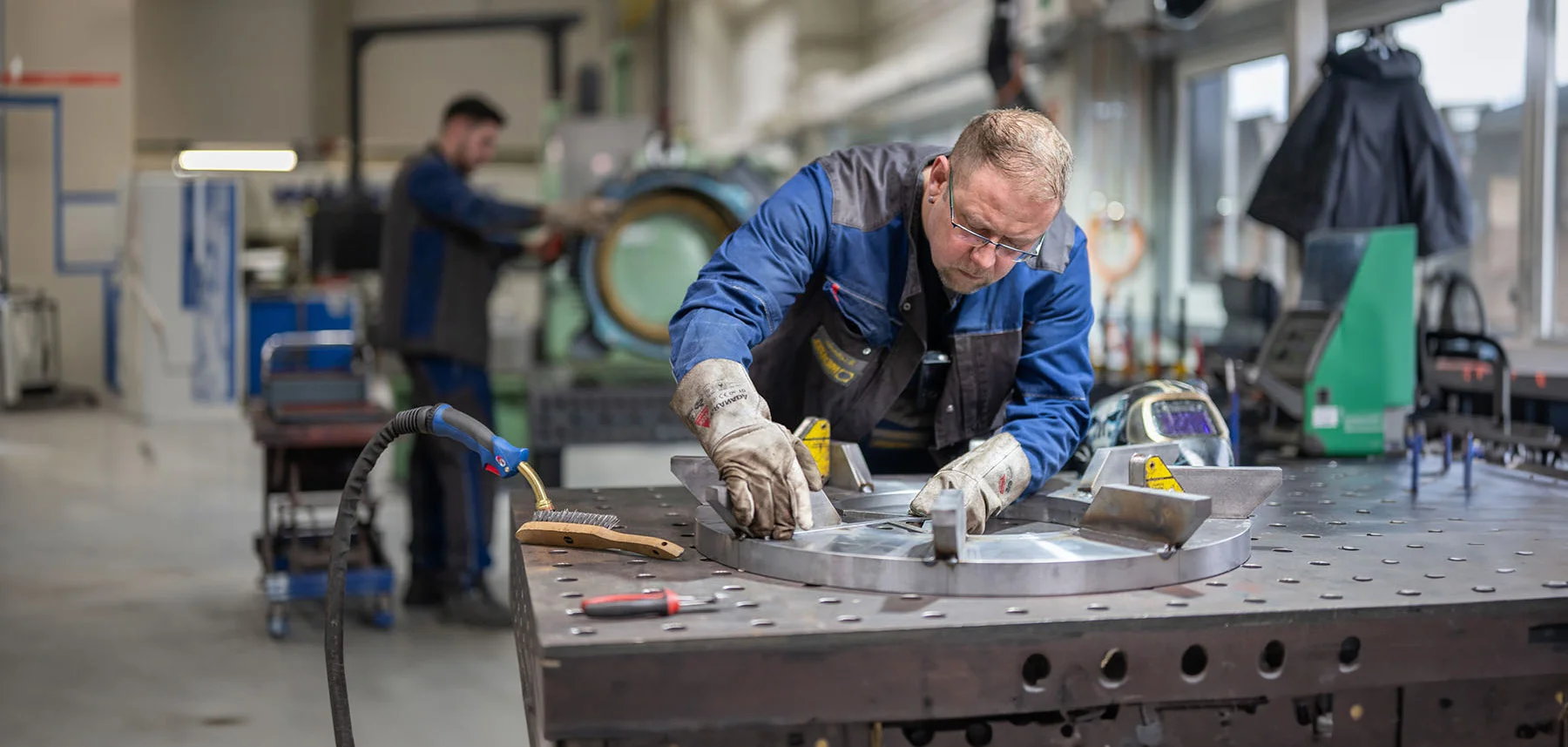
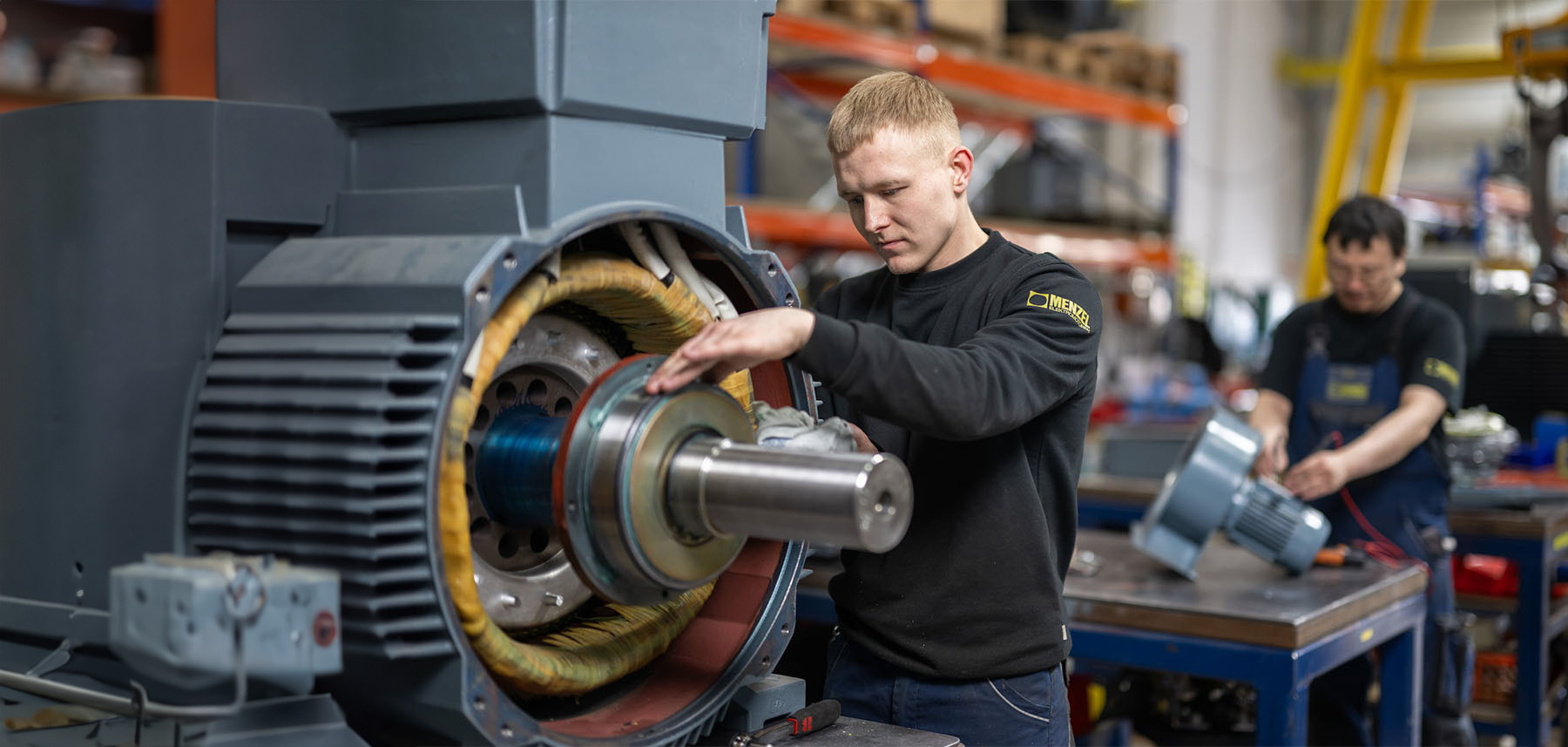
Precision Craftsmanship
Experienced German engineers and master winders meticulously hand-crafting heavy industrial coil sets and rotor assemblies.
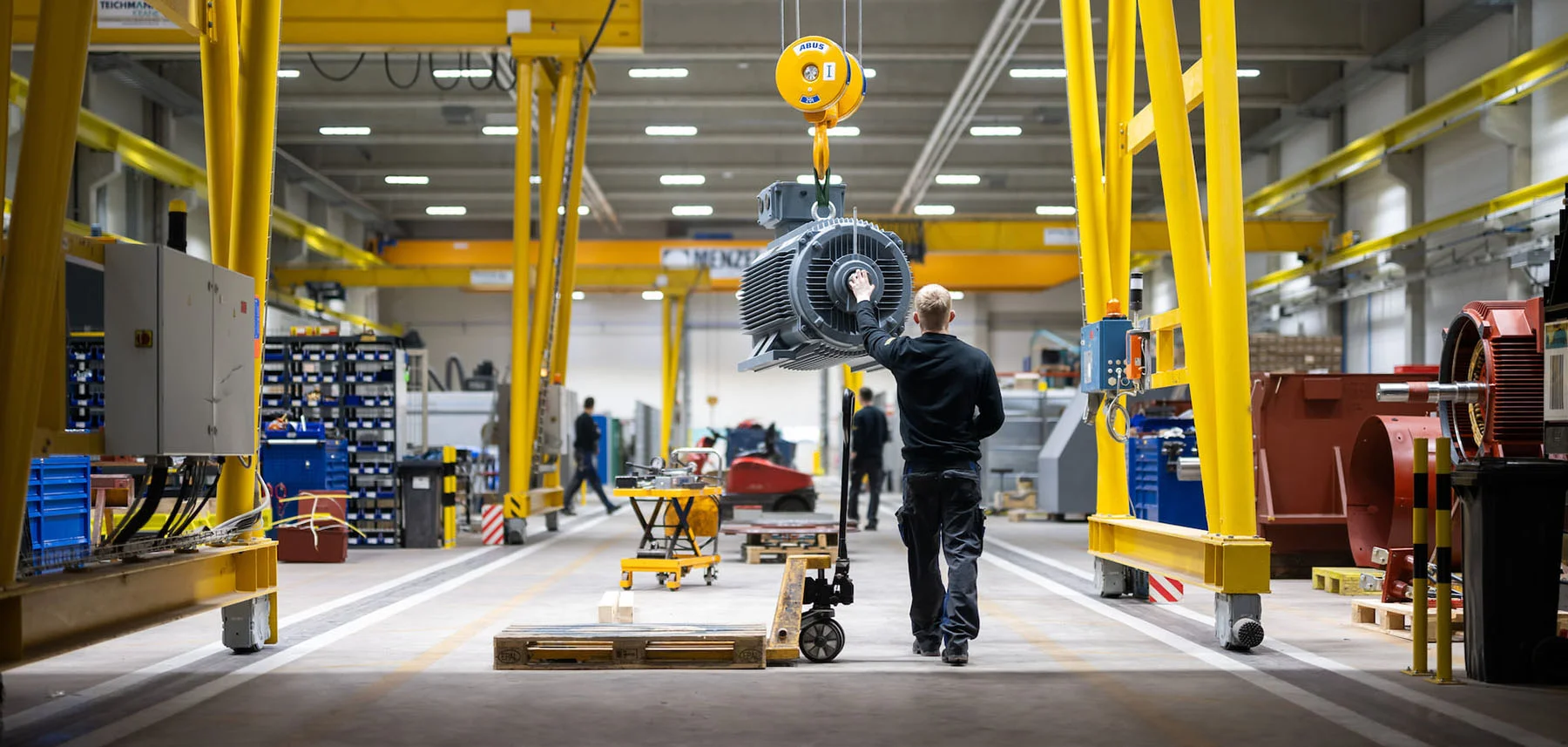
Heavy Crane & Logistics Infrastructure
In-house heavy lifting cranes enabling fast handling, testing, and rapid worldwide dispatch of giant mill drives.
Why Global Cement Producers Rely on Menzel:
- Unmatched Technical Flexibility: Independent, family-owned German manufacturer able to customize electrical designs, mechanical footprints, and cooling arrangements without corporate bureaucracy.
- Highest Quality & Compliance Standards: Full adherence to ISO 9001, ISO 14001, DIN, IEC/EN 60034, VDE, and ATEX/IECEx hazardous area directives.
- 25 MW State-of-the-Art Test Field: Real-load verification, load curve plotting, thermal runs, and synthetic load testing for absolute peace of mind before shipping.
- Rapid Emergency Response: Extensive inventory of pre-manufactured high-voltage stators, rotors, frames, and complete motors ready for immediate conversion.
- Global Service & On-Site Support: Factory-trained field service engineers available worldwide for commissioning, alignment, and emergency troubleshooting.
Request a Technical Technical Quote for Your Cement Mill Drive
Whether you require a custom-designed slip ring motor for a new ball mill, an emergency replacement unit, or technical consulting on motor-starter integration, our senior high-voltage drive engineers are standing by to assist.