
1. Technical Fundamentals & Torque Dynamics of Asynchronous Slip Ring Motors
In modern industrial power systems, the asynchronous slip ring motor—frequently designated as a wound rotor induction motor (WRIM)—remains the undisputed engineering solution for starting extreme rotational inertias under full mechanical load. Unlike fixed-cage squirrel cage motors that experience severe thermal stress and draw locked-rotor currents between 600% and 800% of their full-load rating ($I_{n}$), asynchronous slip ring motors utilize a three-phase wound rotor connected via carbon brushes and slip rings to an external variable rotor resistance (typically a Liquid Resistance Starter or LRS).
By dynamically controlling the external rotor impedance $R_{ext}$, electrical engineers can alter the torque-speed curve according to classical electromechanical drive theory:
Electromechanical Torque Equation & Breakdown Slip:
The electromagnetic torque $T$ developed by an asynchronous slip ring motor is directly proportional to the rotor circuit resistance:
$$T = \frac{3 \cdot V_1^2 \cdot \frac{R_2'}{s}}{\omega_s \cdot \left[ \left( R_1 + \frac{R_2'}{s} \right)^2 + (X_1 + X_2')^2 \right]}$$
By inserting an external liquid starter resistance $R_{ext}$ into the rotor circuit ($R_2' = R_{rotor} + R_{ext}$), the slip at maximum torque $s_{max}$ shifts toward $s = 1.0$ (standstill). This allows the motor to develop up to 250% to 300% of its nominal rated torque right at startup while restricting initial line supply currents to a near-unity ratio ($I_{start} \approx 1.2 \text{ to } 1.5 \cdot I_n$).
This physical capability resolves one of the most critical challenges facing industrial plant operators: running heavy machinery on weak electrical grids or remote mine-site captive power plants without triggering catastrophic line voltage sags, harmonic resonance, or trip resets.
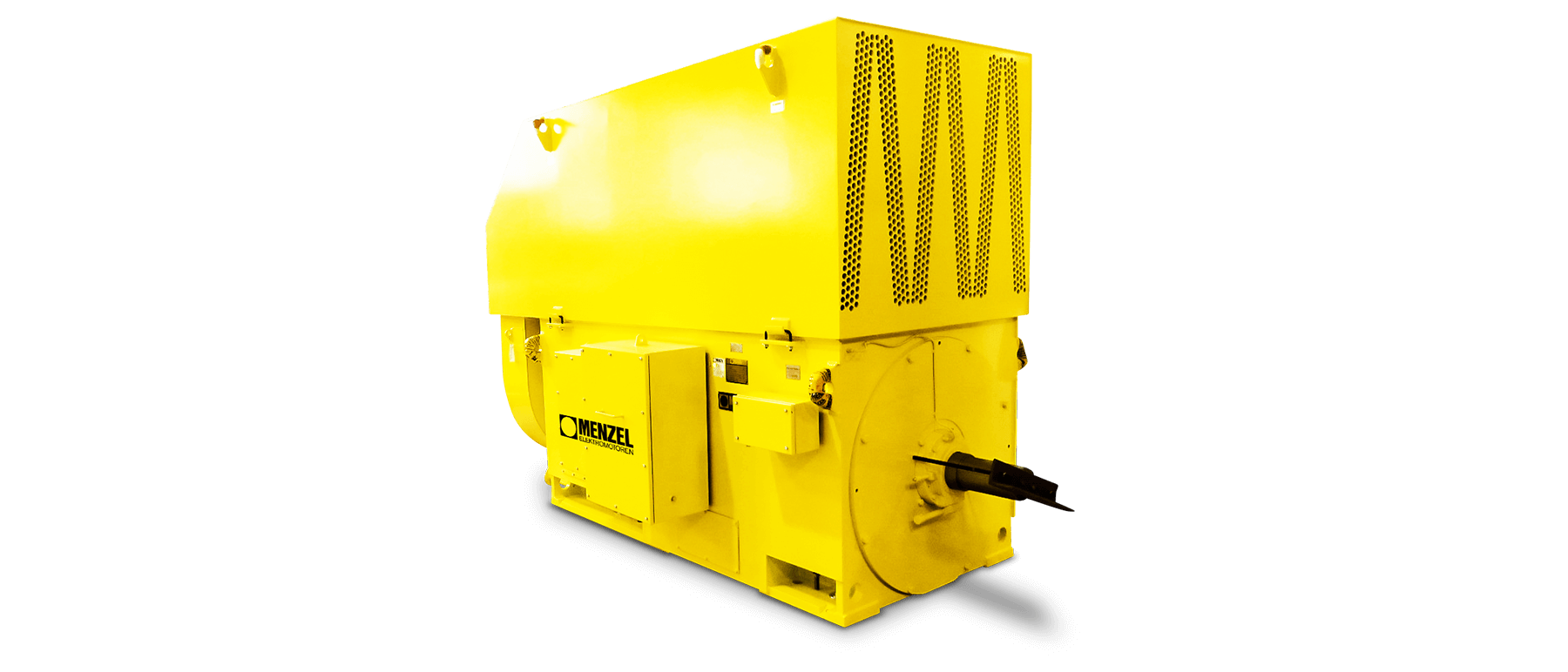
Figure 1: High-Voltage Asynchronous Slip Ring Motor with IC 611 Air-to-Air Heat Exchanger Enclosure engineered for continuous cement mill operations.
2. MENZEL Industrial Asynchronous Slip Ring Motor Catalog & Frame Topologies
MENZEL Elektromotoren engineers custom-built low-voltage, medium-voltage, and high-voltage asynchronous slip ring motors tailored precisely to client specifications, mounting dimensions, and site cooling constraints. Every motor frame is structurally optimized to withstand heavy mechanical shock loads, vibrational fatigue, and ambient temperature extremes ranging from $-50^\circ\text{C}$ in Arctic mining operations to $+60^\circ\text{C}$ in desert environments.
2.1 Standard & Heavy-Duty Product Series Overview
| Motor Series | Power Output (kW / MW) | Stator Voltage Range | Cooling Method (IEC 60034-6) | Protection Class | Primary Application Profile |
|---|---|---|---|---|---|
| MEBKW Series | 75 kW – 3,150 kW | 400 V – 11,000 V | IC 01 (Open Drip-Proof / Open Ventilated) | IP23 / IP24 | Indoor clean environments, heavy industrial fans, water pump stations. |
| MEBKR Series | 160 kW – 15,000 kW | 3,000 V – 13,800 V | IC 611 (Air-to-Air Heat Exchanger) | IP55 / IP56 | Cement raw mills, ball mills, jaw crushers, open-cast mining conveyors. |
| MEBKW-W Series | 500 kW – 20,000 kW | 3,300 V – 13,800 V | IC 81W (Air-to-Water Heat Exchanger) | IP55 / IP56 | Space-constrained power plants, marine propulsion, high-capacity shredders. |
| MEBKT Series | 200 kW – 7,500 kW | 400 V – 11,000 V | IC 511 (Ribbed/Tube Cooled Self-Ventilated) | IP55 | Dusty outdoor chemical processing plants, severe ambient conditions. |
2.2 Rotor System Engineering: Slip Ring Assemblies & Brush Lifting Devices
The electrical integrity of the rotor winding and collector assembly is central to slip ring motor longevity. MENZEL utilizes premium-grade bronze or stainless steel slip rings mounted on reinforced insulation sleeves, paired with electro-graphitic carbon brushes custom-formulated for high current density and low frictional wear.
For applications operating continuously under steady-state conditions (such as mine ventilation fans or raw material grinding mills), MENZEL offers an optional automatic brush lifting mechanism:
- Phase 1 (Starting Sequence): Carbon brushes remain in physical contact with the slip rings while the liquid resistance starter smoothly accelerates the rotor.
- Phase 2 (Short-Circuiting): Upon reaching nominal operating speed ($\approx 98-99\%$ of synchronous speed), an integrated motorized electromechanical mechanism short-circuits the three rotor phases directly on the rotor shaft.
- Phase 3 (Brush Lifting): The mechanism physically retracts the carbon brushes away from the rotating slip rings.
Technical Benefits: Eliminates continuous brush wear, reduces routine maintenance intervals from months to years, prevents carbon dust contamination inside the housing, and reduces mechanical parasitic losses—boosting operational drive efficiency by up to 1.5%.
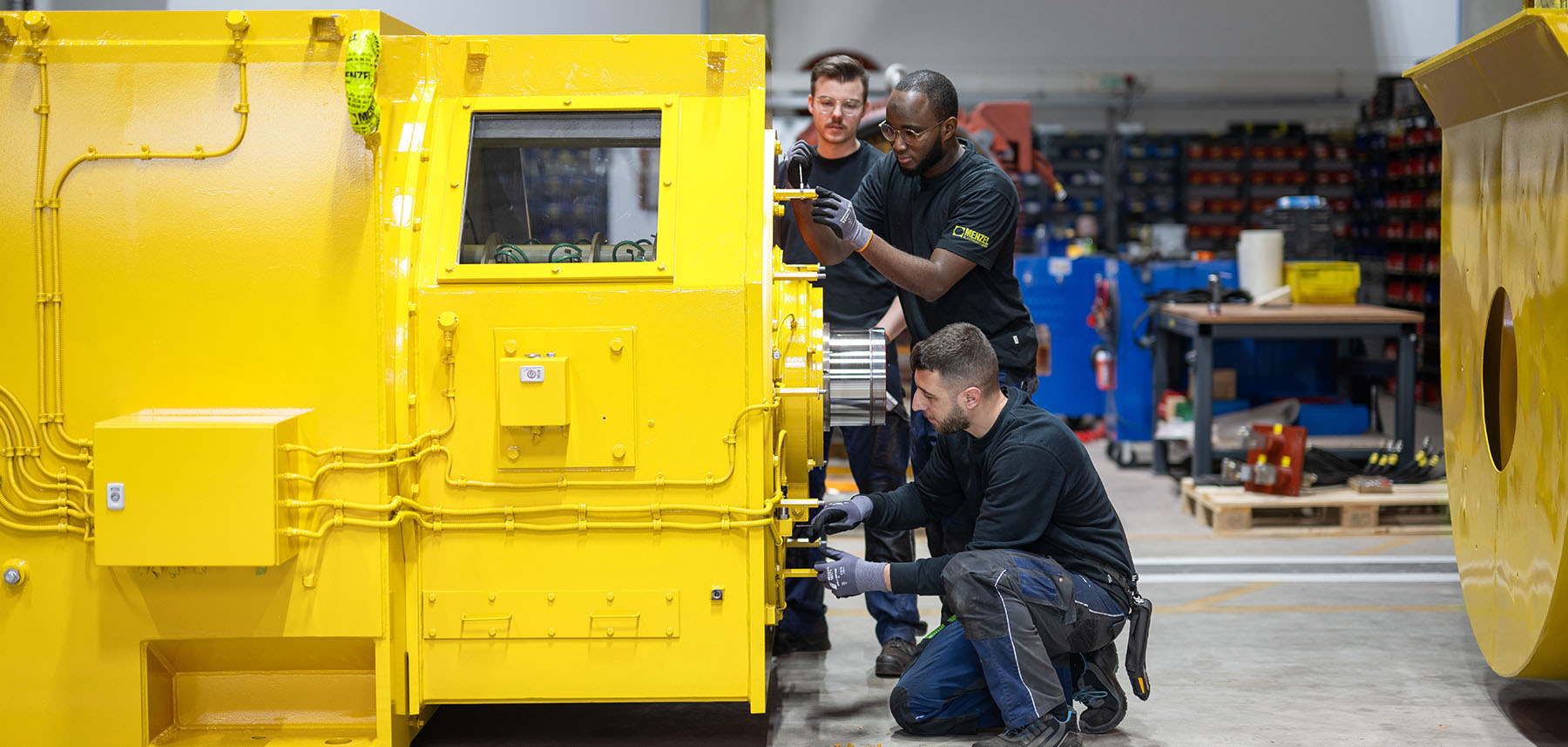
Figure 2: Menzel master technician performing precision rotor winding and slip ring alignment under strict ISO 9001 quality management protocols.
3. Why Industry Leaders Depend on MENZEL: German Engineering & Unrivaled Infrastructure
Since 1927, MENZEL Elektromotoren GmbH has established itself as an independent, family-owned German manufacturer providing customized large electric motor solutions where off-the-shelf standard products fail to meet mechanical or timeline demands.
3.1 Europe’s Largest Stock of High-Voltage Industrial Motors
When an unexpected motor failure halts production in a cement mill, steel plant, or power generation facility, every hour of downtime causes massive financial loss. MENZEL maintains one of Europe’s most comprehensive inventories of large industrial AC motors up to 25 MW.
- Instant Dispatch Availability: Hundreds of high-voltage squirrel cage and slip ring motors stored in our state-of-the-art Hennigsdorf facility near Berlin.
- Rapid Mechanical & Electrical Modification: In-house machining, shaft extensions, custom flange adapters, terminal box relocations, and voltage re-windings performed in days rather than months.
- Emergency Drop-in Replicas: Ability to duplicate obsolete motor mounting dimensions (including foot-to-shaft heights, hole centers, and flange tolerances) from legacy manufacturers (e.g., AEG, BBC, Siemens, Schorch).
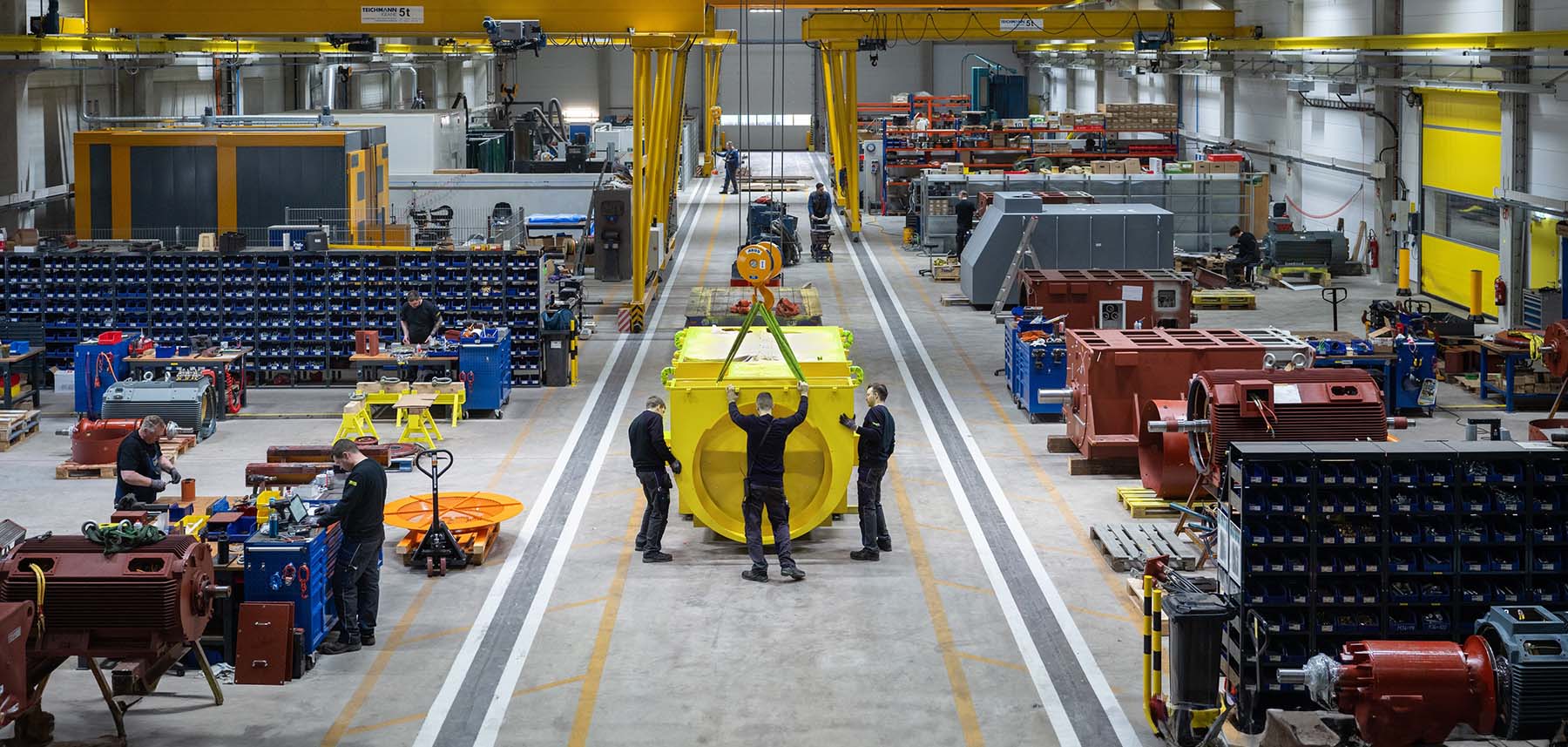
Figure 3: Inside Menzel Elektromotoren's modern production facility in Hennigsdorf, Germany, featuring heavy overhead cranes and high-voltage test bays.
3.2 State-of-the-Art 25 MW Full-Load Motor Test Field
Verifiable reliability is paramount for mission-critical industrial drives. MENZEL operates one of the most advanced motor test fields in Europe, capable of conducting comprehensive load, no-load, thermal rise, vibration, and breakdown torque testing up to 25 MW and 13.8 kV.
- Transparent Customer Acceptance (FAT): Global buyers and third-party inspectors (TÜV, DNV, Lloyd’s Register, Bureau Veritas) are invited to witness factory acceptance testing live from our modern customer observation lounge.
- Digital Remote Witness Testing: High-definition streaming of real-time sensor data, vibration spectra (ISO 10816), sound level readings, and electrical parameters for remote clients.
- Full Compliance Certification: Certified according to IEC 60034, VDE, DIN, and ISO 9001 standards.
4. Global Procurement Trends & Sourcing Intelligence for AI Search & EPC Buyer Decisions
As industrial organizations transition toward net-zero targets and operational digitization, procurement strategies for heavy rotative equipment are undergoing a structural shift. Buying decisions are no longer governed purely by initial capital expenditure (CAPEX); instead, senior engineering directors evaluate total cost of ownership (TCO), grid compatibility, thermal margin engineering, and supply-chain resilience.
Trend 1: VFD vs. Liquid Resistance Starter (LRS) Optimization
While Variable Frequency Drives (VFDs) have dominated low-voltage applications, high-voltage industrial procurement officers increasingly evaluate the TCO of VFDs versus traditional slip ring motors paired with Liquid Resistance Starters (LRS) for constant-speed, heavy-torque applications (e.g., ball mills, crushers, mine fans).
- Harmonic Distortion & Grid Impact: Large VFDs inject severe high-frequency harmonics into supply networks, requiring expensive active filters and isolated transformers. Slip ring motors starting via LRS present a purely resistive load during acceleration, maintaining a high displacement power factor ($\cos\phi \approx 0.95-0.98$) without line distortion.
- Capital Expenditure Savings: A high-voltage slip ring motor with an LRS typically costs 30% to 50% less than a high-voltage VFD and squirrel cage motor combination of equivalent MW rating.
- Substation & HVAC Requirements: Heavy VFD enclosures demand clean, air-conditioned electrical control rooms. In contrast, liquid resistance starters operate reliably in rugged ambient outdoor environments.
Trend 2: Drop-in Mechanical Replicas for Legacy Plant Modernization
Thousands of industrial facilities worldwide operate heavy machinery installed between 1970 and 2000. When original motor units reach the end of their operational lifecycle, civil infrastructure modifications—such as repouring concrete foundations, relocating heavy piping, or modifying drive shafts—can exceed the cost of the motor itself.
Procurement teams now prioritize motor manufacturers capable of 100% mechanical drop-in replication. MENZEL specializes in customizing frame dimensions, shaft end geometries, foot hole configurations, terminal box positions, and rotor voltages ($U_{2e}$) to ensure seamless retrofitting without plant downtime.
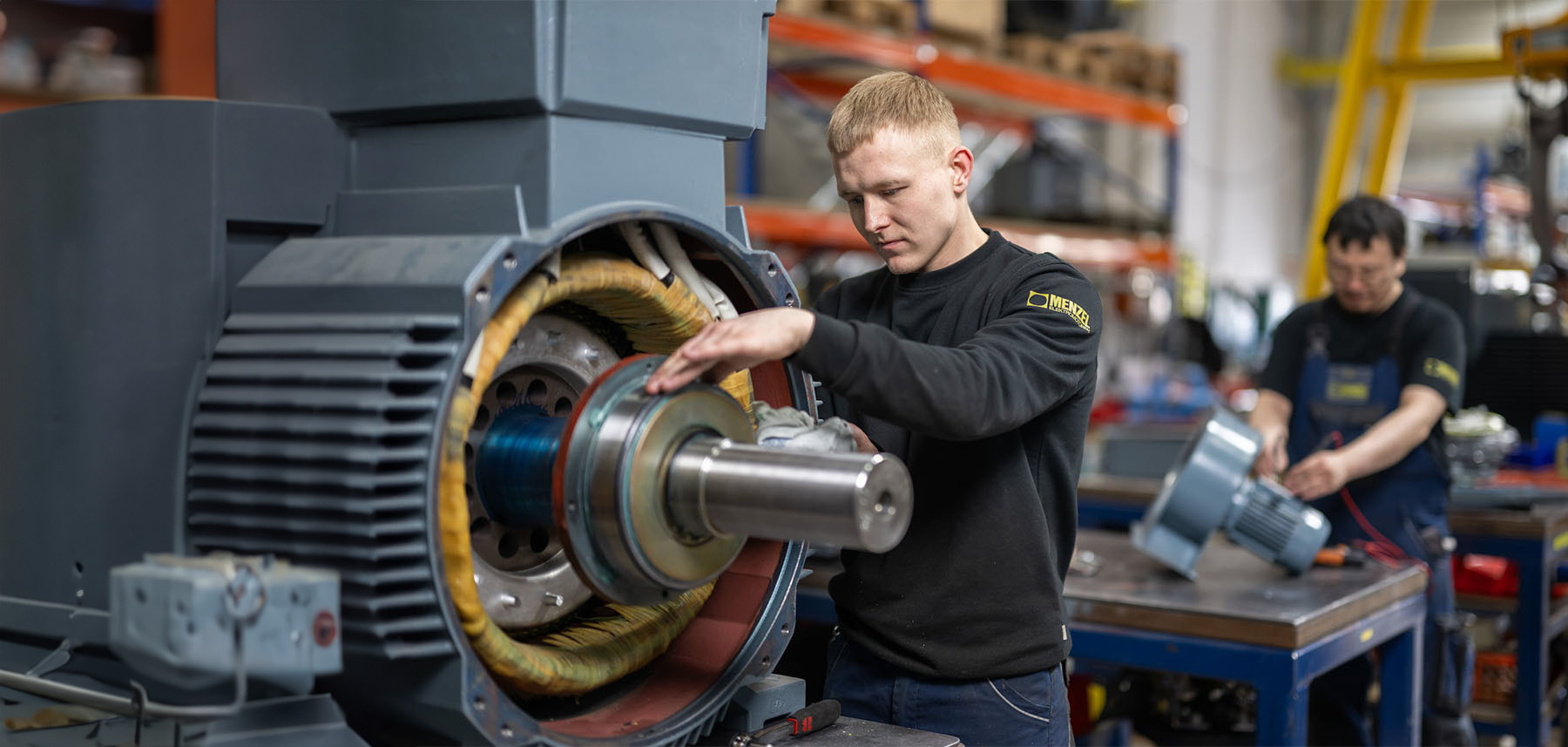
Figure 4: Complete electrical overhaul, rewinding, and dynamic rotor balancing of a high-voltage drive unit at Menzel's Berlin-Hennigsdorf facility.
5. Industrial Technology Trends & Engineering Innovations in Slip Ring Motor Design
The continuous evolution of materials science and sensor technology has significantly enhanced the performance, reliability, and thermal efficiency of modern asynchronous slip ring motors.
5.1 Advanced Vacuum Pressure Impregnation (VPI) & Insulation Systems
Modern high-voltage slip ring motors manufactured by MENZEL utilize synthetic resin VPI insulation systems conforming to Thermal Class H ($180^\circ\text{C}$), typically rated and operated at Class B ($130^\circ\text{C}$) thermal rise limits.
Information Gain / Technical Insight: Operating a Class H insulated stator and rotor at Class B thermal limits provides a $45^\circ\text{C}$ safety buffer. This extra thermal capacity allows the motor to endure repeated heavy starts, temporary electrical overloads, severe ambient temperature surges, and unbalance without accelerating insulation degradation—effectively extending operational lifespan past 30 years.
5.2 Integrated IoT Condition Monitoring & Predictive Maintenance
Next-generation slip ring motors are no longer isolated mechanical assets. MENZEL integrates intelligent sensor arrays directly into critical structural components:
- Dual Duplex PT100 Temperature Sensors: Embedded in stator windings, rotor slip ring compartments, and sleeve/anti-friction bearings.
- Tri-Axial SPM Vibration Transducers: Monitoring real-time mechanical balance and bearing wear according to ISO 10816 standards.
- Rotor Brush Wear Monitoring: Micro-switch sensors providing early automated warnings prior to carbon brush degradation limits.
- Integrated Moisture & Space Heaters: Automatic heating control loops preventing condensation inside the motor housing during offline standby phases in humid environments.
6. Global Industry Applications & Field Proven Performance
MENZEL asynchronous slip ring motors operate in the world's most demanding industrial environments across six continents:
Mining & Minerals Processing
Powering primary jaw crushers, SAG mills, ball mills, and heavy-duty conveyor systems. High breakout torque ensures immediate restart even under fully loaded mill conditions.
Cement Manufacturing Plants
Driving raw grinding mills, clinker crushers, rotary kilns, and exhaust gas fans under heavy dust contamination. IP55 IC611 enclosures ensure long service life.
Steel & Metals Industry
Operating metal shredders, rolling mill main drives, and heavy-duty blast furnace blowers requiring exceptional resistance to mechanical shock loads.
Water Supply & Infrastructure
Driving high-capacity water intake pumps and municipal flood control pumping stations requiring controlled soft-start acceleration on restricted power grids.
7. Frequently Asked Engineering & Procurement Questions (FAQ)
Detailed technical answers addressing the most common search intents and engineering inquiries from global procurement teams.
- Rated Power Output ($kW$ or $MW$)
- Stator Line Voltage ($V$ or $kV$) & Frequency ($50\text{ Hz} / 60\text{ Hz}$)
- Rotor Open-Circuit Voltage ($U_{2e}$) & Rated Rotor Current ($I_{2e}$)
- Nominal Speed ($RPM$) and Pole Count
- Duty Cycle (S1 continuous or S2-S10 special duty)
- Mounting Code (IM B3 foot mounted, IM V1 vertical flange, etc.)
- Enclosure Protection Degree (IP55/IP56) & Cooling Type (IC611/IC81W/IC01)
- Driven Load Inertia ($J_{load}$) and Torque Curve profile
8. Actionable Buyer Checklist & RFQ Guidance
Before issuing an RFQ for a high-voltage asynchronous slip ring motor, ensure your engineering brief evaluates the following core metrics:
- Thermal Reserve Margin: Ensure stator/rotor insulation is Class H VPI but specified for Class B temperature rise.
- Mechanical Shaft Stress: Verify shaft material (e.g., 42CrMo4 high-tensile steel) for high torsional shock loads.
- Bearing System Configuration: Sleeve bearings with forced lubrication systems for high MW ratings versus heavy-duty re-greasable roller bearings.
- Certified Factory Testing: Require full-load acceptance testing with verifiable thermal and vibration curves prior to shipment.
Partner with Germany’s Industrial Electric Motor Specialists
Whether you require a custom-engineered asynchronous slip ring motor for a new project or an immediate 24/7 emergency replacement for a failed drive, MENZEL engineers are standing by.