German Engineering Expertise Since 1927

Heavy-Duty Roller Table Motors: Technical Selection Guide, Future Procurement Trends & Custom Drop-In Solutions for Steel Mills

In modern steelmaking, continuous casting, and hot rolling mills, roller table motors represent the critical mechanical spine of material transport. Operating under severe ambient radiation, intense mechanical shock loads, scale dust contamination, and frequent reversing torque spikes, standard industrial motors suffer premature failure. Menzel Elektromotoren engineers custom-built low-voltage, medium-voltage, and high-voltage roller table drive solutions engineered to eliminate unscheduled mill downtime.

1927 German Manufacturing Tradition
Up to 25 MW Custom Drive Capacity
13.8 kV Max High-Voltage Rating
IC 410 / IC 416 Inverter-Duty Heavy Enclosures

Why Standard Electric Motors Fail in Roller Table Applications

Global steel manufacturers and metallurgical plant managers frequently encounter catastrophic winding burnouts, bearing seizures, and shaft fractures when standard IEC or NEMA industrial motors are deployed on continuous casting lines, slab transport tables, or hot rolling mill run-out tables. The operating environment of a roller table motor is structurally fundamentally distinct from standard pump or fan drive applications.

Roller table drives are subjected to four primary operational stressors that demand specialized electrical design and mechanical reinforcement:

Extreme Thermal Radiation & Ambient Temperatures: Positioned directly below glowing red steel billets or slabs reaching temperatures above 1,200°C, roller table motors absorb intense radiant heat. Convection cooling is limited, necessitating Class H or Special Class C VPI insulation with enhanced thermal margins.
Severe Mechanical Shock & Vibration Loads: As heavy ingots and slabs drop onto conveyor rollers, shock loads up to 10g propagate directly through the roller shaft to the motor bearing assemblies. Standard deep-groove ball bearings shatter or deform under these cyclic impact forces.
Frequent Reversing, Acceleration & Stall Currents: Roller table drives must constantly stop, accelerate, and reverse direction within seconds to manipulate steel blooms. This creates recurring current spikes up to 6–8 times nominal rating, causing rapid thermal expansion and mechanical stress on stator end turns.
Abrasive Scale, Water Jets & Chemical Contamination: Descaling high-pressure water sprays, iron oxide scale dust, and synthetic rolling fluids continuously attack housing seals and terminal boxes. Standard IP55 enclosures quickly admit abrasive dust, leading to insulation tracking and bearing breakdown.

Comparative Technical Matrix: Standard Motors vs. Menzel Heavy-Duty Roller Table Motors

To assist procurement directors and chief plant engineers in evaluating drive reliability, the matrix below outlines the critical engineering differences between mass-market industrial electric motors and Menzel purpose-built heavy-duty roller table motors:

Engineering Parameter Standard Industrial Motor Menzel Heavy-Duty Roller Table Motor
Housing Construction Ribbed aluminum or standard light cast iron (EN-GJL-200) Spheroidal graphite cast iron (EN-GJS-400 / 500) or heavy fabricated welded steel frame
Vibration & Shock Resistance Standard Class A/B (up to 2.5g vibration tolerance) Reinforced structural design withstands continuous mechanical shock forces exceeding 10g
Thermal Insulation Class Class F insulation (105K temperature rise limit) VPI-impregnated Class H (125K limit) or Class C (180°C+) with synthetic corona shielding
Inverter Duty & dV/dt Stress Standard magnet wire prone to partial discharge degradation Inverter-grade mica-shielded copper wire optimized for high PWM switching frequencies
Bearing Configuration Standard C3 ball bearings with plastic grease retainers Heavy-duty cylindrical roller bearings with high-temperature synthetic grease & re-lubrication channels
Enclosure & Cooling Type IC 411 surface fan cooling (fan blades warp under radiant heat) IC 410 (totally enclosed non-ventilated) or IC 416 (forced ventilation with external protected blower)
Inquire Now

Menzel Heavy-Duty Roller Table Motor Recommendation Series

Specially engineered AC squirrel cage, slip ring, and DC roller table motors tailored for continuous casting, reversing roughing stands, and hot section conveyers.

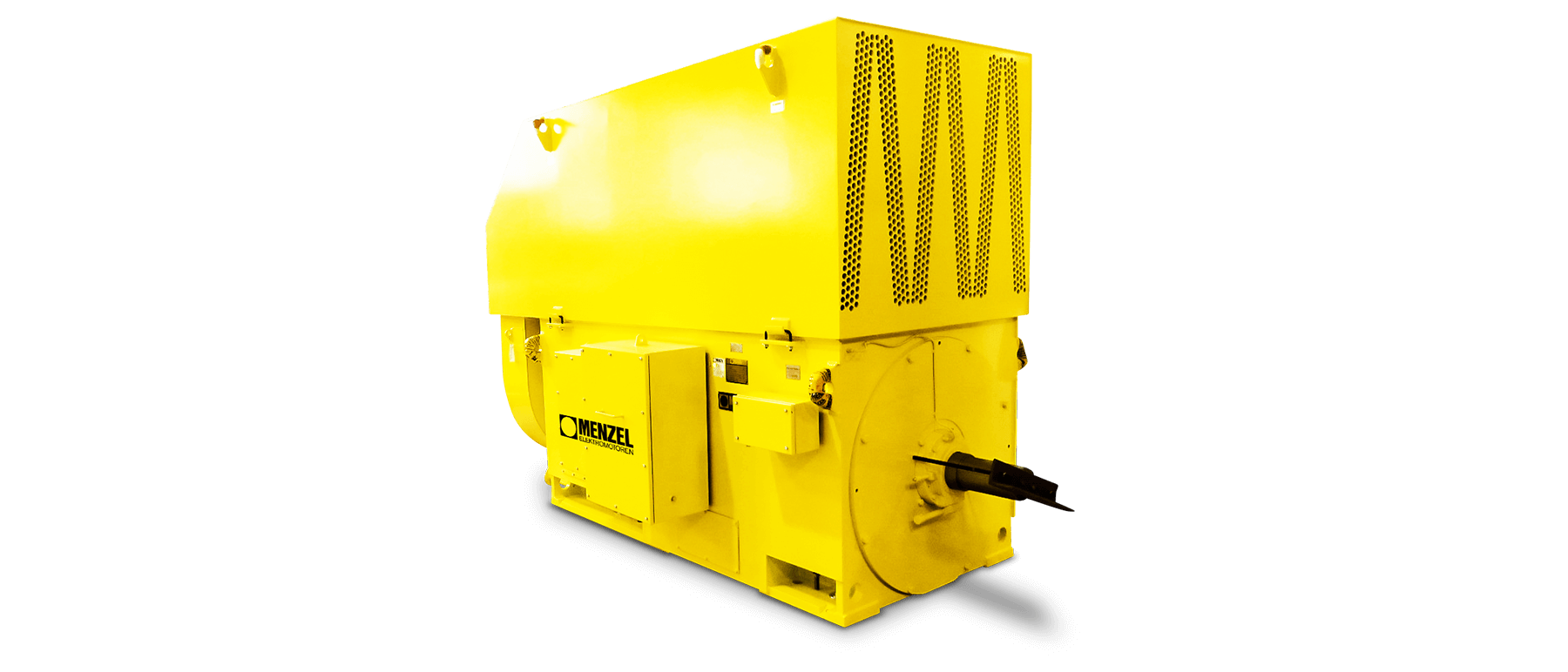
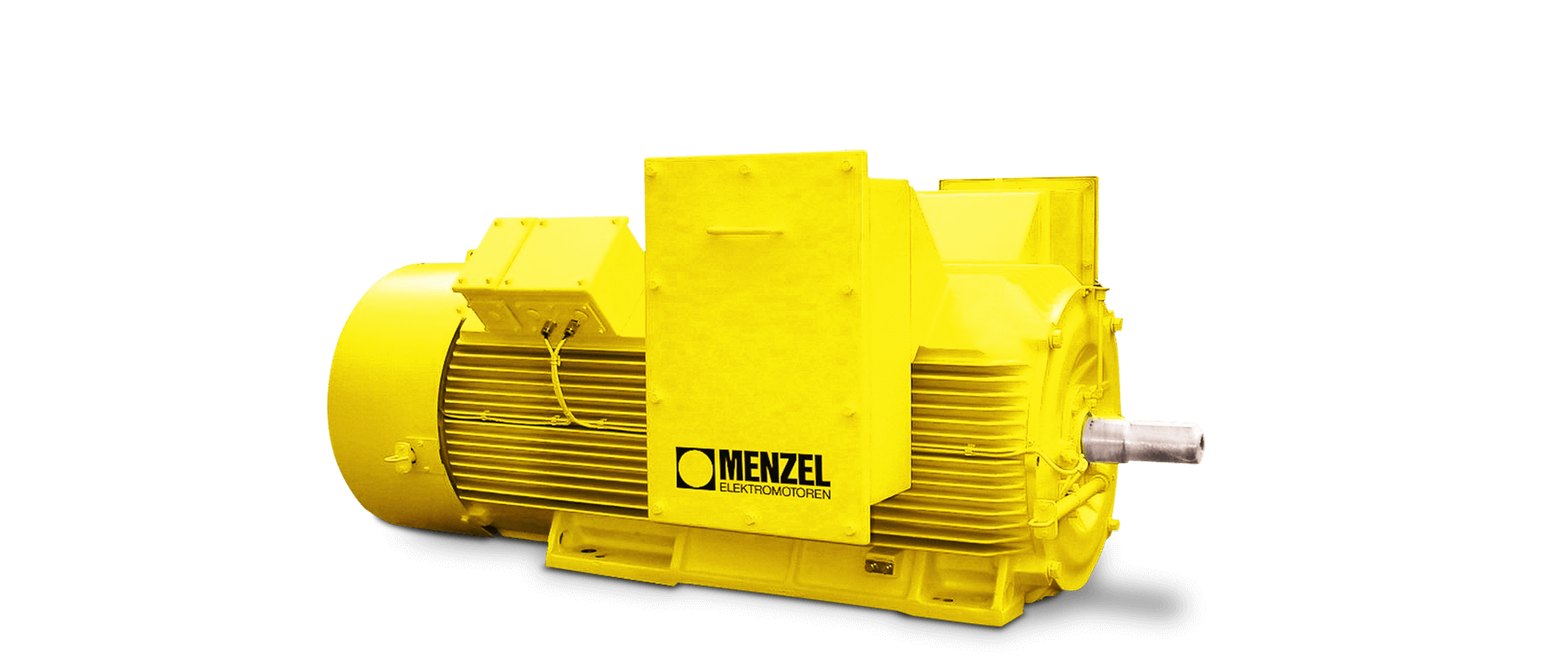
MEBKW Heavy Duty AC Squirrel Cage Roller Table Motor

MEBKW Heavy-Duty AC Squirrel Cage Roller Table Motors

Constructed with ring-ribbed spheroidal cast iron frames, non-ventilated IC 410 or surface-cooled IC 411 design. High breakdown torque ratio up to 3.5x nominal torque for clearing severe slab jams.

MEBKS Slip Ring Motor for High Inertia Roller Tables

MEBKS Slip-Ring Roller Table Motors for High Starting Inertia

Designed for mill lines requiring ultra-high starting torque with limited grid capacity. Heavy-duty brush gear, tropicalized insulation, and vibration-isolated slip ring housings.

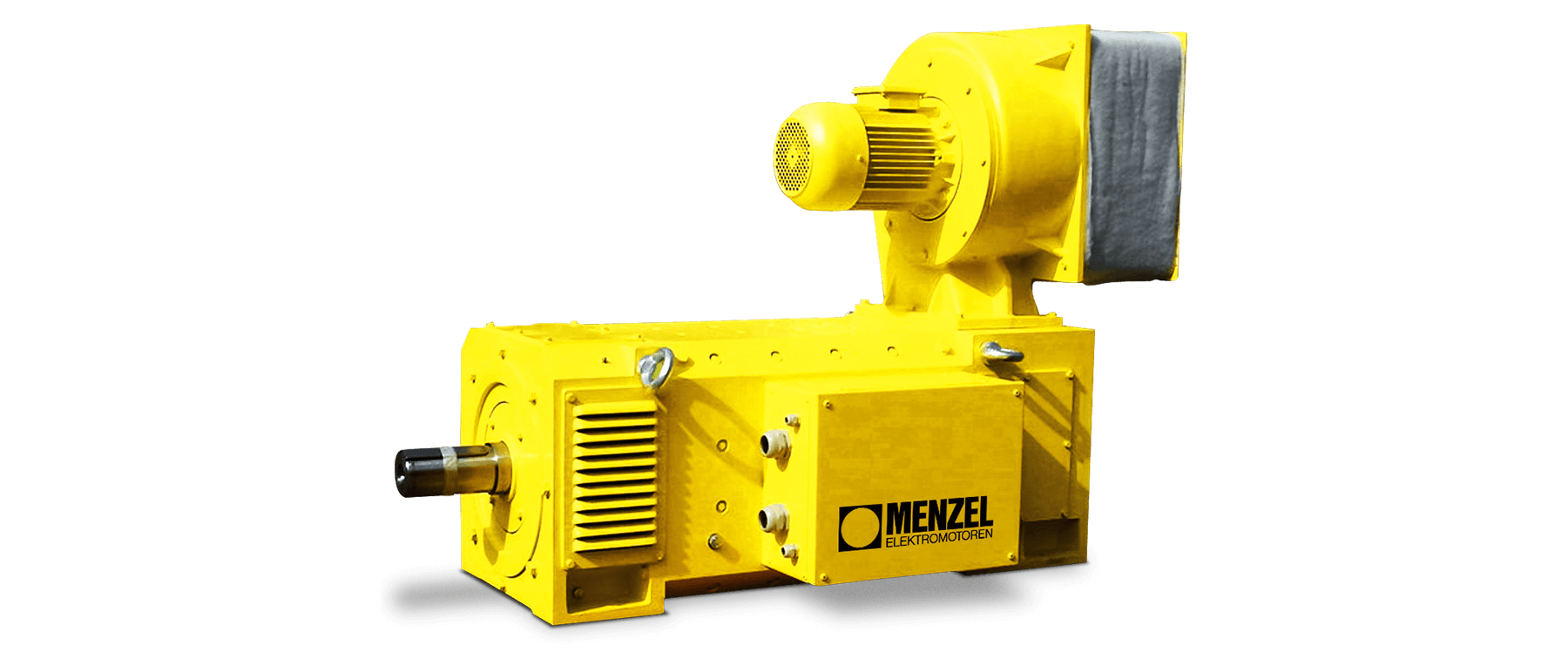
MEB-DC Industrial Roller Table Motors

MEB-DC Industrial DC Roller Table Motors

Fully retrofittable direct current motors engineered for legacy hot strip mills requiring precise speed synchronization across wide weak-field operating speed ranges.

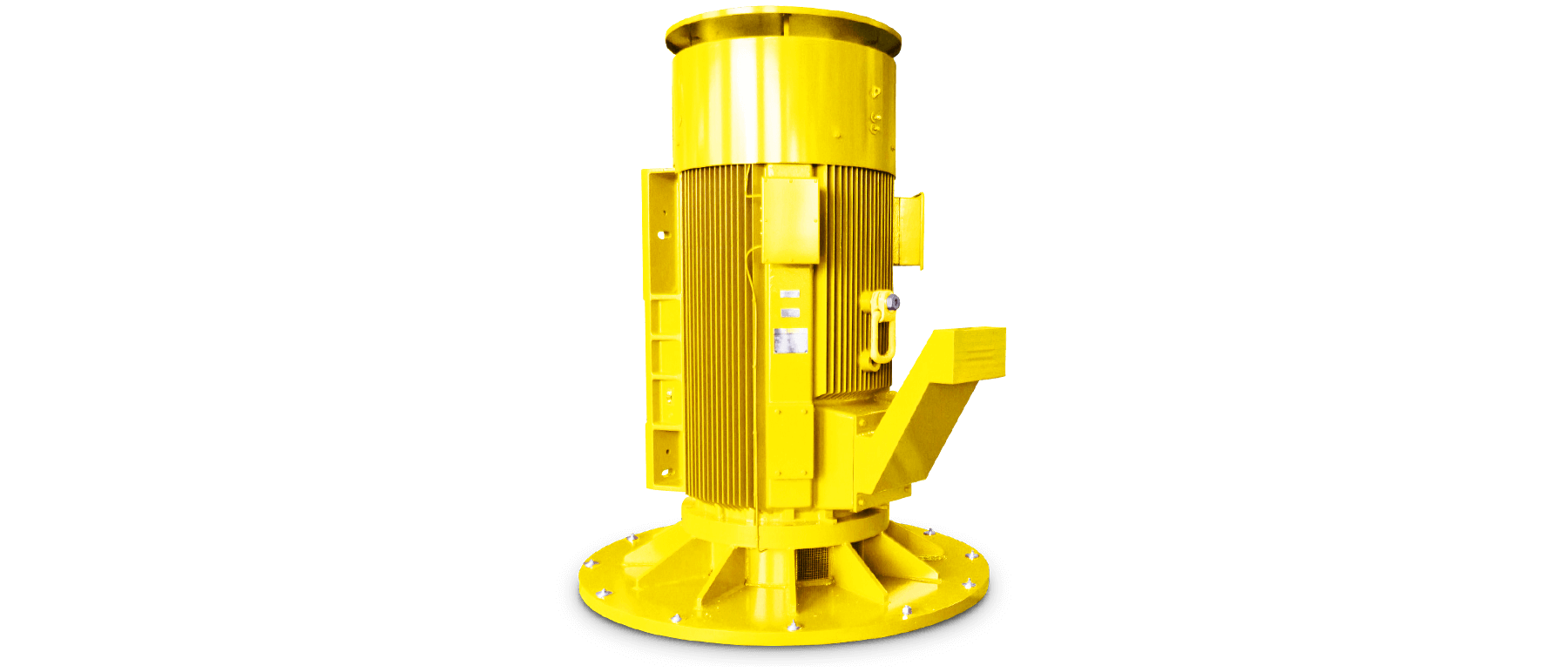
Custom Drop-in Replacement High Voltage Roller Motors

Custom High-Voltage Drop-In Replacement Motors

Tailor-made mechanical shaft extensions, custom mounting foot dimensions, and flange adapters designed to replace obsolete OEM motors without plant modification.

As global metallurgical plants accelerate decarbonization, automation, and operational efficiency, procurement strategies for critical drives are shifting rapidly.

Shift from CapEx Focus to Total Cost of Ownership (TCO)

Historically, procurement managers prioritized initial motor unit price. However, in continuous 24/7 steel production, a single hour of mill standstill caused by motor breakdown can cost between $30,000 and $100,000. Forward-thinking buyers now evaluate drive purchases on MTBF (Mean Time Between Failures), insulation thermal reserve, and energy efficiency under variable VFD loads. Purchasing heavy-duty cast iron motors with Class H insulation yields a lower TCO over a 15-year lifecycle.

Inquire Now →

Demand for Rapid 100% Mechanical Drop-In Replacements

With major electric motor OEMs consolidating and discontinuing legacy motor frame sizes (such as old DIN frame specs or custom mill footings), steel plants face prohibitive costs if required to alter civil foundation beds. Global procurement teams are increasingly contracting with specialized manufacturers like Menzel who maintain vast raw casting inventories and in-house machining facilities to replicate 100% identical mechanical drop-in replacements on short notice.

Inquire Now →

Gearless Direct-Drive Transition & Low-Frequency VFD Operation

To eliminate mechanical gearboxes—which represent high-maintenance failure points in hot steel environments—procurement specifications are shifting toward multi-pole, low-frequency inverter-duty roller table motors. Operating directly at speeds from 50 RPM to 300 RPM via variable frequency drives, direct-drive roller table motors eliminate gearbox wear, mechanical lash, and oil lubrication hazards.

Inquire Now →

How advanced materials science, smart diagnostics, and thermodynamic modeling are redefining heavy-duty drive reliability.

1. Advanced Synthetic Insulation & Nanocomposite Corona Protection

Modern Variable Frequency Drives (VFDs) utilizing high switching frequency IGBTs or Silicon Carbide (SiC) inverters generate extreme voltage rise times (dV/dt spikes) that destroy traditional stator winding insulation. Future-ready roller table motors incorporate multi-layer mica tape insulation impregnated under vacuum pressure (VPI) with nanocomposite resin formulations. This structure withstands continuous voltage transients up to 3.5 kV without experiencing partial discharge inception.

2. Integrated IIoT Condition Monitoring & Thermal Telemetry

Industry 4.0 integration in steel plants requires real-time drive diagnostics. Next-generation roller table motors are constructed with embedded 3-axis MEMS vibration sensors, dual PT100 bearing and winding temperature sensors, and magnetic flux coils integrated directly into the stator teeth. Wireless telemetry modules transmit operational data to predictive maintenance platforms, enabling plant engineers to detect bearing micro-spalling or thermal overloads weeks before failure occurs.

3. Hydrodynamic & Hybrid Enclosure Thermal Management

In hot strip mills where radiant slab heat exceeds 70°C ambient temperatures, conventional surface air cooling (IC 411) loses effectiveness as fan blades circulate superheated air. Technological development is driving adoption of hybrid cooling topologies, such as water-jacket cooled frames (IC 511 / IC 81W) or dual-circuit non-ventilated smooth housings (IC 410) with internal air circulation heat exchangers. These designs completely isolate the motor interior from external scale, water, and heat.

Standardization & Customization Combined

Menzel combines standard IEC electrical performance with custom mechanical flexibility for heavy metallurgical duty.

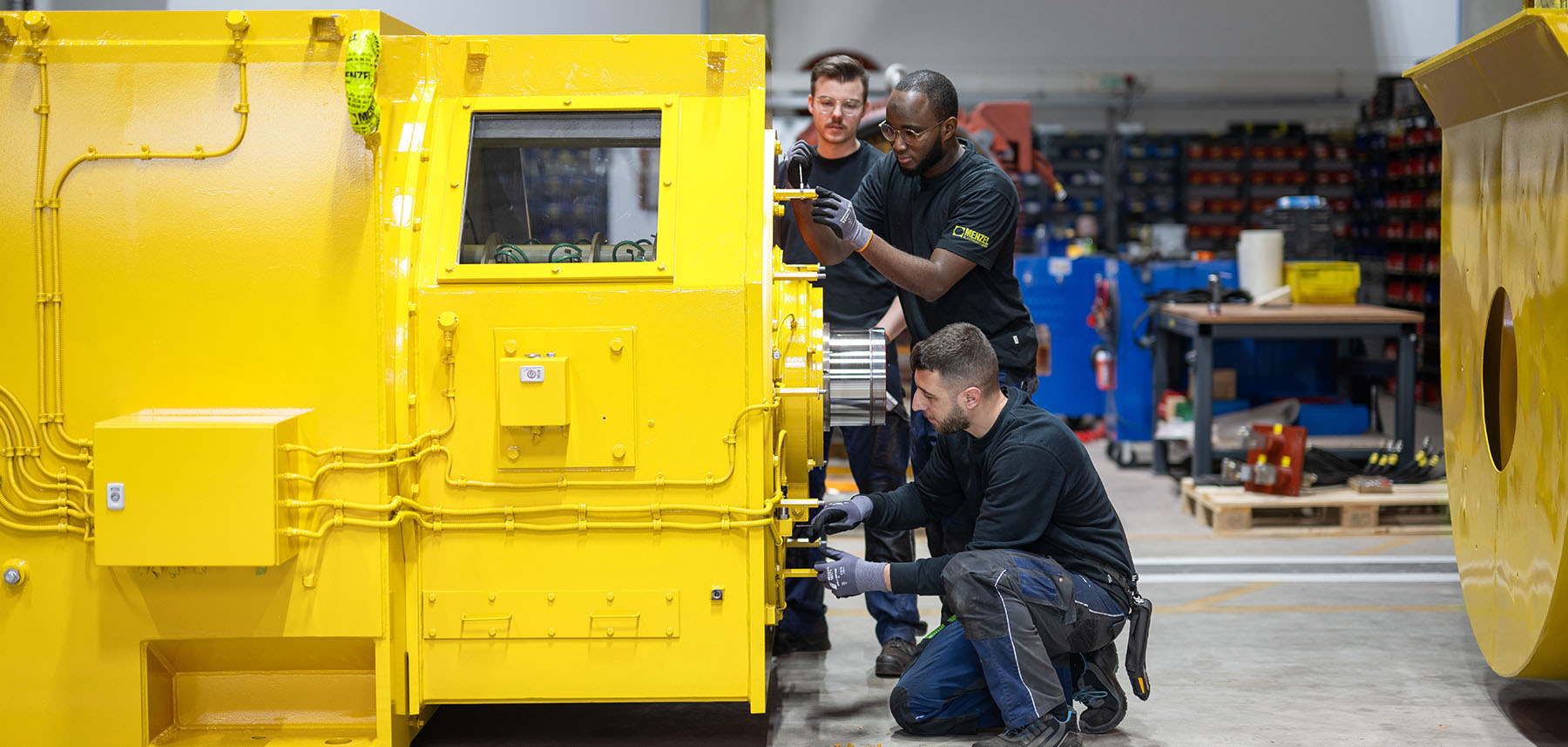
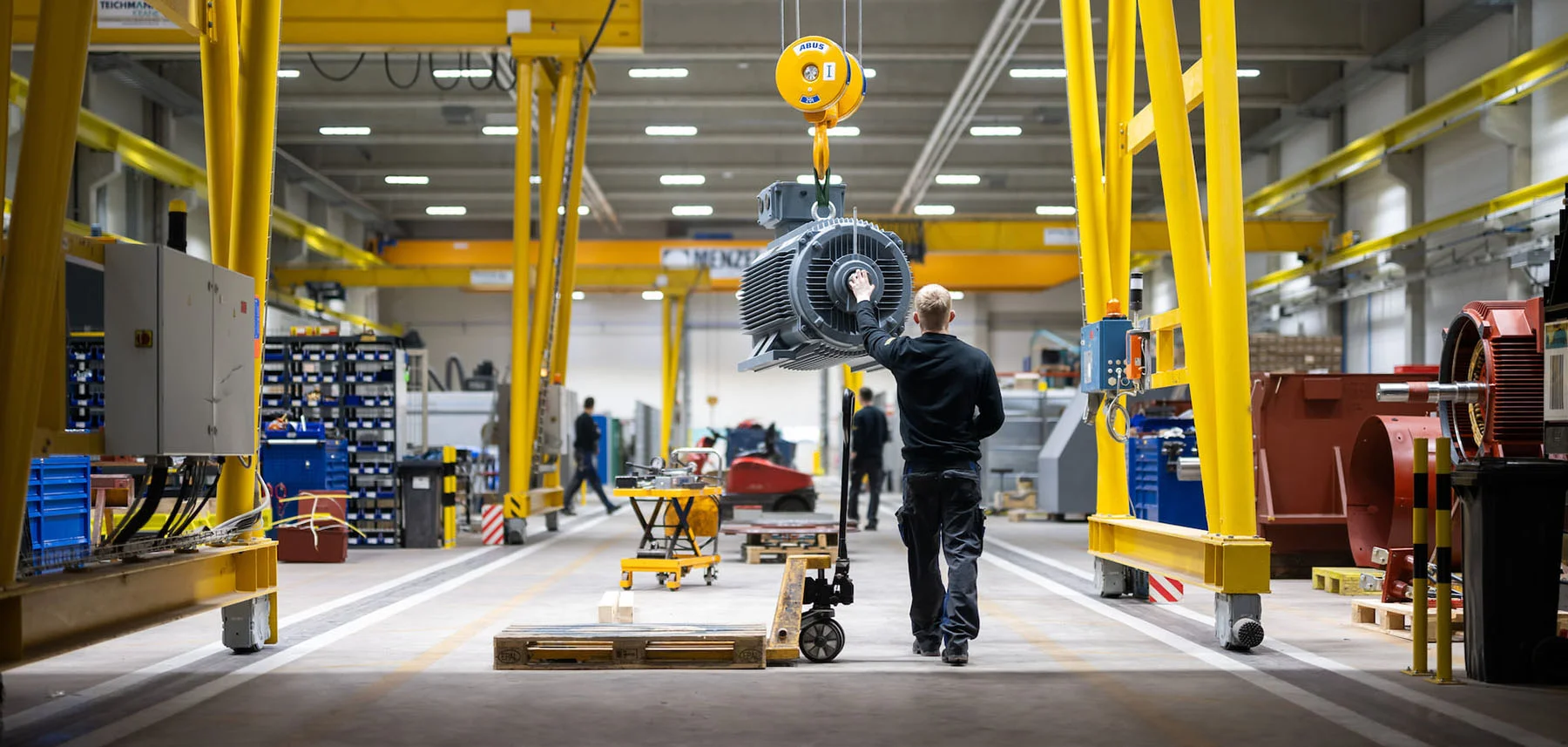
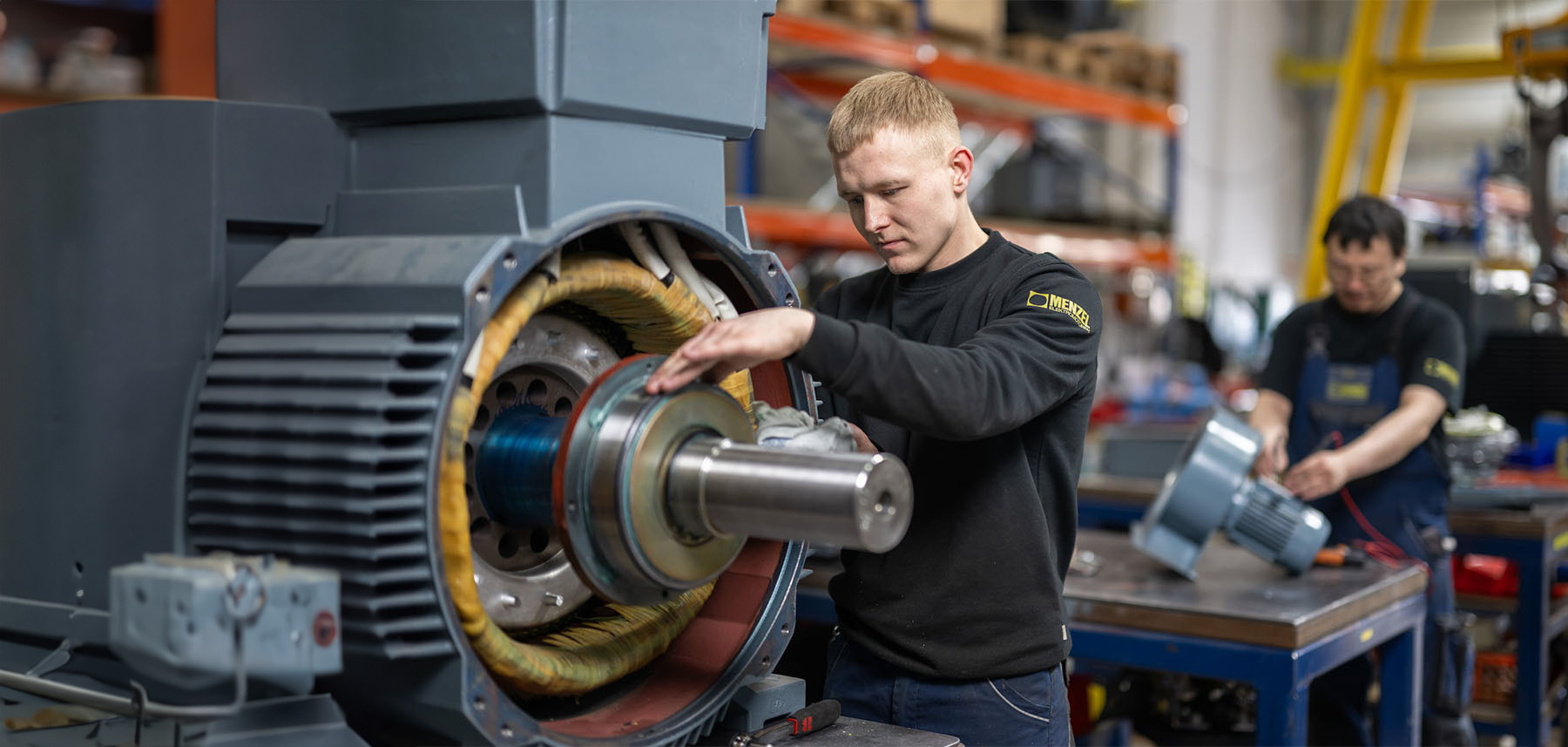
Technician assembling large electric motor

"Our ability to perform full-load testing up to 25 MW ensures that every roller table motor leaves our Hennigsdorf factory fully verified for extreme shock and thermal stress."

Menzel Engineering Team
Inquire Now

Why Leading Global Steel Manufacturers Rely on Menzel Elektromotoren

Over 97 years of specialized German motor manufacturing experience, extreme flexibility, and an unmatched global emergency stock.

Founded in Berlin in 1927, Menzel Elektromotoren GmbH has established itself over nearly a century as one of Europe’s premier independent manufacturers and stockists of large industrial electric motors. Unlike mass-production drive vendors focused on volume standard motors, Menzel specializes in heavy-duty, high-capacity, and customized drive engineering up to 25 MW output and 13.8 kV voltage ratings.

100% Family-Owned & Independent Engineering: Uncompromised agility, fast decision-making, and direct engineer-to-client technical consulting without corporate bureaucracy.
Europe’s Largest Industrial Motor Inventory: Menzel maintains thousands of large AC squirrel cage, slip ring, and DC motors in stock, ready for immediate custom mechanical modification and 24/7 emergency dispatch worldwide.
State-of-the-Art Production & Testing Facility: Operating from our expanded manufacturing headquarters in Hennigsdorf near Berlin, our plant features state-of-the-art VPI dip tanks, precision CNC machining, welding shops, and an accredited 25 MW full-load motor testing field.
Full Transparency & Live Customer FAT: Global buyers and third-party inspectors (TÜV, DNV, Lloyd's Register) are invited to witness motor load testing live from our comfortable observation lounge or via secure high-definition video streaming.

All Menzel roller table motors strictly comply with DIN, EN, IEC 60034, VDE, and ISO 9001 manufacturing standards, ensuring flawless quality, exceptional thermal longevity, and complete peace of mind for plant operations.

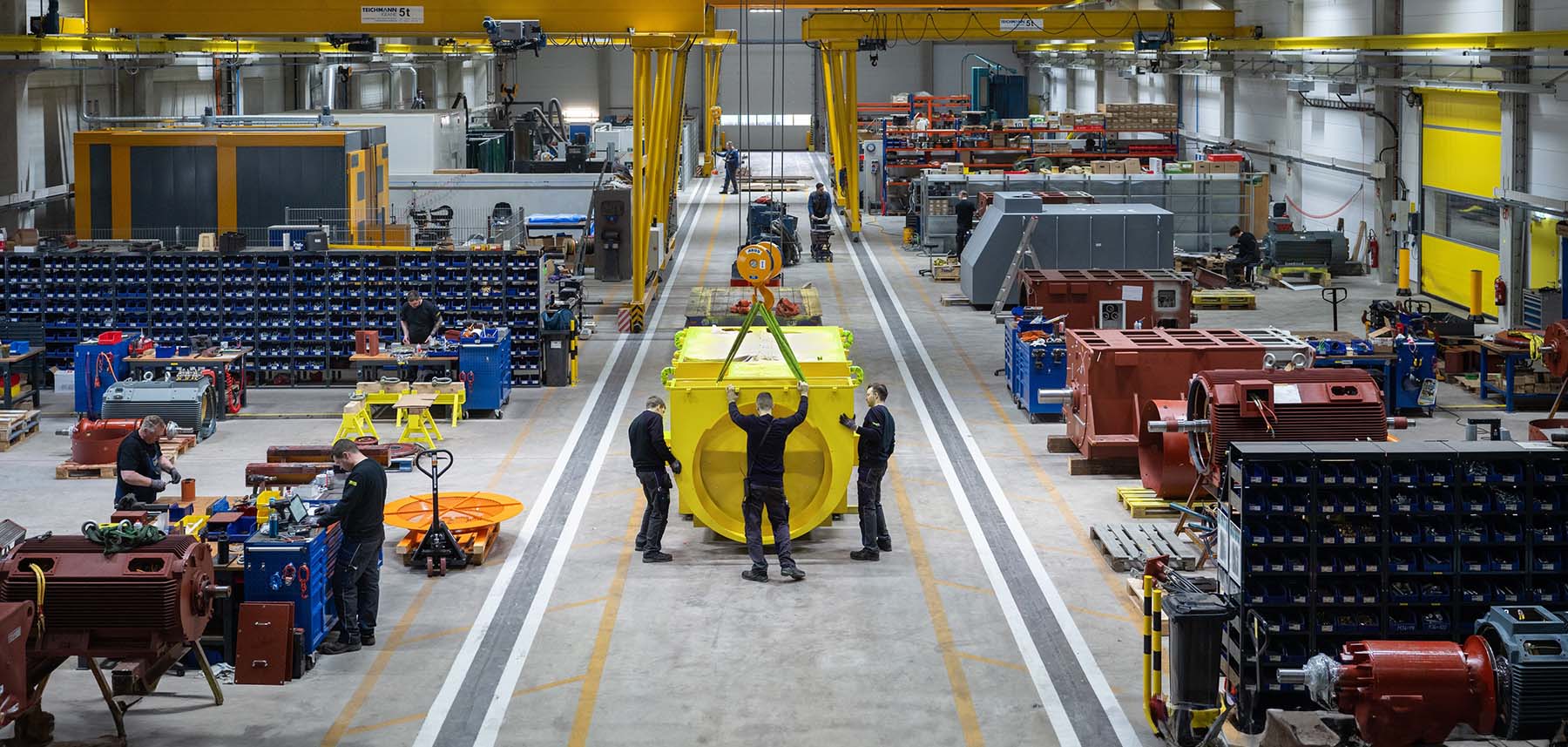
Menzel Motor Factory Assembly Hall

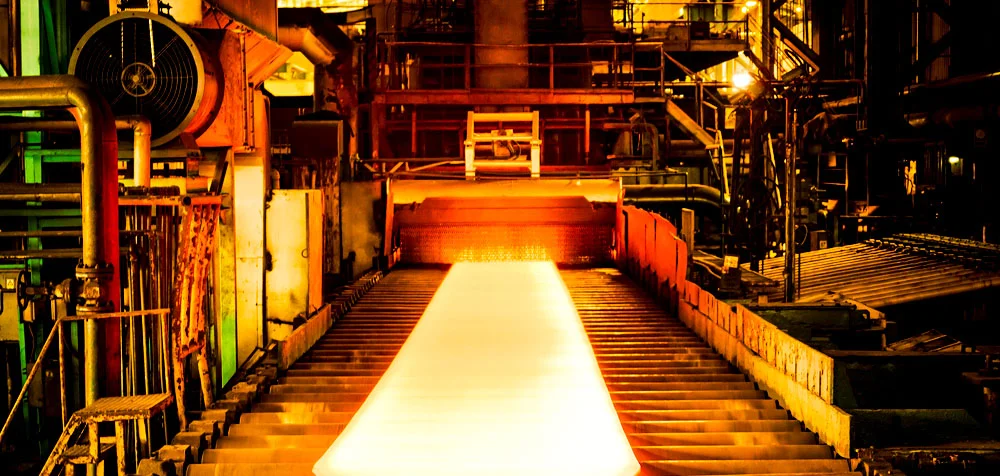
Roller Table Motor Operating Environments

Engineered for extreme operating positions across modern iron, steel, aluminum, and non-ferrous metal processing facilities.

Hot Rolling Mill Drives
Hot Strip Rolling Mills
Continuous Slab Conveyors
Continuous Caster Conveyors
Heavy Metal Handling Crane Drives
Bloom & Billet Transport
Reversing Mill Table Motors
Reversing Plate Mills

Frequently Asked Questions (FAQ) for Roller Table Motor Procurement

Direct engineering answers to common technical queries raised by global procurement buyers, electrical engineers, and steel plant directors.

How do I select between IC 410 (totally enclosed non-ventilated) and IC 411 (surface fan cooled) for roller table motors?

Selection depends primarily on ambient thermal radiation, scale accumulation, and speed range under Variable Frequency Drive (VFD) operation. In hot sections directly adjacent to continuous casters or blooming mills (ambient temperature > 60°C with heavy scale water spray), IC 410 (totally enclosed non-ventilated) motors are preferred. IC 410 motors rely on natural convection across heavy cast iron cooling ribs, eliminating external fan blades that warp under radiant slab heat or clog with scale dust. For low-radiation sections or constant-speed tables, IC 411 (shaft-mounted fan) or IC 416 (forced external blower) provides higher continuous torque density.

What is the difference between group drive and individual drive configurations in roller table tables?

In group drives, a single large electric motor drives multiple conveyor rollers simultaneously via line shafts, bevel gears, or mechanical chains. Group drives require high continuous output power and excellent overload torque reserve. In individual drives, each roller is direct-coupled to its own dedicated low-power motor (typically 1.5 kW to 30 kW). Individual drives offer superior redundancy (if one motor fails, production continues), but demand motors engineered with ultra-robust housings, high breakdown torque ratios, and individual VFD frequency matching. Menzel manufactures high-performance motors for both group and individual drive architectures.

Can Menzel provide 100% mechanical drop-in replacements for obsolete roller table motors without modifying our steel mill foundations?

Yes. Menzel specializes in custom mechanical replication of obsolete motor brands including older Siemens, AEG, BBC, Schorch, Loher, and Westinghouse units. Our engineering team utilizes 3D CAD modeling to match exact shaft center heights, foot mounting hole dimensions, flange bolt circles, terminal box placements, and shaft extension diameters. This eliminates expensive civil modification costs and enables rapid installation during scheduled mill maintenance turnarounds.

How do Menzel roller table motors resist severe mechanical shocks caused by dropping steel slabs?

Menzel roller table motors feature heavy-duty spheroidal graphite cast iron housings (EN-GJS-400/500), which provide significantly higher tensile strength and impact ductility compared to standard gray cast iron. Rotor shafts are forged from high-tensile alloy steel (e.g., 42CrMo4), and bearings are upgraded to heavy cylindrical roller bearing assemblies fitted with high-temperature synthetic grease, retaining rings, and reinforced end shields capable of absorbing radial shock loads in excess of 10g.

What thermal insulation rating is required for inverter-fed roller table motors operating in high ambient heat?

We recommend a minimum of Class H insulation (180°C thermal capacity) with a Class B temperature rise margin (80K limit). Impregnated via Vacuum Pressure Impregnation (VPI) using solventless resin, Menzel stator coils incorporate special inverter-grade enamelled copper wire and mica slot liners. This provides high dielectric strength capable of withstanding repetitive VFD dV/dt voltage spikes (up to 1,600 V/μs) while maintaining thermal stability in ambient temperatures up to 80°C.

What factory acceptance documentation and quality testing are provided prior to dispatch?

Every Menzel roller table motor undergoes rigorous testing in our accredited Berlin/Hennigsdorf test fields. Standard documentation includes routine test reports according to IEC 60034-1 (winding resistance, insulation resistance, high-voltage withstand test, no-load and locked-rotor current). Upon request, we provide full-load thermal heat runs, vibration spectrum analysis, noise measurements, and 3D dimensional inspection sheets. Clients can attend FAT live or receive digital test certificates prior to shipment.

What are the typical emergency lead times for urgent roller table motor replacements during unplanned plant outages?

Thanks to Europe’s largest inventory of unmachined stock motor castings, pre-wound stators, and modular components, Menzel can modify and dispatch emergency replacement roller table motors within 24 to 72 hours. Our 24/7 logistics team coordinates air freight or express hot-shot truck delivery directly to steel plants worldwide.

Inquire Now — Fast Emergency Quote
Memberships & Global Standards compliance