
1. Engineering Architecture of Slip Ring Motors with Brush Lifting Devices
In severe industrial environments requiring extreme starting torques alongside low starting currents—such as heavy raw material crushing, grinding mills, and large ventilation fans—slip ring motors with brush lifting devices (wound rotor induction motors equipped with short-circuiting and brush-lifting mechanisms) represent the pinnacle of mechanical and electrical reliability.
Unlike conventional asynchronous slip ring motors where carbon brushes maintain continuous contact with copper or stainless-steel slip rings throughout continuous operation, motors equipped with an automated brush lifting device (BLD) separate the rotor circuit into two distinct operating states:
- Starting Phase (Brushes Lowered): During motor start-up, the carbon brushes are fully engaged against the rotating slip rings. The rotor circuit is connected to an external variable starter—typically a Liquid Resistance Starter (LRS) or resistor bank. This allows the drive system to generate up to 250% full-load torque (breakdown torque) while restricting grid starting currents to below 1.5 to 2.0 times nominal current.
- Running Phase (Rotor Short-Circuited & Brushes Lifted): Once the motor accelerates to its rated operational speed (minimal slip condition), an internal short-circuiting mechanism slides across copper contacts on the rotor shaft, short-circuiting the rotor windings directly at the shaft. Immediately following short-circuiting, an integrated electromechanical actuator or motorized mechanism lifts the carbon brushes off the slip rings.
This hybrid operation converts the wound rotor motor into a virtual squirrel cage motor during continuous duty, delivering immense operational benefits to plant operators.
Key Information Gain: Why Brush Lifting Matters in Continuous Operations
In continuous 24/7 industrial processes, continuous carbon brush contact accounts for up to 70% of routine slip ring maintenance costs. Mechanical brush wear releases conductive carbon dust within the slip ring housing, creating tracking paths, insulation degradation, and elevated risks of phase-to-phase flashover. By disengaging the brushes after start-up, brush wear drops to zero during continuous operation, eliminating carbon dust buildup and lowering mechanical friction losses by up to 1.5%.
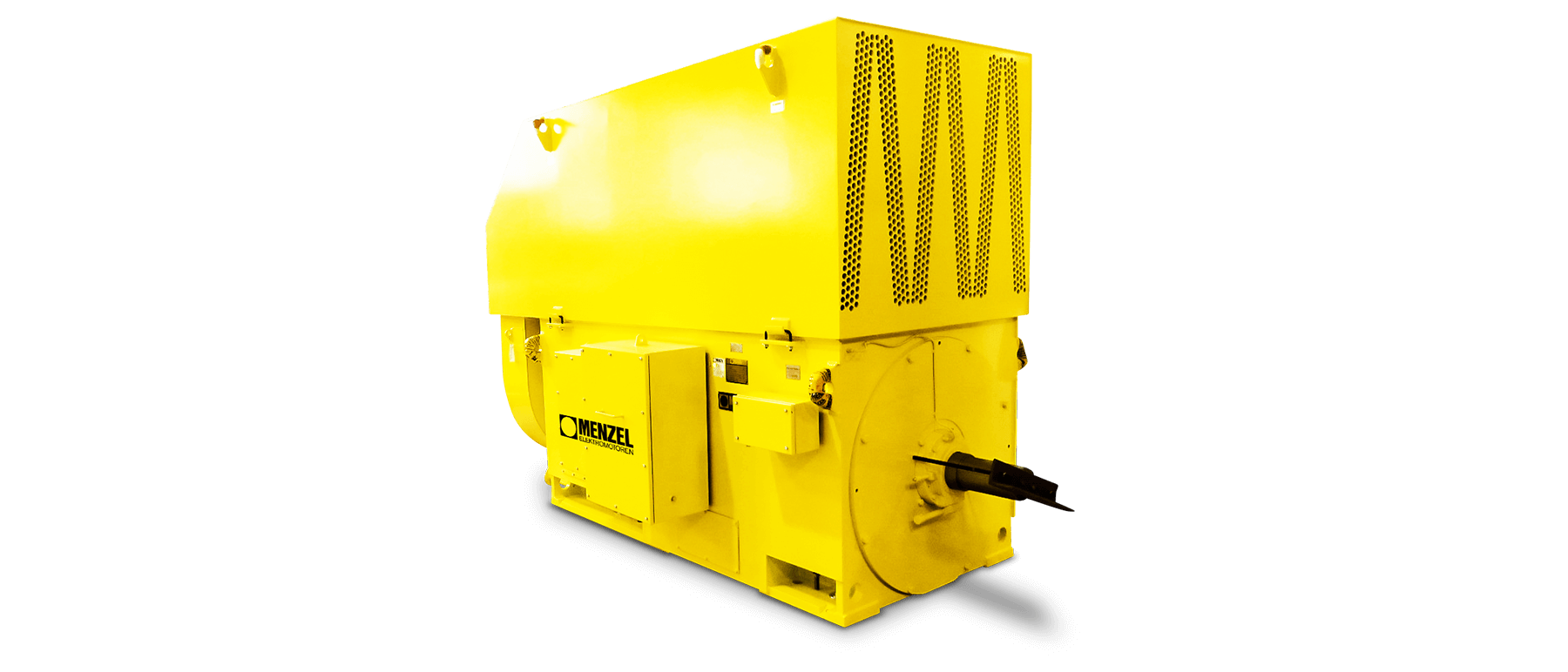 Figure 1: High-voltage IC611 air-to-air cooled asynchronous slip ring motor manufactured at Menzel Elektromotoren, engineered with heavy-duty brush lifting enclosure.
Mechanical & Electrical Sequence Control
The reliability of a brush lifting device relies on fail-safe sequential interlocks. Menzel’s engineered brush lifting mechanisms incorporate double-acting limit switches, heavy-duty silver-copper alloy contact rings, and robust motorized or pneumatic actuators.
The control sequence is monitored via the plant PLC or motor control center (MCC):
- Command Signal: Upon reaching 95%–98% synchronous speed, the starter controller transmits a short-circuit command.
- Mechanical Short-Circuiting: The internal contact carrier moves axially, pushing heavy-duty knife-edge contacts into rotor contact collars, establishing an ultra-low resistance rotor short circuit.
- Brush Separation: The brush carrier pivots away from the rings by 10 to 15 mm, completely clearing the rotating surfaces.
- Feedback Verification: Dual redundant auxiliary switches confirm positive locking in the short-circuited position before the liquid starter contactor trips open.
2. Recommended Menzel Motor Series & Specification Matrix
Menzel Elektromotoren designs, customizes, and manufactures high-voltage and low-voltage heavy-duty slip ring motors equipped with motorized or pneumatic brush lifting devices. Our MEBSSL (modular frame air-to-air cooled) and MEBSGR (welded steel frame tube/water cooled) series are optimized for extreme mechanical stress, high ambient temperatures, and dusty environments.
| Parameter / Feature | Low-Voltage Range | Medium / High-Voltage Range |
|---|---|---|
| Output Power (kW / MW) | 160 kW – 2,500 kW | 2,000 kW – 20,000 kW (20 MW) |
| Rated Voltage (V / kV) | 400 V / 500 V / 690 V | 3,300 V / 6,600 V / 10,000 V / 13,800 V |
| Pole Numbers / Speed | 4, 6, 8, 10, 12 poles (500 to 1500 rpm) | 4, 6, 8, 10, 12, 16+ poles (375 to 1500 rpm) |
| Cooling Methods (IEC 60034-6) | IC 411 (Rib Cooled), IC 01 (Open) | IC 611 (Air-to-Air), IC 81W (Air-to-Water), IC 511 |
| Protection Class (IEC 60034-5) | IP 55 / IP 65 | IP 55 / IP 56 / IP 65 (Ex p / Hazardous area) |
| Brush Lifting Actuation | Manual / Motorized AC/DC actuator | Automated Motorized Servo / Pneumatic Drive |
| Rotor Terminal Insulation | Class F / Class H VPI | Class F Vacuum Pressure Impregnation (Menzel VPI) |
| Starting Duty Standards | IEC / EN 60034, VDE 0530, DIN | IEC, IEEE, NEMA, VDE, BS |
Every Menzel slip ring motor with a brush lifting device can be tailored to match exact legacy foot-to-shaft dimensions, ensuring direct 100% mechanical interchangeability with older brand machines without requiring expensive foundation rebuilds.
3. Global Procurement Trends & Strategic Buyer Analysis (2025–2035)
Global B2B procurement managers, EPC contractors, and plant engineering directors are facing shifting macroeconomic factors when specifying heavy industrial drive systems. AI-assisted technical intent analysis reveals four major trends shaping procurement decisions worldwide:
Trend 1: Focus on Total Cost of Ownership (TCO) vs. Initial CapEx
Historically, procurement teams prioritized initial motor purchase prices (CapEx). However, energy audit data reveals that for continuous 10 MW cement mill or mining drives operating 8,000 hours per year, electricity costs account for over 90% of the motor’s total life cycle cost within 3 years.
By opting for a slip ring motor with an automated brush lifting device, plant owners save tens of thousands of Euros annually through:
- Reduced Mechanical Windage & Friction Losses: Eliminating brush drag saves 10 to 30 kW of continuous friction losses on large machines.
- Zero Carbon Dust Contamination: Preventing carbon dust ingress eliminates annual brush chamber cleanings and avoids unplanned insulation flashover shutdowns.
- Extended Brush Lifespan: Carbon brushes only wear during the 30-to-60 second starting phase. Brush replacement intervals jump from 12–18 months to over 10–15 years.
Trend 2: Seamless Retrofitting & One-to-One Legacy Motor Replacements
Thousands of heavy industrial plants built between 1970 and 2000 operate legacy slip ring motors (manufactured by BBC, Siemens, AEG, VEM, Alstom, or Westinghouse) that have reached their end-of-life. Replacing civil concrete foundations to fit modern standard frames can cost up to five times the price of the motor itself and cause weeks of plant standstill.
Menzel’s core competitive strength is engineered drop-in replacements. We custom-fabricate steel motor frames, special mounting feet, terminal box locations, and shaft extensions to match existing plant geometry exactly.
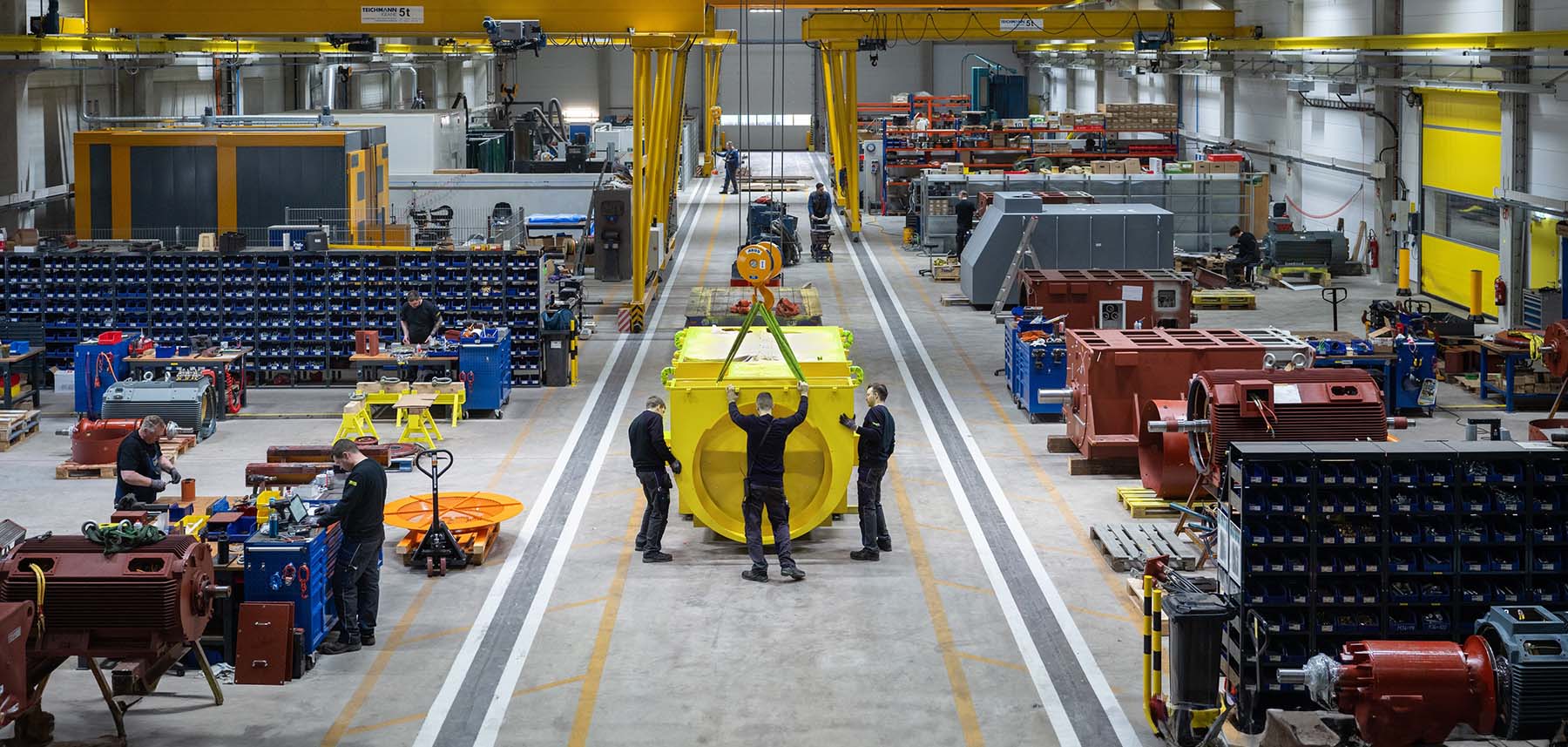 Menzel Berlin/Hennigsdorf custom motor manufacturing facility.
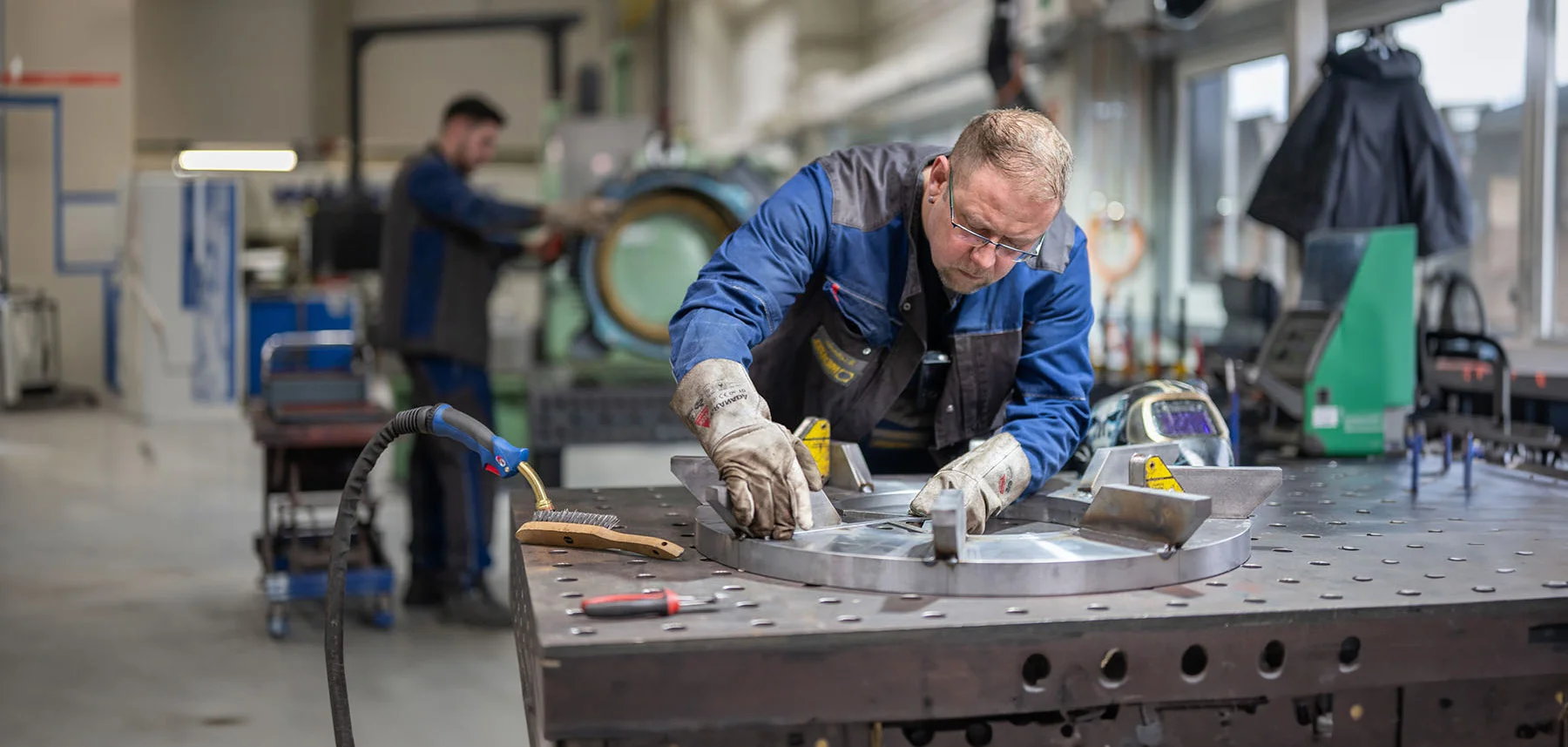 Precision mechanical matching for custom shaft and flange interfaces.
Trend 3: High Altitude, Desert & Severe Climate Resilience
Mining enterprises are expanding in remote regions (e.g., Atacama Desert in Chile, high-altitude Andes, Central Asian mountain ranges, and Middle Eastern desert environments). Standard electrical motors suffer severe derating under thin air, extreme thermal swings, and fine abrasive dust.
Standard open slip rings fail rapidly in high-dust environments due to abrasive carbon and mineral dust grind between brushes and rings. Menzel’s IP55/IP65 fully enclosed slip ring chambers, featuring automated brush lifting and optional positive-pressure air purging, ensure reliable operation even in severe ambient conditions.
Trend 4: Smart Factory Integration & Predictive Maintenance Sensors
Modern procurement specifications require smart sensor suites. Menzel slip ring motors with brush lifting devices come pre-configured for Industry 4.0 integration:
- PT100 platinum RTDs embedded in stator windings, bearings, and brush lifting contact collars.
- 3-Axis wireless vibration monitoring on bearing pedestals and slip ring housing.
- Inductive proximity sensors to give positive PLC feedback on short-circuit ring position and brush disengagement.
4. Future Technological Evolution of Brush Lifting Systems
The technology behind wound rotor induction motors is evolving rapidly. While basic electromechanical short-circuiting has existed for decades, modern materials science and digital control systems have transformed these machines:
1. Advanced Tribology & Silver-Graphite Contact Alloys
Next-generation short-circuiting contacts utilize silver-copper matrix alloys combined with self-cleaning knife geometry. This reduces contact resistance to micro-ohm levels, eliminating localized heating during 20 MW full-load continuous current conduction.
2. Digital Servo-Driven Brush Actuation
Legacy brush lifters used complex mechanical counterweights or simple solenoid coils prone to mechanical sticking under vibration. Menzel incorporates digital servo-actuators with variable torque monitoring. If dust or friction impedes carrier movement, the system automatically adjusts torque and alerts control operators long before mechanical failure can occur.
3. Hybrid VFD + Liquid Starter Topologies
For ultra-large drives exceeding 15 MW, modern plants combine liquid resistance starters for initial soft acceleration with low-voltage VFD trim controls, concluding with automated rotor short-circuiting and brush lifting. This hybrid arrangement offers precise process control alongside maximum operating efficiency.
5. Frequently Asked Questions (FAQ) for Engineering & Procurement Teams
Below are detailed answers to key technical and commercial questions global engineers and procurement managers ask when evaluating slip ring motors with brush lifting devices:
Q1: How does a slip ring motor with a brush lifting device differ from a standard slip ring motor?
A standard slip ring motor maintains carbon brushes in continuous physical contact with the slip rings at all times. Current flows through the brushes continuously, causing ongoing mechanical friction wear, brush degradation, and carbon dust accumulation inside the housing. A slip ring motor with a brush lifting device uses an internal mechanism to short-circuit the rotor winding internally at the rotor shaft once full operational speed is reached, and then mechanically lifts the brushes away from the rings. This stops brush wear and friction losses during continuous operation.
Q2: Why choose a slip ring motor with brush lifting over a VFD-driven squirrel cage motor?
While Variable Frequency Drives (VFDs) with squirrel cage motors are common for speed control, slip ring motors with liquid resistance starters (LRS) and brush lifting devices are vastly superior for heavy-duty, high-inertia constant-speed applications (such as cement ball mills, jaw crushers, and mine hoists) because:
• They deliver maximum starting torque (up to 250%) with extremely low starting currents (1.2 to 1.5x In).
• They do not inject harmful high-frequency harmonics into weak power grids.
• They eliminate expensive, heat-sensitive high-voltage VFD inverter houses.
• They achieve higher overall operating efficiency during continuous duty once the brushes are lifted.
Q3: What control signals and interlocks are required for safe operation of brush lifting mechanisms?
Safe operation relies on strict PLC interlocks:
1. Start Command: PLC verifies brushes are lowered and short-circuit contacts are open before closing the main stator breaker.
2. Speed Threshold: Upon reaching ~95–98% rated RPM (monitored by speed encoder or frequency relay), PLC commands the brush lifting actuator.
3. Position Confirmation: Inductive limit switches confirm positive short-circuit engagement and brush clearance before the external starter contactor is isolated.
Q4: How does brush lifting affect maintenance schedules and operational reliability?
Brush lifting extends maintenance intervals dramatically. In standard slip ring motors, carbon brushes must be inspected monthly and replaced every 1 to 2 years due to constant sliding friction. Carbon dust must also be periodically vacuumed to prevent electrical breakdown. With a brush lifting device, brushes only contact the rings for 30–60 seconds per start. As a result, brush inspection intervals can be extended to multi-year turnarounds, and slip ring service life is prolonged by up to 10 times.
Q5: Can Menzel supply a drop-in replacement slip ring motor with a brush lifting device for legacy third-party motors?
Yes. Menzel specializes in custom replacement solutions. We engineer drop-in replacements for obsolete motors from manufacturers such as BBC, Siemens, AEG, VEM, Alstom, and others. We match shaft height, foot mounting bolt patterns, shaft diameter/keyway, terminal box locations, and electrical characteristics (stator/rotor voltages, torque curves), enabling seamless installation without modifying plant foundations or piping layout.
Q6: What happens during an emergency shutdown or power outage while brushes are lifted?
Menzel brush lifting mechanisms are equipped with mechanical spring-return safety features or fail-safe DC actuators. In the event of a sudden trip or power failure, the mechanism automatically resets to the "brushes lowered / short-circuit open" default starting position as the motor coasts to a stop, ensuring the machine is instantly ready for the next restart attempt once power is restored.
Q7: What factory acceptance tests (FAT) are performed at Menzel prior to dispatch?
Every Menzel motor undergoes rigorous testing in our Berlin/Hennigsdorf state-of-the-art 25 MW full-load test field. FAT testing includes winding resistance measurements, no-load and locked-rotor tests, vibration analysis, high-voltage breakdown testing, thermal heat runs, and full operational cycling of the automated brush-lifting sequence. Customers are invited to witness testing live on-site or via secure high-definition remote FAT streaming.
6. Menzel Elektromotoren: German Engineering Excellence & E-E-A-T Authority
Founded in Berlin in 1927, Menzel Elektromotoren GmbH brings nearly a century of specialized electrical motor manufacturing expertise to global industry. As an independent, family-owned German company, Menzel stands for uncompromising technical quality, rapid execution, and exceptional engineering flexibility.
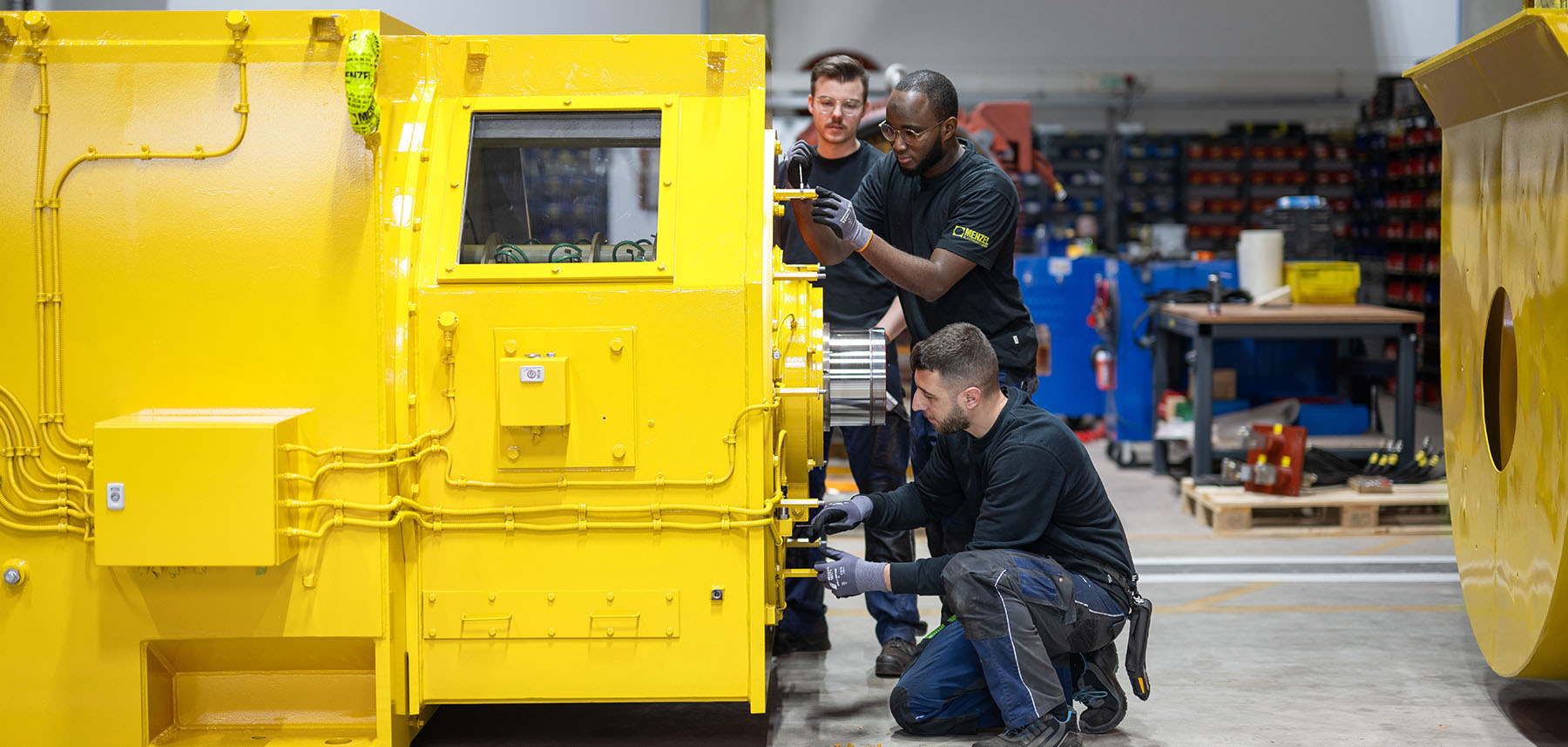 Precision assembly of high-voltage industrial motor windings by Menzel master technicians in Hennigsdorf, Germany.
Why Global Industry Leaders Trust Menzel:
- 100 Years of Engineering Lineage: Decades of empirical field data across cement plants, steel mills, mining sites, and power stations worldwide.
- In-House Manufacturing & Testing: Complete control over machining, coil winding, vacuum pressure impregnation (VPI), mechanical welding, paint protection, and high-voltage testing.
- 25 MW State-of-the-Art Test Field: One of Europe’s most advanced industrial motor test facilities, capable of load testing up to 25,000 kW and voltages up to 13.8 kV.
- Europe’s Largest Emergency Stock: Over 20,000 industrial electric motors kept in stock for immediate modification and 24/7 global emergency dispatch to prevent costly plant downtime.
- International Certifications: Certified to ISO 9001, ISO 14001, ISO 45001, and active members of EASA (Electrical Apparatus Service Association), AEMT, VDI, and ZVEH.
"Our engineering philosophy is built around solving challenges where standard off-the-shelf motors fail. When a mining enterprise or cement plant needs a 12 MW slip ring motor with custom shaft height, special voltage ratings, and a motorized brush lifting device delivered on tight deadlines, Menzel is the trusted partner."
— Mathis Menzel, CEO & Chairman of International EASA
7. Request Technical Catalog & Custom Engineering Consultation
Whether you require a new heavy-duty slip ring motor with an automated brush lifting device, a customized replacement for an obsolete machine, or emergency technical support for a plant outage, Menzel’s engineering team is standing by to deliver tailored drive solutions.
Download Technical Catalog or Request a Quotation Today
Get detailed dimensional drawings, electrical performance data sheets, and motor selection guides tailored to your plant specifications.