Technical Specification & Engineering Whitepaper: VFD Duty Industrial Motors in Kazakhstan
In modern industrial engineering, matching high-power electric motors with Variable Frequency Drives (VFDs) or Variable Speed Drives (VSDs) is vital for operational efficiency, process precision, and energy conservation. Across Kazakhstan’s rapidly modernizing industrial landscapes—spanning the mineral processing complexes of Karaganda, the massive oilfields of Tengiz and Kashagan, the metallurgical foundries of Pavlodar and Ust-Kamenogorsk (Oskemen), and the power generation utilities in Ekibastuz—operating an standard direct-on-line (DOL) motor under VFD control frequently leads to premature insulation breakdown, destructive bearing fluting, thermal overload, and unpredicted plant downtime.
This technical whitepaper provides industrial plant managers, procurement directors, and electrical engineers with an authoritative analysis of engineered VFD Duty Industrial Motors. We examine the electro-magnetic, thermal, and mechanical stresses introduced by modern Pulse Width Modulation (PWM) inverters, and how specialized German manufacturing methodologies—incorporating advanced inverter-grade insulation systems, shaft grounding mechanisms, force-ventilation cooling options (IC416), and climate-adapted housing—ensure decades of uninterrupted operation across Central Asia.
Core Engineering Insight: Operating standard induction motors under modern high-frequency PWM VFDs subjects stator windings to transient voltage spikes (dV/dt) exceeding 1,600 to 2,200 Volts per microsecond. Without specialized corona-resistant inverter-grade magnet wire and Vacuum Pressure Impregnation (VPI), partial discharge will erode standard phase insulation within months of continuous operation.
The Physics of VFD Electrical & Thermal Stresses: Structural Countermeasures
When an electric motor is connected to a variable frequency drive, the output waveform is not a clean, sinusoidal AC curve; instead, it consists of a series of steep voltage pulses generated by High-Speed Insulated Gate Bipolar Transistors (IGBTs). These high switching frequencies (typically 2 kHz to 16 kHz) create three distinct breakdown mechanisms within standard electric motors:
1. Reflected Waves & dV/dt Spikes
Impedance mismatches between long motor feed cables (common in large Kazakh industrial sites) and the motor terminals cause voltage waves to reflect back. This doubles peak voltages up to 2.5x nominal rating, triggering partial discharge and dielectric breakdown in non-VFD rated wire.
2. EDM & Bearing Currents
High-frequency common-mode voltage induces electrical charges along the motor shaft. When capacitive threshold voltage breaks down the lubricating grease film, Micro-spark Electrical Discharge Machining (EDM) causes destructive bearing fluting, pitting, and bearing failure.
3. Low-Speed Thermal Derating
Standard self-ventilated shaft fans (IC411) lose cooling capacity proportional to the cube of speed reduction ($P_{cooling} \propto n^3$). Operating a shaft-driven motor at 20Hz results in severe thermal accumulation, leading to thermal class degradation if unassisted.
Engineered Countermeasures Implemented in Heavy-Duty Motors
To eliminate these breakdown pathways, premium industrial VFD duty motors manufactured for high-reliability environments integrate specific hardware enhancements engineered according to IEC 60034-18-41/42 and NEMA MG1 Part 31 standards:
- Class H Inverter-Duty Winding System: Utilizing pulse-enduring enamel magnet wire with dual-layer mica tape protection, vacuum-impregnated with 100% solid resin (VPI) to resist partial discharge up to 3,000V peak pulses.
- Bearing Protection Isolation & Shaft Grounding: Integration of insulated Non-Drive End (NDE) bearings (e.g., ceramic coating or hybrid ceramic ball bearings) combined with maintenance-free micro-fiber Shaft Grounding Rings (SGR) on the Drive End (DE) to bypass common-mode currents safely to ground.
- Forced Ventilation Cooling (IC416): Installation of an independently powered, constant-speed auxiliary blower unit that maintains maximum airflow over frame cooling fins regardless of the primary motor's operational RPM.
- Reinforced Mechanical Vibration Tolerances: Heavy-gauge cast iron or fabricated steel frame construction balancing rotor dynamics to ISO 1940 Grade G1.0 to absorb mechanical harmonics caused by VFD switching frequencies.
Comparative Analysis: Standard DOL Induction Motors vs. Heavy VFD Duty Motors
| Technical Dimension |
Standard General Purpose Motor |
Menzel Heavy VFD Duty Motor |
Kazakhstan Site Impact |
| Stator Wire Insulation |
Standard Class F Enameled Wire (1,000V Peak) |
Corona-Resistant Class H VPI Mica-Reinforced Wire (3,000V Peak) |
Prevents insulation failure from long cabling voltage reflections. |
| Bearing Shaft Protection |
Uninsulated Standard Steel Bearings |
Insulated NDE Bearing + AEGIS/SGR Grounding Brush Ring |
Eliminates bearing fluting; extends grease life by 300%. |
| Cooling Configuration |
IC411 (Shaft-Mounted Fan, airflow drops with RPM) |
IC416 Force Fan Blower or IC611 / IC81W Air-Water Exchanger |
Enables continuous 100% full-torque operation at 5Hz - 50Hz. |
| Thermal Range (Ambient) |
-15°C to +40°C Standard Rating |
Extreme Climatic -45°C to +50°C Heavy Cold/Heat Design |
Guarantees winter cold-start reliability in Karaganda & Astana. |
| Vibration & Harmonics |
ISO 1940 Grade G2.5 Standard Balancing |
ISO 1940 Grade G1.0 Precision Dynamically Balanced Rotor |
Mitigates high-frequency magnetic resonance noise & fatigue. |
Localized Heavy Industrial Application Scenarios in Kazakhstan
Kazakhstan possesses vast natural resources and heavy production infrastructure that subject drive systems to harsh operating conditions. Choosing the correct VFD duty motor requires matching specific field duty cycles with specialized motor topologies:
1. Mining, Beneficiation & Metallurgy (Karaganda, Kostanay, Oskemen)
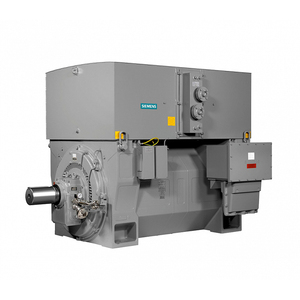
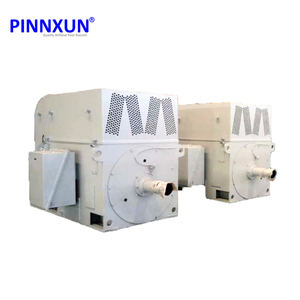
In Kazakhstan's mineral processing plants, massive SAG mills, ball mills, jaw crushers, and underground mine ventilation shafts require high starting torque and continuous speed adjustments to process variable ore densities. VFD-driven slip ring asynchronous motors (such as the YRKK high-voltage series) and heavy-duty squirrel cage motors provide soft-starting capability without drawing excessive inrush currents from regional power grids, protecting supply transformers while enabling 24/7 variable speed slurry pumping.
2. Oil & Gas Extraction, Refining & Pipeline Transport (Atyrau, Tengiz, Kashagan)
Upstream petroleum operations along the Caspian basin demand explosion-proof VFD duty motors compliant with hazardous location standards (Ex db, Ex eb, Ex pz). These motors drive high-pressure crude transfer pumps, gas reinjection compressors, and refinery extruders. The integration of pressurized enclosure systems (IC37 / IC81W cooling with Ex p protection) ensures that variable speed operation does not spark flammable hydro-carbon atmospheres while withstanding corrosive hydrogen sulfide ($H_2S$) environment exposure.
3. Thermal Power Stations & District Utilities (Ekibastuz, Astana, Almaty)
Power plants operating multi-megawatt boiler feed pumps, forced draft fans, and induced draft blowers are increasingly upgrading legacy Soviet-era direct-drive motors to high-voltage medium-frequency variable speed drive configurations. High-voltage 6kV and 10kV VFD motors drastically reduce internal plant power consumption, allowing precise steam pressure regulation while matching seasonal heating load swings in northern and central Kazakhstan.
Operating under Kazakhstan’s Extreme Climate & High Altitude Conditions
The continental climate of Kazakhstan presents severe thermal and geographical challenges that are frequently overlooked by standard motor suppliers:
Thermal Delta (-45°C to +45°C)
Extremely low winter temperatures require specialized sub-zero ductile cast iron frames, low-temperature synthetic greases, and stainless steel anti-condensation heating elements (220V space heaters) to prevent stator moisture freezing during plant standstills.
High-Altitude Air Thinning
Mining installations situated in the Altai mountains or East Kazakhstan (>1,000 meters above sea level) experience reduced ambient air density. Cooling dissipation capacity drops, necessitating thermal derating factors or expanded heat exchanger surface areas.
Abrasive Airborne Dust
Steppe dust and open-cast mine particulate ingress demand IP65 or IP66 sealing ingress protection, utilizing dual-lip Viton oil seals, labyrinth shaft seals, and non-hydroscopic terminal box potting compounds.
Retrofitting Kazakh Legacy Soviet (GOST) Motor Installations
A widespread challenge faced by engineers in Kazakhstan is replacing legacy Soviet-standard motor frames (such as AIR, 5AM, or 4VR series) with modern energy-efficient IEC or DIN units. Differences in shaft center height ($H$), bolt hole distance ($AB$), shaft extension length ($E$), and keyway dimensions often present installation challenges during plant turnarounds.
Through specialized custom mechanical engineering, replacement VFD motors can be manufactured with drop-in foot adapter plates, custom-machined shaft extensions, and matching terminal box positions. This guarantees zero structural modification to existing plant foundations, coupling hubs, or bedplates during motor upgrades.
Kazakhstan Industrial B2B Procurement & Technical FAQ
Q Can a standard 380V or 6kV motor be converted to VFD operation by adding a fan?
Adding a forced-cooling fan (IC416) solves low-speed thermal issues, but does not protect phase insulation against high-voltage pulse reflections or prevent bearing fluting. True VFD duty motors require Class H VPI winding insulation and insulated bearings alongside forced ventilation.
Q What cable length from the inverter to the motor requires dV/dt filters?
If unshielded motor feed cables exceed 30 meters (or shielded cables exceed 50 meters), voltage reflections will peak at the terminal box. We recommend installing output reactors or dV/dt filters at the drive end, in addition to using inverter-duty motors rated for 1,600V - 2,200V peak surges.
Q Do your motors carry EAC / GOST-K and EAEU regulatory approvals?
Yes. All industrial electric motors destined for Kazakhstan comply fully with Eurasian Economic Union (EAEU) technical regulations, including TR CU 004/2011 (Low Voltage Safety), TR CU 020/2011 (EMC Compatibility), and TR CU 012/2011 (Explosion Safety for Hazardous Areas).
Q How do you prevent space freezing during cold winter shutdowns (-40°C)?
Motors are built with embedded 220V/230V anti-condensation space heaters inside the stator frame. These heaters automatically energize when the motor is stopped, keeping internal winding temperatures above the dew point and preventing ice formation.
Q What are the lead times for custom-engineered medium voltage VFD motors to Kazakhstan?
With an extensive stock of pre-manufactured standard frames and an in-house modification shop, emergency replacements can be configured, tested, and dispatched within days. Full custom medium-voltage motors (up to 25 MW) follow expedited engineering cycles with direct logistics to Almaty, Astana, or Karaganda.
Q Can we inspect and witness full-load testing before shipment?
Yes. Customers and third-party inspection agencies (such as SGS or TÜV) are invited to witness load testing, thermal rise runs, and insulation resistance checks live at our state-of-the-art motor test field facility.
German Engineering Leadership in Industrial Drives Since 1927
For nearly a century, Menzel Elektromotoren has stood as a global leader in manufacturing and modifying heavy-duty industrial electric motors. Operating from state-of-the-art facilities with specialized winding shops, high-capacity cranes, and comprehensive load test fields, we deliver drive solutions engineered for maximum operational longevity.
- ✓ Production range up to 25,000 kW (25 MW)
- ✓ Voltage ratings from 220V up to 13.8kV
- ✓ ISO 9001, ISO 14001 & EAC Certified Quality
- ✓ Rapid emergency stock dispatch program
Require Urgent Technical Sourcing or Custom Design?
Consult with our senior drive engineers to specify the exact VFD duty motor for your plant in Kazakhstan.
Inquire Now