
Low Speed High Torque (LSHT) Motors: Technical Architecture & U.S. Sourcing Engineering Whitepaper
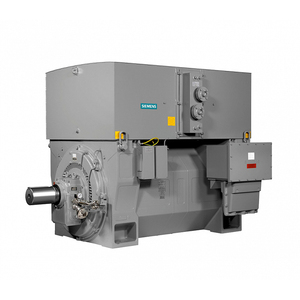
In modern industrial process engineering across North America, the operational mandate for mechanical drive systems has shifted decisively toward higher power density, reduced mechanical complexity, and maximum energy resilience. Title target procurement queries such as Low Speed High Torque Motors Factory & Supplier in the United States market represent a critical search intent: plant engineers, OEM system integrators, and procurement directors are actively seeking direct-drive electro-mechanical solutions capable of bypassing traditional multi-stage mechanical gearboxes while generating immense starting and continuous locked-rotor torque.
This whitepaper provides an exhaustive technical analysis of Low Speed High Torque (LSHT) electric motor architectures, exploring electromagnetic pole configurations, permanent magnet direct-drive dynamics, medium-to-high voltage AC induction topologies, thermal management under low-frequency operation, and localized compliance with United States energy mandates (DOE 10 CFR Part 431, NEMA Premium, IEEE 841, and NFPA 70 National Electrical Code).
Key Takeaways for U.S. Industrial Procurement Directors
- Gearless Direct Drive ROI: Eliminating intermediate gearboxes reduces drivetrain power losses by 3% to 8%, mitigates oil-contamination risks, and slashes total cost of ownership (TCO) by over 35% over a 10-year operating cycle.
- Electromagnetic Pole-Pair Physics: Torque is directly proportional to pole count ($T \propto P$). Operating at 8-pole, 12-pole, or fractional-slot PM configurations delivers massive continuous Newton-meters (Nm) at sub-500 RPM output speeds.
- Legacy U.S. Frame Drop-In Replacement: Tailor-made mechanical flanges, shaft extensions, and foot print dimensions engineered to match historical GE, Westinghouse, Allis-Chalmers, and Reliance Electric installations without civil foundation reconstruction.
Electromagnetic Fundamentals: Direct-Drive vs. Geared Mechanical Drives
Traditional industrial drive trains achieve low rotational speeds and elevated output torque by coupling high-speed electric motors (typically 1800 RPM or 3600 RPM 2-pole/4-pole designs) to helical, planetary, or worm gearboxes. While mechanically functional, this legacy paradigm suffers from structural vulnerability under heavy shock loads, thermal dissipation limits within gear housings, lubrication leakage, and cumulative backlash. Conversely, direct-drive Low Speed High Torque (LSHT) motors produce high mechanical torque directly at the output shaft at native operational speeds (ranging from 1 RPM to 600 RPM).
The fundamental physical law governing electric motor torque production is derived from the magnetic force between stator and rotor fields:
To maximize torque output without increasing frame envelope dimensions exponentially, motor designers employ two primary strategies: increasing magnetic flux density through high-grade rare-earth Permanent Magnets (Neodymium Iron Boron, NdFeB) or increasing the pole-pair count within high-phase AC induction or wound-rotor slip ring architectures. By operating with high pole counts (e.g., 10-pole to 48-pole stators), the fundamental electrical frequency required to drive the motor at low speed matches standard or VFD-synthesized power lines while keeping magnetic saturation within optimal limits.
Performance Matrix: Direct-Drive LSHT Motors vs. Conventional Geared Systems
| Engineering Attribute | Direct-Drive LSHT Motors (PM / High-Pole AC) | Standard Motor + Multi-Stage Gearbox |
|---|---|---|
| System Mechanical Efficiency | 94.5% – 97.8% (Consistently high across speed range) | 82.0% – 89.5% (Gear friction & windage losses) |
| Maintenance Requirements | Zero oil changes; bearing grease monitoring only | Frequent oil sampling, seal replacement, tooth wear audits |
| Torsional Backlash & Rigidity | Zero backlash; ultra-high dynamic positioning response | Significant mechanical backlash; hysteresis in reverse motion |
| Acoustic Noise Emission | Low (< 72 dBA at 1 meter) | High (> 85 dBA due to gear meshing vibration) |
| Overload & Shock Load Capacity | Up to 300% peak breakdown torque capability | Gear teeth susceptible to shear fatigue under shock loads |
| Footprint & Weight Density | Compact single-unit enclosure; low envelope weight | Bulky multi-component skid base required |
U.S. Industrial Market Trends & Regulatory Drivers
The demand for low-speed high-torque motors across the United States has accelerated dramatically, propelled by key economic, environmental, and technological catalysts:
1. Industrial Reshoring & Infrastructure Modernization
With the resurgence of domestic manufacturing in North America—accentuated by the U.S. Inflation Reduction Act (IRA) and the Infrastructure Investment and Jobs Act—heavy industrial sectors are upgrading aging brownfield facilities. Industries across the Midwest Steel Belt, the Gulf Coast Petrochemical Corridor, and Western Mining Basins are replacing outdated, maintenance-heavy motor-gearbox setups with high-efficiency direct-drive LSHT electric motors to achieve 24/7 continuous process uptime.
2. DOE Energy Efficiency Regulations & NEMA Premium Standards
The U.S. Department of Energy (DOE) enforcement under 10 CFR Part 431 mandates stringent efficiency targets for electric motors operating in industrial applications. Low speed motors, historically exempt or assigned lower threshold targets, are now subject to rigorous NEMA Premium and IE3/IE4 international efficiency criteria. Modern LSHT motors utilize low-loss silicon steel laminations (M19 and high-permeability grades), optimized slot fill factors, and forced air or liquid cooling circuits (IC416, IC611, IC81W) to comply with U.S. federal energy conservation standards.
3. VFD Harmonization & IEEE 519 Grid Compliance
The wide adoption of Variable Frequency Drives (VFDs) with Pulse-Width Modulation (PWM) inverter topologies allows precise speed and torque control down to fractional Hertz (0.5 Hz full torque delivery). High-end U.S. industrial plants require motors designed with inverter-duty insulation systems compliant with NEMA MG-1 Part 31 (shielded against voltage spikes up to 3.1kV/microsecond) and integrated shaft grounding rings to prevent bearing fluting caused by common-mode circulating currents.
Localized U.S. Industrial Application Scenarios
Low Speed High Torque motors designed and supplied for the U.S. market are tailored to withstand diverse geographic and environmental stress profiles across the contiguous 48 states and beyond:
Mining & Aggregates (Nevada, Arizona, Powder River Basin)
Heavy jaw crushers, SAG ball mills, and overland conveyor drives require immense breakaway torque under full load conditions. LSHT wound-rotor slip ring motors and permanent magnet direct-drives deliver continuous locked-rotor torque exceeding 250% nominal rating, engineered with IP66 dust-tight sealing against abrasive quartz and copper dust.
Steel Rolling & Metal Fabrication (Ohio, Indiana, Pennsylvania)
Reversing mill drives, continuous casters, and wire rod mills subject motors to rapid directional changes, extreme thermal cycling, and high peak transient torques. Custom low-speed DC motors and heavy-cage AC induction motors absorb impact shocks without structural fatigue or winding displacement.
Oil & Gas, Petrochemical (Texas Gulf Coast, Louisiana)
Reciprocating gas compressors, crude oil pipeline booster pumps, and refinery agitators demand explosion-proof protection. Motors manufactured with Class I, Division 1/2 or Class I, Zone 1 (Ex p pressurized / Ex ec non-sparking) enclosures strictly adhere to IEEE 841 standards for harsh chemical environments.
Municipal Water & Wastewater Treatment Facilities
Large-diameter Archimedes screw pumps, raw sewage lift pumps, and aeration basin mixers operate continuously at low rotational speeds. Low-speed permanent magnet motors eliminate gear oil leakage risks into municipal water supplies while cutting energy consumption by up to 22%.
Enterprise Advantages: German Engineering Precision Meets U.S. Sourcing Demands
With an operational legacy dating back to 1927, our manufacturing engineering foundation combines nearly a century of German motor building craftsmanship with rapid global dispatch capabilities. When American industrial enterprises face critical equipment failure or custom greenfield specifications, our engineering factory delivers unmatched technical depth:
1. Unrivaled Power & Voltage Spectrum (Up to 25 MW & 13.8 kV)
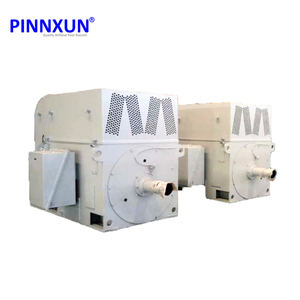
While standard suppliers restrict their low-speed offerings to low-voltage small-frame units, our factory designs and builds large custom industrial electric motors rated up to 25,000 kW (33,500 HP) and terminal voltages up to 13.8 kV. Whether your plant operates on standard 460V, 575V Canadian grid, 2300V, 4160V NEMA medium voltage, or 13.8kV utility feeds, our windings are custom-calculated for optimal thermal stress distribution.
2. Tailor-Made "Drop-In" Mechanical Retrofits
Replacing an obsolete U.S.-manufactured motor (such as legacy Westinghouse, General Electric, or Allis-Chalmers frames) often presents severe civil engineering hurdles due to non-standard foot hole centers, shaft heights, and flange bolt circles. Our design team specializes in producing exact mechanical replicas with identical shaft extensions, terminal box positions, and mounting dimensions. This guarantees seamless "drop-in" physical installation without modifying existing concrete foundations or driven machinery couplings.
3. State-of-the-Art In-House Full Load Test Field
Quality reliability (E-E-A-T) is validated before equipment leaves the factory floor. Our facility houses one of Europe's most advanced motor test fields, capable of conducting load acceptance tests up to 25 MW under full electrical load, thermal rise monitoring, vibration analysis (ISO 10816 compliance), and partial discharge testing. U.S. clients can inspect test runs live via remote high-definition streaming or on-site in our client lounge.
4. Emergency Fast-Track Delivery & Europe's Largest Stock
Unplanned plant shutdowns cost American manufacturers tens of thousands of dollars per hour. We maintain an extensive emergency inventory of large industrial motors—squirrel cage, slip ring, and DC drives—ready for immediate modification and express air/sea freight dispatch to the United States within record lead times.