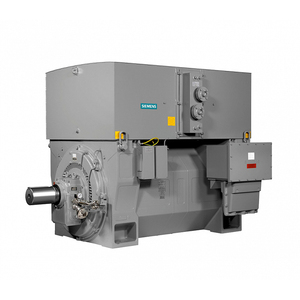
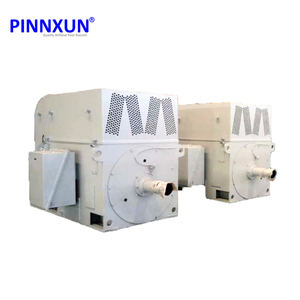
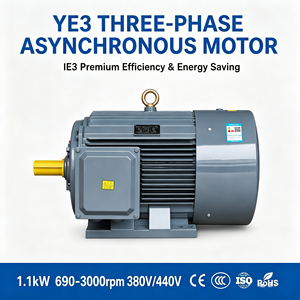
Crane duty motors are specialized electric drive units designed specifically to handle the rigorous operational profiles encountered in material handling equipment, harbour container gantries, overhead travelling (EOT) cranes, slipway winches, and heavy industrial hoists. Unlike continuous duty standard IEC induction motors operating on constant load (S1 duty cycle according to IEC 60034-1), crane duty electric motors are engineered to survive severe intermittent duty cycles (S3, S4, and S5), frequent acceleration and deceleration phases, extreme mechanical shocks, dynamic electrical braking, and high radial/axial shaft forces.
In Portugal's rapidly expanding industrial logistics and maritime shipping corridors, crane systems require motors capable of delivering exceptionally high pull-out torque ratios ($T_k/T_n \ge 2.8 - 3.5$) while operating under stringent duty factors (CDF / % ED). Understanding the precise electrical and mechanical parameters is crucial for Portuguese engineering directors and procurement officers when specifying replacement or new build crane drive packages.
The selection of a crane duty motor in Portugal requires an in-depth analysis of the operational duty cycle to prevent thermal breakdown of winding insulation and mechanical shaft shear:
To sustain the mechanical fatigue caused by instantaneous torque surges during load lifting, crane duty motors manufactured for Portugal feature cast iron frame housing (FC250 or ductile iron nodular frames), heavy-duty ribbed cooling fins (IC 411 / IC 416), vacuum pressure impregnated (VPI) Class H insulation systems utilizing corona-resistant enamels, and oversized roller bearings (e.g., SKF/FAG NU and 63 series with C3 internal clearance). Shaft ends are precision-machined with high-tensile chrome-moly alloy steel to prevent keyway deformation under reversing rotation.

Portugal’s strategic position as Southern Europe's primary Atlantic maritime gateway has created high demand for specialized crane motors across distinct economic sectors. Menzel Elektromotoren supplies engineered crane drive solutions customized to the unique micro-climates, grid voltages, and operating environments found across Portuguese industrial hubs.
Operating Environment: Ship-to-Shore (STS) container cranes, Rubber-Tyred Gantry (RTG) cranes, and Rail-Mounted Gantry (RMG) container handlers.
Specific Challenges: High saline ocean air, salt-fog corrosion, high humidity ($>85\%$), continuous salt spray, and variable ocean wind load reversals.
Engineered Solution: IP66 totally enclosed motors featuring ISO 12944 C5-M extreme marine anti-corrosion painting systems, internal anti-condensation space heaters (230V), stainless steel hardware, and double lip Viton oil seals with re-greasing nipples.
Operating Environment: Heavy shipbuilding goliath cranes, floating dock winches, and slipway pulling machinery handling 500+ ton vessel blocks.
Specific Challenges: Heavy overloads, slow speed ultra-high torque operations, prolonged stall torque conditions during hull alignment.
Engineered Solution: High-voltage YRKK series wound rotor slip-ring motors (3.3kV to 6.6kV) equipped with liquid resistance starters (LRS) to deliver 280% starting torque with controlled low line current pull ($I_{start} \le 1.5 I_n$).
Operating Environment: EOT scrap yard cranes, ladle handling cranes, and billet charging overhead cranes (e.g., Megasa Siderurgia Nacional).
Specific Challenges: Ambient temperatures exceeding $+60^\circ\text{C}$ near furnaces, conductive iron oxide dust, severe shock vibration.
Engineered Solution: Custom heat-shielded S4-60% ED crane duty motors with external forced cooling blowers (IC 416), PT100 thermistor protection on bearings/windings, and Class H silicone insulated windings rated for ambient temperatures up to $+80^\circ\text{C}$.
Operating Environment: Automated paper roll storage cranes, timber yard log grapple gantry systems (e.g., The Navigator Company, Altri).
Specific Challenges: High organic wood dust, continuous 24/7 high duty cycles, rapid acceleration travel paths.
Engineered Solution: Inverter-duty AC induction motors with insulated Non-Drive End (NDE) bearings to eliminate shaft currents ($I_{bearing}$) induced by modern PWM variable frequency drives (VFDs).
Portugal is currently undertaking a massive modernization of its logistics and industrial infrastructure, aligned with the European Green Deal and National Energy and Climate Plan (PNEC 2030). The drive towards complete port decarbonization and Industry 4.0 automation presents new technical demands on crane drive architectures:
Major container terminal operators in Portugal (such as Yilport Leixões and PSA Sines) are actively converting conventional diesel-powered RTGs into zero-emission Electric RTGs (E-RTGs) powered by conductor rails or motorized cable reels. Menzel supplies specialized crane motors configured with dual-shaft extensions, integrated heavy-duty disc brakes, and absolute encoders to support seamless automated container positioning.
Legacy direct-on-line (DOL) slip-ring crane motors in Portuguese mills are being systematically upgraded to variable frequency drive (VFD) fed squirrel-cage induction motors equipped with Active Front End (AFE) regenerative braking units. When lowering multi-ton loads, the crane motor operates in generator mode, feeding clean electrical power back into the factory grid or Portugal's national grid (REN). Our motors feature VFD-optimized reinforced slot insulation, low-capacitance winding geometry, and integrated forced cooling to handle low-speed high-torque operation without thermal derating.
Modern Portuguese heavy industrial plants demand zero unplanned downtime. Menzel crane motors exported to Portugal are equipped with pre-installed SPM vibration monitoring studs, dual PT100 duplex sensors for bearing and winding temperature tracking, and smart terminal boxes prepared for IoT edge-gateway telemetry.
The table below highlights the critical technical design differences between standard industrial motors and Menzel high-torque crane duty motors specified for Portuguese port and industrial applications:
| Technical Parameter | Standard Industrial Motor (IEC S1) | Menzel Crane Duty Motor (IEC S3/S4/S5) | Engineering Advantage in Portugal |
|---|---|---|---|
| Pull-Out Torque Ratio ($T_k/T_n$) | 1.8 – 2.2 x Rated Torque | 2.8 – 3.5 x Rated Torque | Prevents stall during sudden crane load snagging or gust loads. |
| Duty Rating Capability | Continuous S1 (Constant load) | S3 40% / S4 25% (150-600 starts/hr) | Handles intense start/stop reversing cycles without overheating. |
| Rotor Moment of Inertia ($J_{rot}$) | Standard high inertia | Optimized Low Inertia Design | Reduces acceleration energy consumption during rapid crane starts. |
| Thermal Insulation & Rise | Class F insulation / Class B rise | Class H insulation / Class B rise ($\Delta T \le 80\text{K}$) | Provides $+40^\circ\text{C}$ thermal margin for high ambient summer heat. |
| Corrosion Protection | Standard C2 / C3 Paint | ISO 12944 C5-M Heavy Marine Epoxy | Immunity against salt air at Port of Sines & Leixões. |
| Bearing Shaft Current Protection | None (Optional) | Insulated NDE Bearing + Grounding Brush | Eliminates VFD fluting damage and extends bearing lifecycle. |
When high-value crane operations in Portugal face critical drive requirements, technical directors rely on Menzel Elektromotoren GmbH. As an independent family-owned German manufacturer with nearly 100 years of continuous innovation, Menzel combines massive manufacturing capability with rapid custom flexibility.
Our state-of-the-art testing facility in Hennigsdorf/Berlin handles load testing for AC and DC motors up to 25 MW and 13.8 kV under real load profiles.
Europe’s largest emergency stock of high voltage, slip ring, squirrel cage, and industrial DC motors ready for immediate customization and dispatch.
In-house welding, mechanical machining, paint booth, and winding shops allow complete customization of shaft ends, flanges, terminal boxes, and coolers.