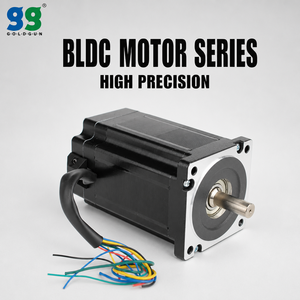
Industrial Automation DC Motors 48V 750W 110mm BLDC Brushless Permanent Magnet Motor 2KW
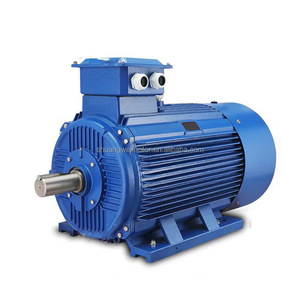
30kW - 280kW 380V/415V AC Three Phase Induction Totally Enclosed IE4 Efficiency Motor
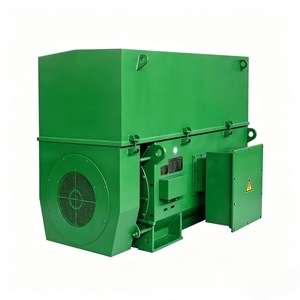
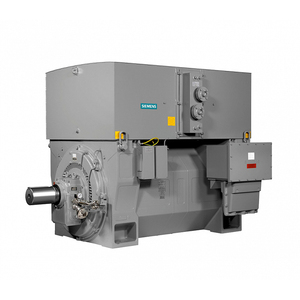
Three-Phase Medium Voltage Induction Motor 3kV 6kV 10kV AC for Power Plant Fan IE3/IE4 IP55
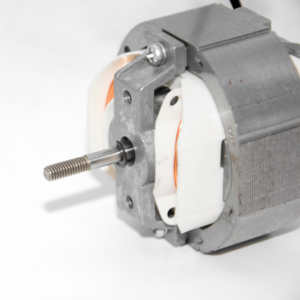
220V/240V Commercial Kitchen Hood Exhaust Fan Motor Replacement Kit 50Hz/60Hz Vent Motors
3300V 5500V 6600V Medium Voltage High Power Electric Motor AC Induction Motor up to 1000HP
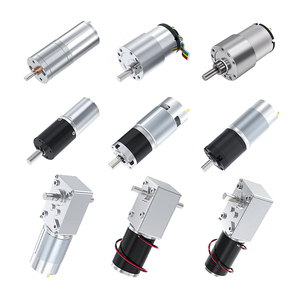
Custom Precision DC Gear Motors 3V-48V Electric Micro Planetary Brushless Gearbox Motors
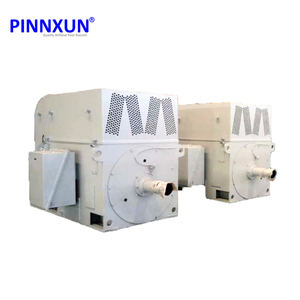
YKK / YRKK Series 3300V 4160V 6600V AC Heavy Duty Induction Motor 150kW - 9000kW
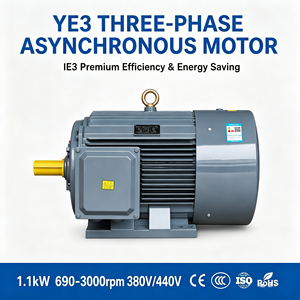
Premium Efficiency 3-Phase AC Induction Motor 18.5kW - 200kW 220V/380V/415V 2800RPM
IE4 / Super
Efficiency Class Standard
Up to 25 MW
Custom Motor Output
415V / 50Hz
Australia Grid Native
IP66 / IP67
Harsh Environment Rating
Executive Whitepaper: Strategic Procurement of IE4 Super-Premium Motors for Australian Industry
Australia’s industrial sector is facing a dual imperative: navigating some of the world's highest commercial electricity tariffs (ranging from AUD $0.24 to $0.45 per kWh in regional mining corridors) while complying with stringent government decarbonization targets under the Greenhouse and Energy Minimum Standards (GEMS) Act. As heavy industries—spanning the Pilbara mining basins, Murray-Darling agricultural irrigation schemes, and East Coast heavy processing plants—seek to optimize operational expenditure (OPEX), the migration from legacy IE2 and standard IE3 induction motors to IE4 Super-Premium Efficiency Motors has evolved from an environmental initiative into a financial necessity.
Information Gain Insight: Over a typical 10-to-15-year lifecycle of a continuously operating (8,000 hrs/yr) industrial electric motor in Australia, initial capital procurement costs account for less than 3% of total cost of ownership (TCO). Electrical energy consumption accounts for over 95%. Upgrading a single 315 kW motor from IE3 to China-manufactured IE4 premium standards yields up to AUD $18,400 in direct annual energy savings, fully amortizing the unit's purchase price within 7 to 12 months.
As leading Chinese original equipment manufacturers (OEMs) and exporters, our manufacturing facilities have engineered specialized IE4 motor platforms designed directly for the Australian market. By harmonizing state-of-the-art electromagnetic design, high-permeability cold-rolled silicon steel, and precision rotor slotting with strict compliance to AS/NZS 1359.5 and international standard IEC 60034-30-1, we deliver industrial electric drive solutions that withstand extreme Outback ambient temperatures while lowering plant-wide kVA demands.
Technical Engineering & Manufacturing Standards of China-Export IE4 Motors
Achieving IE4 super-premium efficiency requires eliminating internal electrical and mechanical losses that plague standard industrial motors. Chinese high-efficiency motor factories utilize advanced materials science and precision automated manufacturing to maximize power factor and operational thermal headroom.
Low-Loss Magnetic Stator Laminations
Constructed using ultra-thin (0.35mm to 0.20mm) high-permeability, low-loss cold-rolled silicon steel sheets (such as 20AV1300 grade). This design reduces stator core eddy current losses by up to 35% compared to standard IE2/IE3 laminations under 50Hz Australian mains frequencies.
Optimized Slot Fill & Copper Volume
Automated high-density slot winding techniques increase the copper slot-fill factor to over 78%. By expanding the conductor cross-sectional area and utilizing Class H insulated, 200°C moisture-resistant enamelled copper wire, stator I²R thermal resistance losses are minimized dramatically.
Precision Die-Cast Aluminum/Copper Rotors
Incorporating vacuum-assisted pressure-cast aluminum or pure copper rotor cage structures reduces rotor slip and parasitic stray load losses. Dynamic balancing to ISO 1940 Grade G1.0 ensures vibration-free operation under heavy industrial shocks.
Total Cost of Ownership (TCO) & Information Gain Data Visualization
To evaluate the practical economic return for Australian facility managers, the table below illustrates a comparative analysis between legacy IE2, standard IE3, and our custom China-manufactured IE4 motors operating continuously under typical Australian industrial parameters.
| Motor Efficiency Class |
Nominal Rating (kW) |
Full Load Efficiency (%) |
Annual kWh Consumed (8,000 hr) |
Annual Operating Cost (AUD)* |
10-Year TCO Savings vs IE2 |
| Standard IE2 |
110 kW |
94.5% |
931,216 kWh |
AUD $260,740 |
Baseline Reference |
| High Efficiency IE3 |
110 kW |
95.4% |
922,431 kWh |
AUD $258,280 |
AUD $24,600 |
| Super Premium IE4 (Our Factory) |
110 kW |
96.3% |
913,810 kWh |
AUD $255,866 |
AUD $48,740 |
| Standard IE2 |
315 kW |
95.5% |
2,638,743 kWh |
AUD $738,848 |
Baseline Reference |
| High Efficiency IE3 |
315 kW |
96.0% |
2,625,000 kWh |
AUD $735,000 |
AUD $38,480 |
| Super Premium IE4 (Our Factory) |
315 kW |
96.7% |
2,606,000 kWh |
AUD $729,680 |
AUD $91,680 |
*Note: Calculations based on nominal industrial tariff of AUD $0.28/kWh running 8,000 hours per annum at continuous S1 duty cycle. Dynamic motor load factor assumed at 95%.
Localized Australian Application Scenarios for IE4 & High-Voltage Motors
Operating industrial rotating machinery in Australia demands engineered resilience against harsh environmental factors: severe solar radiation, conductive dust in iron ore regions, high ambient humidity in Queensland, and fluctuating regional grid voltages. Our China factory line customizes electrical motor enclosures and windings for these exact localized conditions:
Mining & Minerals Processing (Pilbara & Bowen Basin)
Challenge: Ambient temperatures exceeding +50°C, heavy atmospheric iron ore contamination, and high mechanical shock loads on primary jaw crushers, SAG mills, and heavy slurry pumps.
Localized Solution: Cast iron frame motors rated to IP66/IP67 ingress protection, fitted with Class H non-hygroscopic VPI (Vacuum Pressure Impregnation) insulation systems operated at Class B temperature rises. Integrated PT100 bearing and winding RTDs provide real-time telemetry to site SCADA systems. Insulated non-drive end bearings prevent VFD-induced shaft fluting currents.
Water Irrigation & Utility Pumping (Murray-Darling Basin)
Challenge: Continuous S1 operational pumping cycles across remote river networks where voltage drop along long rural feeder lines is prevalent (415V nominal dropping to 380V under peak load).
Localized Solution: Wide-voltage tolerance (415V ± 10% @ 50Hz) IE4 induction motors optimized for high power factor (cos φ > 0.88). Custom stainless steel fasteners, marine-grade epoxy coatings (C5-M corrosion rating), and heavy-duty shaft grounding rings protect internal components against damp agricultural environments.
Steel Rolling Mills & Heavy Industrial Drives
Challenge: High inertia startup demands, frequent reversing, and high torque burst requirements for mill rollers and heavy overhead crane hoists.
Localized Solution: Heavy-duty YKK / YRKK high-voltage and medium-voltage slip ring and squirrel-cage induction motors up to 9000 kW (3.3kV, 6.6kV, 11kV). Modular IC611 (air-to-air cooling) and IC81W (air-to-water cooling) enclosures ensure continuous thermal management under cyclic overloads.
HVAC, Air Handling & Commercial Exhaust Systems
Challenge: Strict Australian building codes requiring low operational acoustics, compact physical footprints, and 240V/415V compatibility for ventilation fans.
Localized Solution: Low-noise single-phase and three-phase vent electric motors, commercial kitchen exhaust replacement kits, and lightweight aluminum frame BLDC brushless motors designed for seamless integration into roof-mounted air handler units.
Enterprise Manufacturing Strengths & Legacy Motor Drop-in Replacement
One of the primary friction points for Australian engineering teams replacing legacy electric motors (such as aging TECO, Siemens, WEG, or Reliance units) is physical mechanical interchangeability. A motor failure on a critical conveyor or main ventilation fan can cost tens of thousands of dollars per hour in lost production.
Our Chinese factory specializes in custom dimensional re-engineering. Leveraging an extensive CAD library and in-house pattern shop, we manufacture 100% direct drop-in replacement motors matching exact legacy shaft center heights, foot mounting hole pitch, flange dimensions (D-flange or C-face), and terminal box placements without requiring costly civil foundation or mechanical mounting base modifications on site.
25 MW Full-Load Testing Field
Every exported high-voltage and IE4 low-voltage motor undergoes rigorous routine and type testing according to IEC 60034-2-1. Our factory features full-load testing stands capable of handling power ratings up to 25 MW at voltages up to 13.8 kV, complete with live remote video inspection for Australian client sign-off.
Rapid Emergency Customization
We maintain extensive raw casting and raw rotor shaft stocks. For emergency plant outages in Australia, our fast-track engineering department can custom-machine special shafts, modify cooling configurations (IC01, IC411, IC611, IC81W), and fit custom thermal sensors within expedited turnarounds.
Seamless Global Logistics
Direct maritime shipping routes from our coastal China manufacturing hub to main Australian ports (Fremantle, Sydney, Melbourne, Brisbane, Adelaide) ensure reliable transit times. All sea freight packaging conforms to ISPM 15 wooden crate fumigation standards with heavy VCI anti-corrosion barrier protection.
Need an Emergency Replacement or Custom IE4 Technical Quote?
Our senior electrical application engineers are on standby to analyze your nameplate data, operating duty, and mechanical mounting specs to deliver an optimized IE4 solution for Australian sites.
Frequently Asked Questions by Australian Industrial Motor Buyers
Below are expert technical responses addressing common procurement, compliance, and operational questions from Australian mining engineers, electrical contractors, and OEM plant buyers.
Q1:
Are your China-manufactured IE4 motors fully compliant with Australian GEMS and AS/NZS standards?
Yes. All of our IE4 Super-Premium Efficiency motors are engineered and certified to meet or exceed the Australian Greenhouse and Energy Minimum Standards (GEMS) Determination as well as standard AS/NZS 1359.5. Test reports generated via calibrated low-uncertainty testing methods (IEC 60034-2-1) are supplied with every procurement documentation pack for registration on the Australian E3 equipment database.
Q2:
How do your motors handle Australia's native 415V 50Hz electrical grid and wide rural voltage fluctuations?
Standard European or American off-the-shelf motors are designed for 400V 50Hz or 460V 60Hz. Running a standard 400V motor on an Australian 415V grid causes increased magnetizing current, higher temperature rise, and reduced insulation life. Our motors serving the Australia market feature custom 415V/690V (or 240V/415V) winding designs with a continuous voltage tolerance of ±10% and frequency tolerance of ±5% (Zone A per IEC 60034-1), guaranteeing cool, stable operation across remote regional grids.
Q3:
What protection measures are included for Variable Frequency Drive (VFD / Inverter) operation?
When driven by modern PWM inverters, motors experience high peak voltage spikes (dv/dt) and common-mode shaft voltages that destroy standard bearings via electrical discharge machining (EDM). Our VFD-duty IE4 motors include Class H inverter-grade magnetic wire with reinforced phase insulation, insulated non-drive-end (NDE) bearings for frame sizes 280 and above, and optional conductive micro-fiber shaft grounding rings (AEGIS type) to divert bearing currents harmlessly to earth.
Q4:
Can your factory manufacture direct mechanical replacements for older or obsolete motor brands?
Absolutely. Mechanical interchangeability is one of our primary exporter strengths. Provide us with your current motor’s dimensional drawing or rating plate details, and our engineering team will fabricate customized mounting feet, special shaft extensions (tapered, double-extension, splined), and custom terminal box locations to match your site's existing foundation base without requiring structural modifications.
Q5:
What ingress protection (IP) and surface coatings are recommended for Pilbara dust or coastal marine applications?
For iron ore or bauxite dust environments (Pilbara / Goldfields), we recommend our IP66 totally enclosed fan-cooled (TEFC) cast iron series featuring labyrinth bearing seals (V-ring or oil-seals). For coastal or offshore applications, motors are treated with a multi-layer heavy epoxy paint system compliant with ISO 12944 Category C5-M (High Marine Corrosion), tested for 1,440 hours of continuous salt spray exposure.
Q6:
What is the typical delivery timeline from your China factory line to major Australian ports?
Standard low-voltage IE4 motors in frame sizes up to 315 are kept in continuous stock buffers and can be dispatched within 7 working days. Custom-engineered low-voltage or medium-voltage motors (3.3kV-11kV) typically carry a manufacturing lead time of 4 to 6 weeks. Ocean freight shipping to Fremantle/Perth takes approximately 12-16 days, while eastern ports (Sydney, Melbourne, Brisbane) take approximately 14-18 days. Air freight dispatch is available for urgent breakdown situations.
Q7:
What quality certifications and testing documentation accompany each export order?
Every motor is dispatched with a comprehensive Quality Dossier. This includes Factory Acceptance Test (FAT) reports covering winding resistance, no-load & lock-rotor testing, dielectric high-potential testing, vibration analysis (ISO 10816), noise level measurement, ISO 9001:2015 quality management compliance, CE certificates, and Certificate of Origin (COO) documentation to take advantage of ChAFTA preferential tariff treatments in Australia.
Technical Specification Checklist for Australian Motor Procurement
When requesting a formal quotation or engineering appraisal for Australian site deployment, please supply the following parameters to ensure optimal electromagnetic and mechanical matching:
- Rated Power Output (kW / HP): e.g., 30kW, 110kW, 315kW up to 25 MW.
- Supply Voltage & Frequency: 415V 50Hz, 690V 50Hz, or Medium Voltage (3.3kV, 6.6kV, 11kV).
- Operating Duty & Load Type: Continuous S1 duty, variable torque (centrifugal pumps/fans), constant torque (conveyors/crushers), or cyclic heavy start duty.
- Motor Efficiency Target: Standard IE3 or Super-Premium IE4 / Permanent Magnet Synchronous.
- Ambient Conditions: Maximum ambient temperature (e.g., +40°C, +50°C, +60°C) and altitude above sea level.
- Drive Method: Direct Online (DOL), Star-Delta, Soft Starter, or Variable Frequency Drive (VFD).
- Enclosure & Ingress Protection: IP55, IP66, IP67; IC411 (TEFC), IC611 (air-air radiator), or IC81W (water-cooled).
- Mechanical Mounting Footprint: B3 (foot mounted), B5 (flange mounted), B35 (foot & flange), or custom drop-in dimensions.
Partner with China’s Leading IE4 Motor Manufacturer & Exporter
Optimize your plant efficiency, reduce utility bills, and protect your rotating equipment with robust IE4 drives built specifically for Australian industrial environments.