Next-Generation Industrial Motion Solutions

Top Trusted Industrial Brushless DC Motors Manufacturer & Suppliers

High-Performance Hardware

Precision Industrial BLDC Product Portfolio

Engineered for heavy automation, unmanned aerial vehicles, robotics, and heavy duty industrial drives under strict ISO9001 and CE certifications.

Brushless DC Motor Robotic Servo Motor Joint Actuator
Brushless DC Motor Robotic Servo Motor Robot Joint Actuator Module 48V Waterproof Flange Mount for Exoskeleton
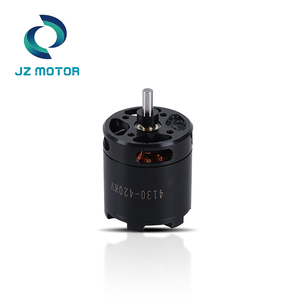
Jinze High Speed Electric Brushless Fixed-Wings Drone Motor
Jinze High Speed Electric Brushless Fixed-Wings Drone Motor BLDC Motor DC Motor UAV Motor With Good Price And High Power
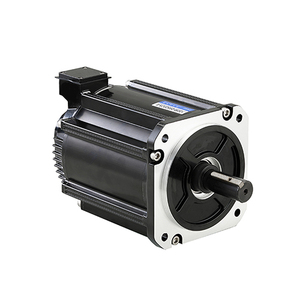
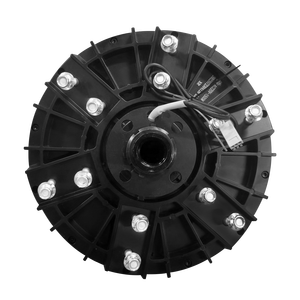
High Torque 5000w Bldc Motor Servo for Heavy AGV
High Torque 5000w Bldc Motor Servo 5KW 6KW 7.5KW 10KW 48v 60V 72V 96V Brushless Dc Motor for Heavy agv
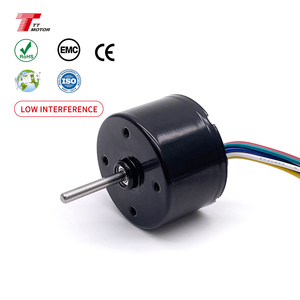
High Torque Strong Magnetic DC 12V 24V BLDC Fan Motor
High Torque Strong Magnetic DC 12V 24V 3625 36mm*25mm Brushless Motor Bldc Fan Motor
High Efficiency Brushless DC Motor for Industrial Automation
High Efficiency Brushless DC Motor for Industrial Automation and Robotic Applications
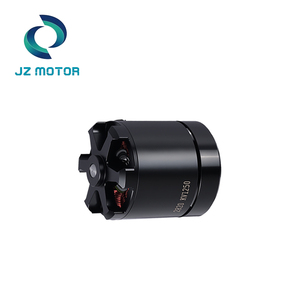
Jinze Customized High Speed Electric Drone Motor
Jinze Customized High Speed High Power Electric BLDC Brushless Fixed-Wing Drone Motor With Long Lifespan
AMTHI Industrial HVLS Ceiling Fan PMSM BLDC Motor
AMTHI Professional 18ft 12ft 5.5m Industrial Ceiling HVLS Fan Motor 5 Blades Low Noise PMSM Brushless DC 220V Waterproof 750W
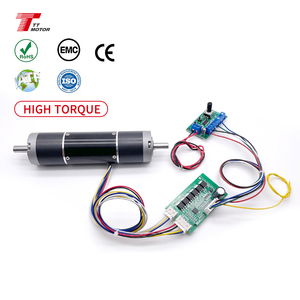
Double Shaft Brushless Planetary Gearbox Motor
Electric Motor Double Shaft 36mm Diameter Brushless High Torque 24v Dc Motor Planetary Gearbox Motor
98.5%
Peak Energy Efficiency
25 MW
Max Testing Capacity
IP68/IP69K
Submersible Protection
50,000+
Hours Operational Lifespan
Technical Whitepaper & Strategic Procurement Analysis

Engineering Superiority in Industrial Motion Control: The Transition to High-Torque BLDC Systems

In modern heavy industry, robotic automation, logistics telemetry, and commercial equipment, the shift toward Brushless DC (BLDC) Motors and Permanent Magnet Synchronous Motors (PMSM) represents a fundamental engineering evolution. Traditional brushed DC motors—plagued by continuous mechanical friction, electrical sparking, carbon brush wear, and high thermal dissipation—are rapidly being phased out in favor of electronically commutated BLDC topologies.

As a global tier-one industrial electric motor manufacturer with legacy roots dating back nearly a century, our engineering framework integrates high-density rare-earth neodymium magnets (NdFeB), state-of-the-art Field Oriented Control (FOC) vector algorithms, and advanced thermal potting. This comprehensive whitepaper provides plant managers, robotics system integrators, and procurement directors with the exact technical clarity, ROI models, and sourcing trends required to specify reliable motor drives.

Unmatched Power Density

By eliminating rotor copper losses and deploying concentrated slot winding configurations, our industrial BLDC drives achieve power density profiles up to 3.8 kW/kg, reducing overall machinery footprint while elevating peak torque output.

Zero Maintenance Dynamics

Without mechanical brushes to inspect or replace, maintenance intervals are extended beyond 50,000 continuous operating hours. Double-sealed ceramic bearings and IP67/IP68 flange enclosures safeguard against harsh grit, oil, and moisture intrusion.

Precision FOC Motion Control

Integrated high-resolution Hall sensors, optical encoders, or sensorless back-EMF feedback mechanisms enable smooth sub-RPM speed regulation, zero-backlash position tracking, and reduced cogging torque for medical robotics and industrial exoskeletons.

Strategic Market Intelligence

Future Procurement Trends in Industrial BLDC Motors (2025–2030)

Key technological shifts changing procurement decisions for enterprise equipment manufacturers globally.

1. Widespread Adoption of Wide-Bandgap (SiC/GaN) Controllers

Industrial OEMs are migrating from traditional silicon IGBT inverters to Silicon Carbide (SiC) and Gallium Nitride (GaN) MOSFET controllers. Operating at switching frequencies above 100 kHz, these integrated drive units reduce switching losses by 60%, shrink filter passive components, and allow BLDC motors to operate under higher ambient thermal limits with minimal acoustic noise.

2. Rise of Direct-Drive Axial Flux Topologies

For applications such as Heavy AGV wheels, HVLS warehouse fans, and robot joint actuators, axial flux PMSM/BLDC designs are superseding conventional radial flux motors. Axial flux structures offer shorter axial lengths, extremely high torque-to-weight ratios, and direct-drive coupling that eliminates efficiency-draining planetary gearboxes.

3. Rare-Earth Material Optimization & Heavy-Duty Thermal Magnet Stability

Procurement teams are prioritizing magnet supply chain security and thermal endurance. Advanced BLDC designs incorporate high-grade N42SH, N45UH, or N38EH NeFeB permanent magnets rated for 180°C to 220°C continuous operation without demagnetization risks, alongside dysprosium-lean formulation to stabilize unit costs.

Technology Benchmarking: Brushless DC (BLDC) vs. Traditional Motor Architectures

Performance Indicator Industrial BLDC / PMSM Motor Brushed DC Motor Standard AC Induction Motor
Electrical Efficiency Ultra-High (90% – 98%) Moderate (65% – 75%) Standard IE2/IE3 (80% – 92%)
Maintenance Cycle Maintenance-Free (50,000+ Hrs) Frequent (Brush change every 2,000 Hrs) Low (Bearing lubrication only)
Torque-to-Weight Ratio Highest (Up to 3.8 kW/kg) Low to Moderate Moderate
Thermal Dissipation Heat generated in Stator (Easy to cool) Heat generated in Rotor (Hard to cool) Heat generated in Stator & Rotor
Speed & Position Control Pinpoint Vector / Encoder / FOC Control Basic Voltage Speed Regulation Requires External VFD
Total Cost of Ownership (5-Yr) Lowest (Energy & downtime savings) High (Continuous downtime/wear) Moderate
Manufacturing Excellence

Why Global Enterprise Buyers Trust Our Industrial BLDC Manufacturing Facilities

Combining legacy engineering precision with modern automated manufacturing, custom winding shop capability, and rigorous multi-stage load testing.

100% Full-Load Dynamometer Testing

Every industrial BLDC motor batch undergoes rigorous quality validation inside our full-load motor testing center. We verify real-time torque output, back-EMF symmetry, thermal rise under maximum current loading, dielectric breakdown resistance, and vibration spectrum according to IEC 60034 standards.

Custom Mechanical & Electrical Modification

Standard off-the-shelf motors often fail specific application constraints. Our dedicated engineering team delivers customized shaft geometries (double-shaft, keyway, spline, hollow-shaft), bespoke mounting flanges (NEMA/IEC/Custom), IP68 vacuum pressure impregnation (VPI) coil encapsulation, and wide-range operating voltage windings (12V to 96V DC / 220V AC PMSM).

Global Stocking & Emergency Supply Pipeline

To eliminate costly industrial shutdowns, we maintain extensive inventory reserves of core BLDC stator/rotor blanks, high-torque planetary gearboxes, high-resolution rotary encoders, and heavy AGV wheel drive units ready for rapid customization and worldwide air-freight dispatch.

Procurement & Engineering FAQ

Frequently Asked Questions by Industrial BLDC Motor Buyers

In-depth technical responses covering sizing, thermal design, controller matching, and ingress protection.

How do I correctly calculate continuous vs. peak torque requirements for heavy AGVs operating on incline ramps?
Continuous torque ($T_{cont}$) must exceed the rolling resistance torque on flat surfaces combined with thermal dissipation limits. Peak torque ($T_{peak}$), often required for 3 to 10 seconds during ramp climbing or acceleration under load (e.g., 5000W–10000W Heavy AGVs), depends on total payload mass ($m$), wheel radius ($r$), ramp angle ($\theta$), and acceleration rate ($a$):
$$T_{peak} = r \times [m \cdot g \cdot (\sin\theta + f_r \cdot \cos\theta) + m \cdot a] / i$$ where $f_r$ is the rolling resistance coefficient and $i$ is the gearbox gear ratio. Ensure the selected BLDC motor has a demagnetization current threshold ($I_{demag}$) exceeding your controller’s peak phase current output.
What are the practical trade-offs between Hall-effect Sensor control and Sensorless Field-Oriented Control (FOC)?
Hall Sensor Control: Provides immediate position feedback at zero speed (0 RPM), delivering maximum full-torque start capability without rotor backward drift. Ideal for heavy robot joints, exoskeletons, winches, and electric AGV traction motors.
Sensorless FOC Control: Relies on mathematical state estimators derived from back-EMF signals. Eliminates Hall sensor wiring harness failures in extremely hot (>120°C), highly vibrational, or wet environments. Best suited for continuous high-speed pumps, HVAC blowers, fixed-wing drones, and HVLS ceiling fans.
Why choose high-voltage PMSM/BLDC motors (e.g., 220V AC / 96V DC) over low-voltage 12V/24V options for large equipment?
Power ($P$) equals Voltage ($V$) multiplied by Current ($I$). To supply 5,000 Watts at 24V DC, the system requires over 208 Amperes of phase current, demanding extremely thick copper wiring, heavy switching MOSFETs, and producing excessive resistive heat ($I^2R$). By increasing voltage to 96V DC or 220V PMSM, current drops to ~52A or ~22A respectively. This dramatically lowers thermal strain, enables lighter harness weights, improves systemic efficiency, and extends overall component longevity.
What structural measures ensure IP67/IP68 waterproof compliance for robotic joint actuators and outdoor motors?
Achieving true IP67 or IP68 waterproof ratings requires a multi-layer engineering approach: double-lip fluororubber (FKM) radial shaft seals, CNC-machined O-rings along end-shield mating faces, vacuum pressure impregnated (VPI) epoxy stator encapsulation, pressure-equalizing hydrophobic vent plugs, and waterproof IP68 cable gland assemblies.
How does planetary gearbox backlash impact dual-shaft BLDC motors in precision motion applications?
Planetary gearboxes offer high torque density, but standard commercial backlash (15 to 30 arcminutes) causes rotational hysteresis in precision positioning systems. For robotic joint modules, exoskeletons, or dual-shaft steering systems, we supply precision-ground planetary gearheads with low backlash (<3 to 5 arcminutes) or zero-backlash harmonic drive reducers to ensure absolute spatial repeatability.
What energy payback period can industrial plants expect when upgrading warehouse HVLS fans from gear-driven AC to Direct-Drive PMSM/BLDC motors?
Direct-drive PMSM/BLDC HVLS fan motors eliminate gearbox mechanical loss (~15% efficiency drop) and operate at motor efficiencies exceeding 93%. Operating 16 hours per day in a commercial facility, the direct reduction in electrical consumption, alongside zero oil changes or seal replacements, typically yields a complete return on investment (ROI) within 14 to 18 months.

Accelerate Your Motion Engineering Project Today

Whether you require standard high-torque BLDC motors, custom drone powerplants, heavy AGV wheel drives, or specialized robotic joint actuators, our engineering team is ready to assist with sizing calculations, CAD models, and custom factory quotes.