Industrial Whitepaper: High-Torque Crane Duty Motors & Heavy Material Handling Engineering
Electric motors designed for crane duty, heavy hoisting, and overhead material handling represent a distinct category within industrial drive engineering. Unlike continuous-duty motors operating under static mechanical loads (IEC 60034-1 S1 duty standard), heavy-duty crane motors operate primarily under intermittent periodic duty cycles (S3, S4, and S5). These operational profiles are characterized by high-frequency acceleration, frequent electrical reversing, rapid dynamic braking, severe thermal shock, and exposure to adverse ambient conditions such as moisture, dust, and corrosive vapors.
Selecting an inadequate motor for heavy-duty lifting equipment leads directly to premature insulation failure, mechanical shaft fatigue, contactor pitting, and uncontrolled load slippage. As a leading specialized manufacturer and global exporter of high-capacity electric motors, our engineering framework integrates advanced thermal dynamic modeling, reinforced electromagnetic designs, and modular physical retrofitting capabilities. This comprehensive technical guide analyzes the critical performance benchmarks, emerging procurement trends, thermal management strategies, and design selection standards required for heavy-duty crane power systems.
Core Engineering Insight: Crane duty motors require a minimum breakdown torque ratio (Mk/Mn) of 2.5 to 3.5 to safely absorb shock loads during sudden load lifting, rapid hoist acceleration, and wind gusts on outdoor container portal cranes.
Electromagnetic & Mechanical Design Fundamentals of Crane Motors
Crane drives are subjected to severe electrical and mechanical stress. The primary differentiator between standard industrial induction motors and heavy-duty crane duty electric motors lies in their rotor dynamics, breakdown torque margin, thermal time constants, and mechanical frame rigidity.
1. Duty Cycles and Thermal Rating (S3, S4, S5 Duty Profiles)
According to IEC 60034-1, crane motors are engineered according to specific intermittent operational cycles:
- S3 Duty (Intermittent Periodic Duty): Defined by a sequence of identical duty cycles, each including a period of operation at constant load and a rest/de-energized period. Rated by Cyclic Duration Factor (CDF), typically 15%, 25%, 40%, or 60% CDF over a 10-minute base period.
- S4 Duty (Intermittent Periodic Duty with Starting): Incorporates significant starting current heat losses into the duty profile. Starting torque demands elevated thermal resistance in both stator windings and rotor bars.
- S5 Duty (Intermittent Periodic Duty with Electric Braking): Combines frequent acceleration with dynamic or regenerative electrical braking. Thermal stress is maximum under S5 duty due to energy dissipation during rapid deceleration.
Our heavy-duty crane motors utilize vacuum pressure impregnated (VPI) Class H insulation systems rated for 180°C operation, while operating at Class B temperature rise limits (80K). This thermal margin creates an extended operational buffer that prevents insulation degradation under peak overload conditions.
2. Rotor Architecture: Slip-Ring (Wound Rotor) vs. Squirrel Cage with VFD
Historically, wound-rotor slip-ring electric motors dominated the heavy crane market. By inserting external rotor resistors via slip rings, operators could regulate starting torque and limit starting current spikes. Slip-ring motors remain indispensable for heavy-duty metallurgical cranes, foundry cranes, and high-capacity port cranes operating without complex power electronics.
Modern crane motor architecture, however, increasingly utilizes inverter-duty heavy-duty squirrel cage induction motors powered by Variable Frequency Drives (VFDs). Advanced squirrel cage crane motors feature specialized copper-bar or double-cage rotors engineered for low inertia and high pull-out torque. When paired with closed-loop vector control drives and high-resolution optical encoders, VFD-driven squirrel cage crane motors provide smooth zero-speed torque control, precise positioning, and regenerative energy feedback to the facility grid.
3. Mechanical Construction & Heavy-Duty Enclosures
Due to intense vibration, impact loads, and environmental exposure, crane motor frames are fabricated from high-tensile nodular cast iron or heavy welded steel plate structures. Motor shafts are manufactured from alloy steels (such as 42CrMo4) to withstand cyclic torsional shear during emergency mechanical braking.
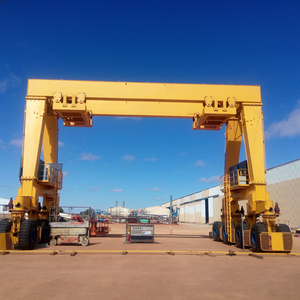
Enclosure protection ratings for outdoor portal cranes, ship-to-shore (STS) cranes, and rubber-tyred gantry (RTG) cranes require IP65, IP66, or IP67 ratings. Dual-lip rotary shaft seals, labyrinth seals, and internal anti-condensation heaters ensure absolute moisture exclusion during thermal cooling cycles when the crane is idle.
Technical Selection Matrix: Crane Duty Electric Motors
| Motor Series Type |
Power Output Range |
Duty Rating Standard |
Starting Torque Ratio (Ms/Mn) |
Cooling Method (IEC 60034-6) |
Primary Industrial Applications |
| Asynchronous Slip Ring (Wound Rotor) |
75 kW to 20,000 kW |
S3, S4 (25% - 60% CDF) |
2.8 - 3.5x Rated Torque |
IC 411 / IC 611 / IC 81W |
Steel Rolling Mill Overhead Cranes, Blast Furnace Hoists, Mining Winches |
| Inverter-Duty Heavy Squirrel Cage |
15 kW to 25,000 kW |
S4, S5 (VFD Driven) |
2.5 - 3.2x Rated Torque |
IC 416 (Forced Air Blower) |
Port Container STS / RTG Cranes, Shipyard Gantry Cranes, EOT Overhead Cranes |
| Compact Cantilever & Jib Drive Motor Gearbox |
1 kW to 45 kW |
S3 (40% CDF) |
2.2 - 2.8x Rated Torque |
IC 410 (Totally Enclosed Non-Ventilated) |
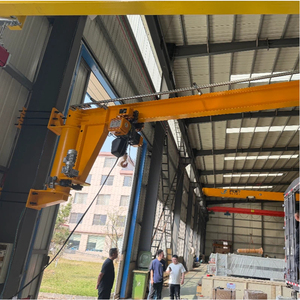
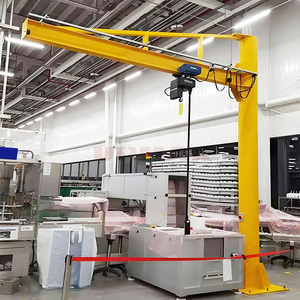
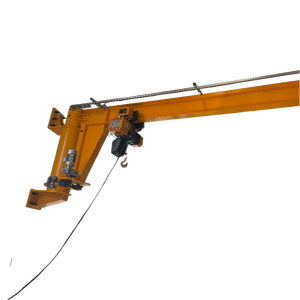
Workshop Jib Cranes, Wall-Mounted Cantilever Hoists, Cargo Handling Units |
| Hazardous Area Explosion-Proof Crane Motor |
5 kW to 5,000 kW |
Ex d / Ex p / Ex ec |
2.5 - 3.0x Rated Torque |
IC 411 / IC 511 (Tube Cooled) |
Offshore Oil Platforms, Chemical Storage Gantry Cranes, Refineries |
Manufacturer Capabilities & Enterprise Competitive Advantages
Derived from over nearly a century of industrial motor engineering excellence, our manufacturing operations deliver high-reliability electric motors tailored specifically to non-standard requirements. When off-the-shelf equipment fails to satisfy demanding crane engineering criteria, our facility provides fully customized electrical drive solutions.
1. Advanced Customization & Mechanical Adaptation
Every crane design presents unique spatial and mechanical constraints. We specialize in custom foot and flange dimensions, non-standard shaft diameters, dual-ended shaft extensions for mechanical holding brakes, and specialized terminal box positions. Motors can be engineered to directly match historic flange standards from legacy European, American, and Asian manufacturers.
2. Dedicated High-Capacity Motor Test Field
Quality assurance is backed by an in-house full-load motor testing station capable of testing motors up to 25 MW and 13.8 kV under actual load profiles. Customers and independent inspection authorities (such as TÜV, DNV, Lloyd's Register) are invited to witness factory acceptance testing (FAT) live on-site or via secure high-definition remote video streaming.
3. Massive Stock Inventory & Emergency Response Service
Recognizing that crane downtime in container ports or steel mills costs tens of thousands of dollars per hour, we maintain one of Europe's largest emergency stock inventories of large industrial motors. Our rapid customization shop can modify stock motors—adjusting windings, shaft dimensions, or cooling methods—dispatching emergency replacements worldwide in record turnaround times.
4. Rigorous Quality Standards & Global Accreditations
All motor design, fabrication, winding, and assembly processes strictly comply with ISO 9001, DIN, VDE, IEC, and CE guidelines. Active corporate memberships in leading electrical associations (EASA, AEMT, VDI, ZVEH) ensure continuous technical leadership and compliance with modern safety norms.