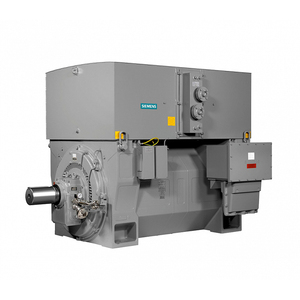
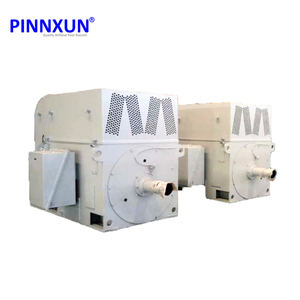
Engineered to withstand heavy radial loads, mechanical shock, and continuous thermal stress under NEMA Design C/D parameters.
Why standard off-the-shelf industrial motors fail in crushing applications—and the structural engineering required to endure extreme mechanical stresses.
Crushers encounter transient jam loads and direct material surges. Standard NEMA Design B motors stall under 200% peak overload. True crusher duty motors integrate rotor slotting designed for 250% to 350% breakdown torque, enabling the motor to pull through intense instantaneous peak loads without tripping overload relays.
Overhung V-belt pulley drives exert extreme radial bending moments on drive shafts. Crusher duty motors utilize high-tensile AISI 4140 or 4340 forged alloy steel shafts paired with heavy-duty cylindrical roller bearings (NU/NJ series) on the drive end, yielding L10h bearing life calculations exceeding 100,000 operational hours.
Crushers generate high ambient dust and severe thermal cycling during continuous duty (S1/S4). Our stator windings feature 100% copper conductors insulated with Class H mica tape, subject to full Vacuum Pressure Impregnation (VPI) with 100% solid epoxy resins to prevent moisture ingress, abrasive dust tracking, and winding movement under vibration.
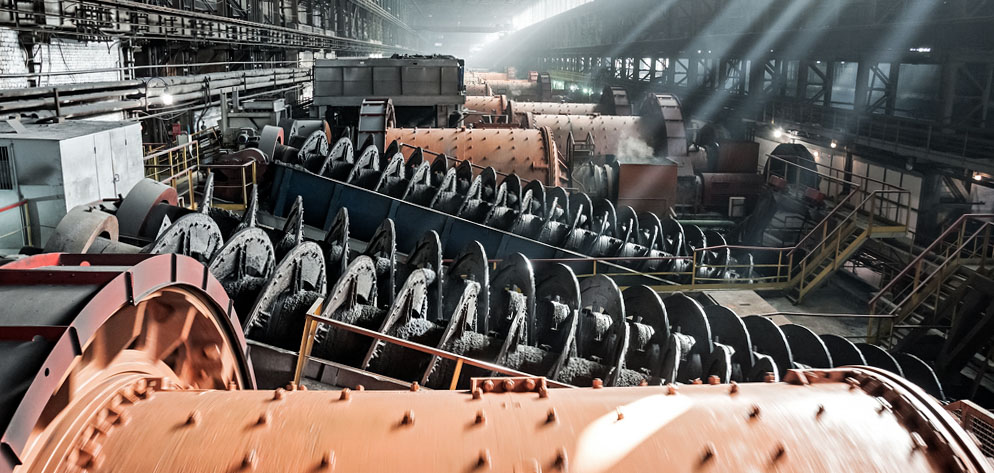
In aggregate processing, concrete recycling, and hard-rock mining facilities, electric motors operate in hostile environments characterized by abrasive silica dust, ambient temperature swings (-30°C to +50°C), and violent multi-axis mechanical vibration. Rock crushers—categorized into Jaw Crushers, Cone Crushers, Gyratory Crushers, Impactors, and Roll Crushers—each demand unique speed-torque profiles during operation:
| Technical Characteristic | Standard Severe Duty Motor | True Industrial Crusher Duty Motor | Menzel Custom Heavy Duty (up to 25MW) |
|---|---|---|---|
| Breakdown Torque | 200% – 220% FLT | 275% – 350% FLT | Custom engineered up to 380% FLT |
| Shaft Material | Standard AISI 1045 Carbon Steel | High-Tensile AISI 4140 Forged Steel | Forged Alloy 4140 / 4340 Chrome-Moly |
| Drive-End Bearing Type | Standard Deep Groove Ball Bearing | Heavy-Duty Cylindrical Roller Bearing | Oversized NU/NJ Roller + Spherical Thrust |
| Enclosure Protection | IP55 Cast Iron Enclosure | IP65 / IP66 Severe Dust & Hose-proof | IP66 / IP67 Fully Sealed Special Enclosure |
| Insulation & Thermal Margin | Class F (80°C rise at 1.0 SF) | Class H (80°C rise at 1.15 SF) | Class H VPI (80°C rise at 1.25 SF) |
Market intelligence and technological transitions reshaping global industrial motor procurement strategies over the next decade.
Global decarbonization mandates and skyrocketing electrical tariffs have shifted procurement evaluations from initial capital expenditure (CapEx) to total life-cycle cost (OpEx). Crusher motors running 6,000+ hours annually consume their initial purchase price in energy within months. Modern procurement frameworks prioritize IE4 Super Premium and IE5 Ultra Premium synchronous reluctance or induction designs to cut operational losses by up to 15%.
Unplanned crusher downtime in primary mining can incur loss rates exceeding $20,000 per hour. Modern enterprise buyers mandate factory-integrated wireless vibration sensors, tri-axial accelerometers, and PT100 winding/bearing RTDs connected via IO-Link or Modbus TCP. Predictive AI algorithms now analyze real-time rotor eccentricity, bearing race fatigue, and thermal spikes weeks before physical component failure occurs.
Variable Frequency Drives (VFDs) are increasingly paired with cone and jaw crushers to optimize output sizing and clear blockage jams electronically. Procurement specifications now mandate NEMA MG1 Part 31 compliance for inverter-duty motors, requiring insulated non-drive end bearings to eliminate destructive shaft fluting currents and reinforced slot insulation to withstand high dV/dt voltage spikes.
Since 1927, MENZEL Elektromotoren has engineered custom-built, heavy-duty industrial electric motors for the world's most severe operational environments. When standard off-the-shelf catalog motors fail under the crushing loads of mining, steel mills, and cement plants, global industrial leaders turn to Menzel.
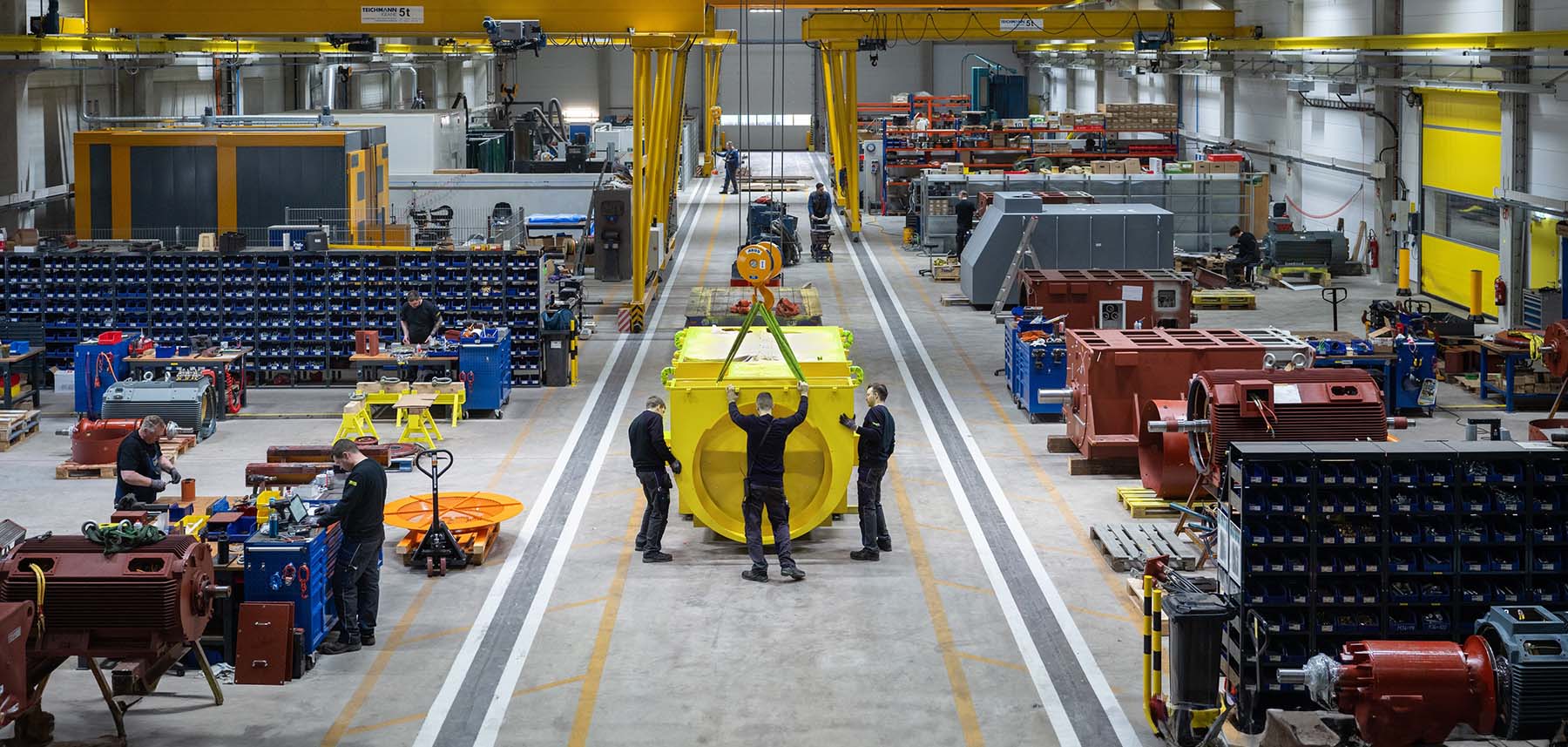
Our state-of-the-art Hennigsdorf motor facility near Berlin houses one of Europe's largest independent industrial motor stocks, combined with advanced testing fields capable of handling load testing up to 25 MW and 13.8 kV.
When primary jaw crushers or grinding mills start under fully loaded rock chambers, direct-on-line (DOL) squirrel cage induction motors encounter rotor lock and thermal tripping due to excessive starting current draw (up to 700% FLI).
Menzel YRKK Series Slip-Ring (Wound Rotor) Motors utilize external liquid resistance starters (LRS) to deliver 100% full load starting torque while drawing less than 150% full load current. This dramatically minimizes electrical grid disturbance and mechanical shock loading on gearboxes and V-belts.
Essential guidance on selecting, sizing, and importing heavy crusher duty electric motors.
While standard severe-duty motors (such as IEEE 841 units) focus primarily on chemical corrosion resistance and basic IP56 sealing, a true Crusher Duty Motor is purpose-engineered to survive continuous mechanical shock loading, extreme radial forces, and severe transient jams. Crusher duty motors feature high-tensile AISI 4140 forged alloy steel shafts (rather than standard 1045 carbon steel), cast-iron frame construction with reinforced foot walls, NEMA Design C or D electrical slots providing breakdown torque up to 350%, and heavy-duty drive-end cylindrical roller bearings (NU series) rated for high overhung belt loads.
Selection depends on power grid capacity and starting load conditions:
Squirrel Cage Motors (NEMA C/D): Ideal for cone crushers, impactors, and smaller jaw crushers where the grid can absorb starting current spikes (500%–700% FLA) or where Soft Starters / VFDs are utilized.
Slip Ring Motors (YR/YRKK Series): Mandatory for large primary jaw crushers, SAG mills, and remote mining sites with weak electrical supply grids. Slip ring motors connect to a Liquid Resistance Starter (LRS) to deliver up to 250% starting torque with ultra-low starting current (<150% FLA), preventing power line voltage dips.
Rock crushers are almost universally driven via heavy V-belt pulley assemblies to decouple motor speeds from crusher countershaft speeds and absorb vibration. These belts exert massive continuous radial overhung loads ($F_{radial}$) on the motor drive shaft. Standard ball bearings under high belt tension experience rapid fatigue fluting and race failure within months. Crusher duty specifications mandate oversized cylindrical roller bearings on the drive end, coupled with finite element analysis (FEA) verified shaft diameters to prevent shaft bending fatigue or snap failures at the bearing shoulder.
Yes. One of Menzel's core competitive specializations is producing 100% mechanically and electrically interchangeable drop-in replacement motors for obsolete or discontinued units from any global brand. Our engineering team can replicate exact terminal box positions, foot mounting dimensions, shaft extensions, shaft height, and flange bolt patterns. This eliminates the need for plant civil modifications, baseplate welding, or pipework alteration, reducing replacement plant downtime from months to days.
When powered by a VFD, pulse-width modulation (PWM) creates severe voltage peak spikes ($dV/dt$) that can degrade standard winding insulation. Inverter-duty crusher motors must be built to NEMA MG1 Part 31 standards, utilizing Class H VPI insulation with reinforced phase-to-phase insulation barrier tapes and spike-resistant magnet wire. Additionally, to prevent destructive circulating bearing currents caused by common-mode voltage, motors above 100 kW must feature an insulated non-drive end bearing housing or grounding brushes.
Aggregate plants generate airborne conductive silica dust and high moisture. Standard dip-and-bake varnish leaves micro-air voids inside stator slot windings. Under continuous heavy vibration, wires inside these voids rub together, causing insulation abrasion and short circuits. VPI processing places the wound stator in a vacuum chamber to remove all moisture and air voids before injecting 100% solid epoxy resin under high pressure. The resin cures into a solid, solid-state mass that locks windings permanently in place and seals out dust and moisture completely.
Our senior electrical engineers and fast-response technical teams are ready to analyze your motor nameplate specs, application parameters, and delivery requirements immediately.