Global Heavy-Duty Chemical Engineering Whitepaper

Top Trusted Chemical Process Motors Manufacturer & Suppliers

High-Performance Explosion-Proof Drives, Agitator Motors, Reaction Tank Mixers & Precision Fluid Transfer Solutions Engineered for Hazardous Environments

High-Gain Product Catalog

Featured Chemical Process Motors & Integrated Machinery

Engineered in compliance with ISO 9001, IECEx, ATEX, and CE standards. Designed for continuous duty (S1) under intense thermal, corrosive, and explosive operating conditions.

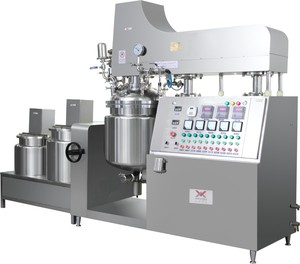
100L 1000L Cosmetic Mixer Vacuum Homogenizer with Motor Gearbox
Vacuum Homogenizer & Mixer

100L-1000L Stainless Steel Vacuum Homogenizing Emulsifier Tank Motor

Heavy-duty motorized gearbox emulsification system crafted with SUS316L contact surfaces for high-viscosity chemical, pharmaceutical, and cosmetic synthesis.

Capacity: 100L - 1000L Custom
Material: SUS304 / SUS316L
Speed: 0-3600 RPM Variable
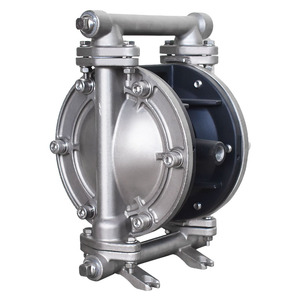
QBY3-10P 304 Stainless Steel Pneumatic Diaphragm Pump
Fluid Transfer Pump

QBY3-10P 304 Stainless Steel Pneumatic Diaphragm Pump

Explosion-proof fluid handling motor replacement for severe chemical transfers involving concentrated acids, alkalis, solvents, and abrasive slurries.

Body Shell: 304 / 316 Stainless
Fluid Type: Acid / Alkali / Solvent
Drive: Pneumatic / Air Motor
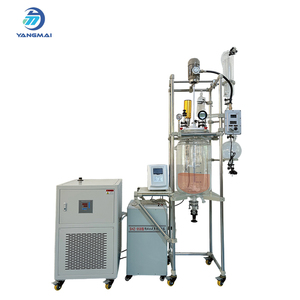
Laboratory Glass Reactor Chemical Reactor with Temp Control
Precision Glass Reactor

Laboratory Reflux Glass Chemical Reactor with Temperature Controller

Integrated precision motor drive system engineered for organic chemistry reflux, crystallization, and continuous temperature-regulated synthesis.

Vessel: High Borosilicate 3.3
Temp Range: -80°C to +200°C
Control: Digital Stepless Motor
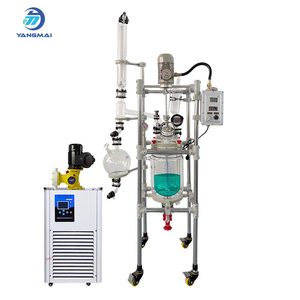
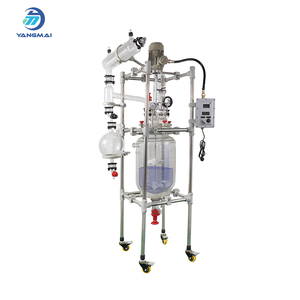
10L Double Layer Glass Reactor Chemical Reactor
Jacketed Synthesis System

10L Double Layer Jacketed Glass Reactor with Heating & Stirring Motor

Compact benchmark chemical reactor with high-torque overhead stirrer motor, ideal for pilot-scale chemical process development and distillation.

Volume: 10 Liters Jacketed
Stirring Motor: Brushless DC / Ex
Sealing: PTFE Vacuum Seal
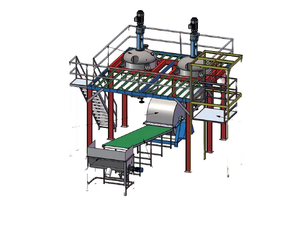
Chemical Industry Factory SUS 316L Ultrasonic Agitator
Industrial Agitator Motor

SUS 316L Large-Scale Mixing Ultrasonic Agitator Drive Equipment

High-power industrial chemical agitator with ultrasonic dispersion technology for heavy sludge processing, polymerization, and uniform blending.

Structure: Heavy SUS316L
Motor Rating: 5.5kW - 75kW Ex
Application: Industrial Polymerization
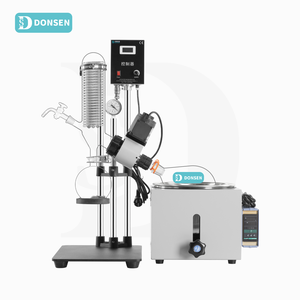
2L Rotary Evaporator Vacuum Distillation Equipment
Distillation Equipment

2L Laboratory Rotary Evaporator Oil Distillation System

Precision motorized lift and rotation drive mechanism for smooth organic solvent recovery, essential oil extraction, and vacuum concentration.

Evaporation Flask: 2 Liters
Motor Lift: Automatic Vertical
Vacuum Degree: < 0.098 MPa
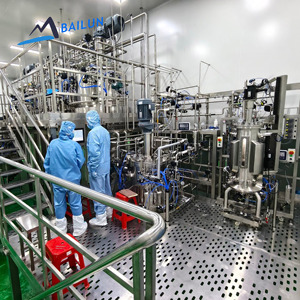
2000L Stainless Steel Bio Reactor Fermentor
Bio-Chemical Reactor

2000L Automatic PLC Controlled Bioreactor & Fermentor Motor

Industrial-grade bioprocess agitator motor system integrated with PLC automation for vaccine production, amino acid synthesis, and fermentation.

Volume: 2000L Fermenter Vessel
Automation: Siemens PLC Control
Sanitary Class: GMP / CIP Cleanable
Custom Double Layer Jacketed Glass Reactor Stirring Tank
Custom Reaction Vessel

1L to 200L Multi-Scale Jacketed Glass Reactor Chemical Stirring Tank

Versatile modular chemical process stirring tank available from 1L to 200L with explosive-proof magnetic gear drive motor customization.

Range: 1L, 5L, 50L, 200L
Motor Type: Ex d IIBT4 / Variable VFD
Customization: OEM Flange & Shaft
98+
Years Chemical Engineering Legacy
25 MW
Maximum Electric Drive Capacity
13.8 kV
High Voltage Process Capability
IE4 / IE5
Ultra-Premium Efficiency Class
Technical Authority & E-E-A-T Insights

Engineering Chemical Process Motors for Extreme Industrial Duty

Understanding thermal dynamics, explosive gas classification, and mechanical stress vectors in chemical plant operations.

Explosion Mitigation & Hazardous Area Protection (ATEX / IECEx)

Chemical processing plants operating with volatile solvents, hydrocarbons, and combustible vapors demand rigorous motor enclosure ratings. Chemical process motors must adhere to strict explosion protection topologies including Ex d (Flameproof), Ex e (Increased Safety), and Ex p (Pressurized Enclosures).

When operating under ATEX Zone 1, Zone 2, or Zone 21/22 dust atmospheres, internal arcs or thermal spikes must never ignite the ambient gas mixture. Flameproof paths, specialized labyrinth seals, and cast-iron frame integrity prevent internal pressure propagation to the surrounding plant environment.

Key Compliance Standard: IEC/EN 60079-0/1/7 specifies that surface temperatures of chemical motors must remain well below the auto-ignition temperature of processed gases (Temperature Classes T1 through T6).

Severe Chemical Corrosion & Material Tribology

Exposure to airborne inorganic acids (HCl, H2SO4), alkaline mists, and aggressive organic solvents rapidly degrades standard industrial cast iron and carbon steel motor frames. Premier chemical process motors utilize C5-M Heavy Marine/Chemical epoxy coatings with dry film thickness exceeding 320 microns.

Wetted hardware, rotor shafts, and mixing agitators integrate high-grade SUS 316L, Hastelloy C276, or Titanium cladding. Mechanical shaft seals incorporate dual-pressurized liquid flush systems (Plan 53A/53B) with Fluorocarbon (FKM) or Perfluoroelastomer (FFKM) dynamic seals to prevent toxic fluid leakage into motor windings.

Engineering Advantage: Stainless steel IP69K junction boxes equipped with potted cable glands block chemical vapor ingress during high-pressure CIP/SIP washdown cycles.
Next-Gen Industry Analysis

Technological Development Trends in Chemical Motors

Emerging innovations redefining drive efficiency, intelligence, and operational longevity in process engineering.

1. Synchronous Reluctance & IE5 Efficiency Integration

The transition from IE3 to IE4 / IE5 Ultra-Premium Efficiency standard is accelerating across chemical refineries. Synchronous Reluctance Motors (SynRM) eliminate rotor copper losses completely, operating significantly cooler than traditional induction motors.

Lower operating temperatures directly extend bearing grease lifespan and winding insulation degradation cycles by up to 2.5 times in continuous 24/7 chemical reactor service.

2. IIoT-Native Predictive Maintenance Sensors

Modern chemical motors now embed multi-axis MEMS vibration sensors, PT100/Pt1000 RTDs inside stator windings, and acoustic emission transducers directly connected to plant Distributed Control Systems (DCS).

Machine learning algorithms analyze real-time spectrum signatures to detect bearing fluting, rotor unbalance, or seal degradation long before catastrophic batch failure occurs.

3. Advanced Inverter-Duty Insulation Systems

With widespread deployment of Variable Frequency Drives (VFDs) for process speed regulation, high dV/dt voltage spikes threaten stator winding integrity due to corona discharge.

Leading manufacturers implement Class H insulation enriched with inorganic mica shielding and Vacuum Pressure Impregnation (VPI) capable of handling peak transient surges up to 3000V in compliance with NEMA MG1 Part 31.

Procurement Intelligence

Future Procurement Trends & Total Cost of Ownership (TCO)

Strategic purchasing frameworks for EPC contractors, plant engineering heads, and procurement directors.

01

Shift from Initial Purchase Price to 20-Year TCO Evaluation

Electricity accounts for 90% to 95% of an industrial chemical motor's total lifecycle cost. Purchasing managers now prioritize energy efficiency payback calculations, where an IE5 upgrade offsets initial motor capital costs within 14 months of continuous operation.

02

Standardization & Modular Interchangeability

Global chemical conglomerates are moving away from proprietary motor dimensions toward standardized IEC/NEMA foot and flange mountings. Modular designs with customizable shaft extensions reduce spare part inventory holding costs by over 35%.

03

SIL (Safety Integrity Level) Certified Drive Packages

Chemical plant procurement guidelines increasingly mandate combined VFD and motor packages certified to SIL 2 or SIL 3 standards under IEC 61508, ensuring dependable Safe Torque Off (STO) during emergency safety shutdowns.

Cost Structure Insight

Where Does Your Motor Budget Really Go?

Over a typical 15 to 20 year continuous operational lifespan in a chemical refinery:

Electricity Consumption Cost 92%
Maintenance & Seal Overhauls 5%
Initial Capital Procurement 3%

Source: Global Chemical Engineering Equipment Economic Review

Data Visualization Matrix

Chemical Process Motor Selection Guide

Cross-referencing process machinery types with required electrical specs, explosion protection ratings, and fluid dynamics.

Equipment Category Typical Power Range Explosion Protection Enclosure Class Shaft / Wetted Material Primary Application
Vacuum Homogenizer Motor 5.5 kW – 110 kW Ex d IIB T4 Gb IP65 / IP66 SUS316L / Titanium Cosmetic & Pharma High-Shear Mixing
Chemical Diaphragm Pump 0.75 kW – 30 kW Ex h IIC T4 Gb (Air/Pneumatic) IP66 / IP67 304 / 316 / PTFE Acid, Alkali & Solvent Transfer
Laboratory Glass Reactor Drive 0.18 kW – 2.2 kW Ex d IIC T4 Gb / Non-Ex IP55 / IP65 Borosilicate Glass / PTFE Organic Chemistry Synthesis & Reflux
Large Industrial Agitator 15 kW – 500 kW Ex d IIC T4 / Ex p Gb IP66 SUS 316L / Hastelloy Polymerization & Slurry Agitation
Rotary Evaporator Vacuum Drive 0.09 kW – 1.5 kW Ex d IIB T4 IP54 / IP65 PTFE Coated Alloy Volatile Solvent Recovery & Distillation
Bio-Reactor Fermentor Agitator 3 kW – 160 kW Cleanroom Safe / Non-Ex IP66 / IP69K Electropolished SUS316L Sterile Fermentation & Vaccine Production
Manufacturing Capabilities

Why Global Chemical Leaders Partner With Us

Decades of German-inspired engineering precision, state-of-the-art testing infrastructure, and rapid emergency response.

Full-Load High-Voltage Testing Facility

Every custom chemical motor undergoes rigorous factory acceptance testing (FAT) up to 25 MW load and 13.8 kV voltage in our dedicated test field. Customers can observe load curves, thermal rise, vibration spectrums, and noise signatures via our live digital observation lounge.

Custom Mechanical & Electrical Adaptation

When standard off-the-shelf motors fail to fit legacy chemical plant mountings, our in-house engineering design department produces custom shaft modifications, non-standard mounting flanges, special terminal box orientations, and exact mechanical replicas.

24/7 Global Emergency Motor Reserve

Unplanned chemical plant downtime can cost tens of thousands of dollars per hour. We maintain one of Europe's largest stocks of heavy industrial explosion-proof AC and DC motors ready for immediate global air freight dispatch and on-site commissioning.

Buyer Knowledge Base

Frequently Asked Questions (FAQ)

Addressing key technical, safety, and procurement inquiries from chemical process engineers and plant managers.

Q: What is the fundamental difference between Ex d (Flameproof) and Ex e (Increased Safety) motors in chemical processing plants?

Ex d (Flameproof) motors are designed with extra-heavy enclosures capable of withstanding an internal explosion of combustible gases without rupturing. The flame paths cool expanding hot gases before they can reach the external flammable atmosphere. Ex e (Increased Safety) motors, by contrast, do not allow any arcs, sparks, or excessive temperatures to occur internally under normal or specified overload conditions. Ex d is preferred for highly volatile Zone 1 chemical synthesis areas, while Ex e is frequently applied in less severe Zone 2 environments or for fan drives.

Q: How do variable frequency drives (VFDs) impact chemical motor bearing life, and how is shaft fluting prevented?

High-frequency PWM switching from VFDs induces high-frequency common-mode voltages on the motor rotor shaft. When this voltage exceeds the dielectric breakdown threshold of the oil film in the bearings, electrical discharge machining (EDM) occurs, causing micro-pitting or "fluting" on the bearing raceways. To prevent bearing failure in continuous chemical mixing processes, we equip inverter-duty motors with insulated non-drive end (NDE) bearings, hybrid ceramic ball bearings, and conductive micro-fiber shaft grounding rings (SGR).

Q: What shaft sealing configurations are recommended for top-entry chemical reactor agitators handling toxic solvents?

Top-entry agitator motors handling hazardous or toxic organic solvents typically utilize double mechanical seals with a pressurized barrier fluid skid (API Plan 53A or 53B). The barrier fluid pressure is maintained 1.5 to 2.0 bar above the reactor vessel pressure, ensuring that any seal ring wear results in barrier fluid leaking inwardly into the vessel rather than toxic chemicals escaping out into the motor atmosphere. For zero-emission, ultrapure, or highly toxic applications, magnetic coupling drives are recommended to achieve completely sealless operation.

Q: How does motor Temperature Class (T1-T6) relate to the chemical auto-ignition temperature of plant vapors?

The Temperature Class defines the maximum surface temperature that any exposed part of the chemical motor can reach during operation under worst-case overload conditions. For instance, a T4 motor rating guarantees a maximum surface temperature of 135°C, making it safe for environments containing vapors like diethyl ether or ethyl acetate. If a plant processes gases with lower auto-ignition points, such as carbon disulfide (auto-ignition temperature ~90°C), a strict T6 rating (max surface temp 85°C) must be specified in the procurement contract.

Q: What paint coating specification should be mandated for motors installed in marine-chemical coastal plants?

For chemical facilities exposed to aggressive marine atmospheres combined with chemical process mists, ISO 12944-5 specifies a C5-M (Marine High Corrosion) or CX (Extreme Offshore) multi-layer polyurethane/epoxy paint system. The specification requires a zinc-rich epoxy primer, an intermediate epoxy tie-coat, and a UV-resistant aliphatic polyurethane finish coat with a total dry film thickness (DFT) of at least 320 to 400 microns, accompanied by stainless steel 316 external fasteners.

Need Custom Chemical Motor Engineering or Rapid Replacement?

Our senior drive application engineers are ready to assist you with motor sizing, ATEX compliance verification, shaft modifications, and fast commercial quotes.