High-performance AC, DC, and custom heavy-duty electric motors engineered for volatile environments.
In modern industrial operations—ranging from offshore petrochemical rigs, underground coal mines, and chemical processing facilities to flour mills and pharmaceutical cleanrooms—the presence of flammable gases, vapors, mists, or combustible dust creates a highly volatile environment. Operating standard electric motors under these hazardous conditions poses extreme ignition risks due to potential electrical arcs, sparks, or surface overheating. This comprehensive technical guide and procurement white paper provides an authoritative evaluation of ATEX certified electric motors, examining protection concepts, international regulatory frameworks, procurement trends, and engineering selection parameters for critical drive infrastructure.
Procurement directors and plant safety engineers must align motor electrical ratings with specific hazardous zone definitions defined by EN/IEC 60079 standards. Selecting an under-certified motor compromises plant safety, while over-specifying inflates capital expenditures (CAPEX) unnecessarily. Below is the technical breakdown of operational zones and required motor protection concepts:
| Hazardous Zone | Atmosphere Type | Risk Duration / Frequency | Mandatory Protection Concept | ATEX Equipment Category |
|---|---|---|---|---|
| Zone 1 | Gas / Vapor / Mist | Occasional presence in normal operation | Flameproof (Ex db) / Increased Safety (Ex eb) | Category 2G (EEx d, EEx e) |
| Zone 2 | Gas / Vapor / Mist | Unlikely or short duration presence | Non-sparking (Ex ec) / Pressurized (Ex pz) | Category 3G (EEx nA / EEx ec) |
| Zone 21 | Combustible Dust | Occasional presence in normal operation | Dust Ignition Protection by Enclosure (Ex tb) | Category 2D (IP65 / IP66) |
| Zone 22 | Combustible Dust | Unlikely or short duration presence | Dust Ignition Protection by Enclosure (Ex tc) | Category 3D (IP55 / IP65) |
Beyond zone classification, ATEX motors are categorized according to the specific explosion group of the gas mixture. Gas Group II is subdivided into IIA (Propane), IIB (Ethylene), and IIC (Hydrogen / Acetylene), with IIC requiring the most stringent flamepath tolerances and minimum ignition energy controls. Furthermore, the motor's maximum surface temperature must never exceed the auto-ignition temperature of the surrounding gas. Temperature classes range from T1 (450°C) down to T6 (85°C). Premier manufacturers design high-voltage ATEX motors to operate within conservative T3 (200°C) or T4 (135°C) limits even during full-load overload conditions.

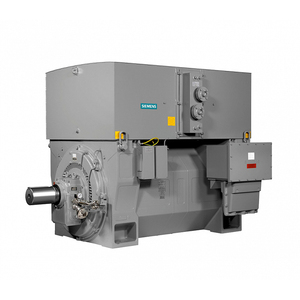
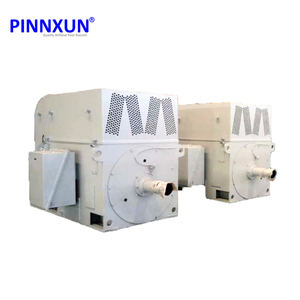
Building upon nearly a century of heavy-duty electromechanical engineering (originating in Germany in 1927), our enterprise stands as a global leader in custom manufacturing, stocking, and exporting large industrial AC induction, slip-ring, and DC electric motors. Where standard off-the-shelf equipment fails to meet custom mechanical dimensions or extreme voltage parameters, our engineering team delivers bespoke drive solutions tailored up to 25 MW output capacity and voltages up to 13.8 kV.
We manufacture 100% mechanically and electrically interchangeable replacement motors for legacy machinery, matching historical shaft heights, flange dimensions, and terminal box orientations without plant modification.
Every ATEX-certified motor undergoes rigorous factory acceptance testing (FAT) inside our dedicated full-load test laboratory up to 25 MW. Clients are invited to witness performance and thermal testing live or via encrypted remote streams.
Unplanned downtime costs heavy industry millions daily. We maintain one of Europe’s largest stockpiles of medium and high-voltage industrial motors, offering immediate 24/7 global dispatch for emergency replacements.
Our production procedures are governed by strict ISO 9001, ISO 14001, and ATEX Quality Assurance Notifications (QAN / QAR). Key manufacturing stages—including stator winding, Vacuum Pressure Impregnation (VPI), dynamic rotor balancing to ISO 21940 Grade G1.0/G2.5, and specialized explosion-proof terminal box assembly—are conducted entirely in-house by expert motor technicians.
The global industrial electric motor landscape is experiencing a paradigm shift driven by stringent decarbonization mandates, the integration of Industrial Internet of Things (IIoT) sensors, and the deployment of wide-bandgap Variable Frequency Drives (VFDs). Procurement executives must anticipate these structural shifts when sourcing ATEX certified equipment:
Historically, hazardous area electric motors were granted regulatory exemptions from minimum energy performance standards (MEPS) due to technical constraints surrounding internal thermal dissipation and explosion containment gaps. However, updated eco-design regulations globally now mandate IE3 and IE4 efficiency standards for explosive atmosphere motors across major kilowatt ranges. Modern ATEX motors utilize premium magnetic steel laminations, optimized stator slot filling, and permanent magnet assisted synchronous reluctance (PM-SynRM) designs to achieve IE5 efficiency without compromising Ex protection integrity.
Predictive maintenance has moved from luxury to operational necessity. Procuring ATEX motors pre-equipped with intrinsic safety (Ex i) condition monitoring sensors allows real-time telemetry of tri-axial vibration, stator winding temperature (PT100/RTC), bearing acoustic signatures, and partial discharge activity. This data streams directly to cloud analytics platforms, enabling maintenance managers to detect bearing fluting or insulation degradation weeks before potential failure occurs.
The widespread adoption of high-speed IGBT and SiC Variable Frequency Drives introduces steep voltage rise rates (high dv/dt) and high-frequency voltage spikes to motor windings, threatening breakdown via partial discharge. Next-generation ATEX motors for VFD operation feature reinforced Class H corona-resistant magnet wire, mica barrier tapes, and double-VPI treatment. Additionally, insulated ceramic bearings or shaft grounding rings (certified for hazardous locations) are installed to eliminate bearing currents caused by common-mode voltages.
Mismatched technical specifications during procurement lead to costly site re-engineering, installation delays, or severe safety hazards. The following decision matrix assists procurement officers and engineering leads in specifying optimal cooling, enclosure, and duty configurations:
| Cooling Code (IEC 60034-6) | Cooling Description | Primary Industrial Application | ATEX Enclosure Compatibility | Procurement Risk Factor |
|---|---|---|---|---|
| IC 411 | Frame-surface cooled by self-driven fan | Pumps, Compressors, Standard Conveyors | Ex db, Ex eb, Ex ec, Ex tc | Low — High standardized availability |
| IC 611 | Air-to-Air heat exchanger (Top-mounted) | Heavy-duty Mine Fans, Large Mills | Ex db, Ex pz, Ex eb | Medium — Custom physical footprint |
| IC 81W | Air-to-Water heat exchanger | Marine Thrusters, Cleanroom Compressors | Ex db, Ex px, Ex pz | Medium — Requires cooling water circuit |
| IC 01 | Open-circuit self-ventilated | Power Plant Boiler Fans (Non-Dust) | Ex ec (Zone 2 Only) | High — Restricted to clean environments |
When requesting technical quotations for high-capacity ATEX motors (500 kW to 25 MW), buyers should always provide complete site grid parameters including short-circuit power, voltage dip constraints during motor startup, and ambient operating temperature profiles (-50°C arctic steelworks to +60°C desert oil fields).
Expert technical answers regarding ATEX certification, international export compliance, and custom motor modifications.
Consult with our senior motor engineers today. We provide precise technical evaluations, custom engineering drawings, and fast commercial quotations for global export.
Inquire Now