Technical Industry White Paper
Comprehensive Engineering Guide: Wound Rotor Induction Motors Sourcing & Manufacturing
In modern high-heavy industrial power transmission, the Wound Rotor Induction Motor (WRIM)—commonly referred to in international electromechanical standards as the Slip Ring Motor (YR / YRKK / YRKS series)—remains an irreplaceable electromechanical workhorse. Unlike conventional squirrel-cage induction motors whose rotor circuits are permanently short-circuited via aluminum or copper end rings, wound rotor motors feature three-phase rotor windings connected through slip rings and carbon brushes to an external resistance device. This specific electromechanical architectural configuration grants industrial engineers precise control over starting current and starting torque dynamics.
Global heavy industries such as mining, metallurgy, cement production, marine engineering, and municipal water management frequently encounter high-inertia rotating loads. Machinery such as ball mills, jaw crushers, overland conveyor belts, mine hoists, and heavy centrifugal blowers require exceptional breakaway torque during initial startup without inflicting catastrophic voltage sags or thermal stress upon local grid infrastructures. China’s premier electric motor manufacturers and exporters have established world-class manufacturing ecosystems, combining advanced metallurgical engineering, Vacuum Pressure Impregnation (VPI) insulation technology, and rigorous IEC/NEMA quality compliance to supply cost-efficient, high-reliability wound rotor induction motors across the globe.
Electromechanical Dynamics: Wound Rotor (YRKK) vs. Squirrel Cage (YKK) & VFD Systems
To optimize capital expenditure (CAPEX) and operational efficiency (OPEX), plant engineering directors and procurement managers must evaluate the core electromagnetic tradeoffs between traditional slip ring induction systems and modern Variable Frequency Drives (VFD) paired with squirrel-cage motors.
| Performance Characteristic |
Wound Rotor Motor (YR/YRKK) + Liquid Rheostat |
Squirrel Cage Motor (YKK) + Direct-On-Line (DOL) |
Squirrel Cage Motor (YKK) + High-Voltage VFD |
| Breakaway Starting Torque |
Very High (up to 250% Rated Torque) |
Moderate (110% - 150% Rated Torque) |
High (150% - 200% Rated Torque) |
| Inrush Starting Current |
Low (1.2x to 1.5x Rated Current) |
Severe (6.0x to 8.0x Rated Current) |
Extremely Low (1.0x Rated Current) |
| Thermal Stress during Startup |
Dissipated externally via Liquid Resistor |
Absorbed internally within Rotor Cage |
Low (Controlled acceleration ramps) |
| Initial Capital Investment (CAPEX) |
Moderate / Highly Cost-Effective |
Lowest Initial Investment |
High (Expensive HV VFD Power Modules) |
| Harmonic Distortion to Grid |
Zero Harmonics (Pure Sinusoidal) |
Zero Harmonics |
Requires Heavy Harmonic Filters (THD 3-5%) |
| Maintenance Complexity |
Periodic Brush & Slip Ring Inspection |
Minimal (Only Bearing Grease) |
HV Power Electronics & Cooling Maintenance |
As demonstrated in the comparison data visualization above, wound rotor induction motors excel in high-load breakaway scenarios where electric utility providers impose strict limits on peak starting current draws. By inserting external resistance into the rotor circuit during acceleration, the motor shifts its maximum torque (breakaway torque point) directly to the zero-speed starting point. As the rotor accelerates, the external resistance is progressively decreased—either manually or automatically via a Liquid Resistance Starter (LRS)—until the slip rings are short-circuited, allowing the motor to operate at peak efficiency under nominal slip conditions.
Critical Industrial Applications Powered by Slip Ring Induction Motors
Wound rotor induction motors are custom-engineered for applications demanding massive torque reserves under severe operational duty cycles. China's top export-grade manufacturing plants produce specialized enclosures (IC01, IC411, IC611, IC81W) to withstand hostile environmental conditions ranging from arctic cold to tropical humidity and abrasive dust.
Cement & Mining Grinding Mills
Ball mills, SAG mills, and raw material crushers in cement and mining processing plants present enormous rotating inertia. YRKK series medium and high voltage slip ring motors deliver up to 250% starting torque with minimal grid sags, preventing unplanned tripped breakers.
Heavy Duty Rolling Steel Mills
In metal processing and rolling mill production lines, motors experience violent impact loads as steel billets enter the rollers. The inherent flywheel energy storage and adjustable rotor resistance of wound rotor motors cushion mechanical shocks and protect power trains.
Overland Conveyors & Mine Hoists
Long-distance belt conveyors spanning miles of mountainous terrain require soft, controlled torque ramping to avoid snapping conveyor belts. Slip ring induction drives provide smooth, step-less acceleration curves under variable material loading.
Global Sourcing Dynamics & Future Procurement Trends (2025–2030)
The global industrial electric motor manufacturing landscape has undergone a major paradigm shift. Historically dominated by European and North American legacy manufacturers, high-capacity motor procurement has increasingly migrated to premier Chinese industrial centers (such as Jiangsu, Shanghai, Shandong, and Zhejiang provinces). Modern Chinese electric motor factories integrate state-of-the-art Robotic VPI Tanks, CNC Laser Stamping Lines, and Automated Dynamic Balancing Workstations, providing compelling technical value for global engineering procurement construction (EPC) contractors.
Global Quality Standards
China's High-Voltage Motor Export Capabilities
Top China wound rotor motor manufacturers strictly comply with IEC 60034 series, IEEE 841, NEMA MG1, and CE / ATEX / Ex directives. By combining heavy manufacturing supply chains with rigorous quality testing, Chinese factories deliver custom medium/high-voltage motors up to 25 MW with significantly shorter lead times than Western OEMs.
- 100% Full Load Factory Acceptance Testing (FAT) with digital diagnostic records.
- Customized shaft extensions, mounting dimensions, and retrofits for legacy European frames.
- Class F / Class H insulation systems utilizing Vacuum Pressure Impregnation (VPI).
Key Sourcing Trends Reshaping Industrial Motor Procurement
- Integration of Smart IoT Condition Monitoring: Global buyers now mandate pre-installed vibration sensors (PT100/SPM), wireless tri-axial vibration transmitters, and embedded rotor temperature monitoring modules to enable Predictive Maintenance 4.0.
- Rise of Brush Lifting Mechanism Integration: To minimize brush wear during continuous operation, modern YRKK wound rotor motors increasingly incorporate automated motorized brush-lifting and short-circuiting devices. Once the motor reaches full synchronous speed, the brushes are lifted, reducing mechanical friction losses and extending brush lifetime by up to 300%.
- High-Efficiency IC611 & IC81W Cooling Configurations: Energy conservation regulations demand optimized thermal management. Closed-circuit air-to-air cooling (IC611) and air-to-water cooling (IC81W) allow motors to operate at peak efficiency under hostile ambient temperatures exceeding 50°C.
- Modular Customization for Legacy Replacement: Plant brownfield upgrades frequently require replacing obsolete 1970s-era European or American motors. Chinese manufacturers excel at 1:1 mechanical dimension matching (flange positioning, shaft height, terminal box positioning) without requiring costly foundation rebuilds.
Engineering Excellence: Insulation Systems, Cooling & Enclosures
The operational lifespan of a high-voltage wound rotor induction motor depends directly upon its stator and rotor insulation integrity. Modern Chinese factories employ multi-stage Class F and Class H VPI (Vacuum Pressure Impregnation) systems utilizing high-grade resin epoxy. The stator and rotor cores undergo multiple cycles of vacuum evacuation and high-pressure resin injection, eliminating air voids and ensuring superior resistance to thermal shocks, moisture ingress, and chemical contamination.
"Selecting the proper cooling method (IC code according to IEC 60034-6) is paramount for motor longevity. While IC01 open-drip-proof motors provide maximum power output per kilogram, harsh industrial sites requiring dust and washdown protection rely on IC411 (rib-cooled) or IC611 (air-to-air heat exchanger) enclosures to prevent stator contamination."
Cooling Code Breakdown for Wound Rotor Motors:
- IC01 / ODP: Open-circuit self-ventilated. Ideal for clean indoor pump rooms requiring cost-effective high megawatt output.
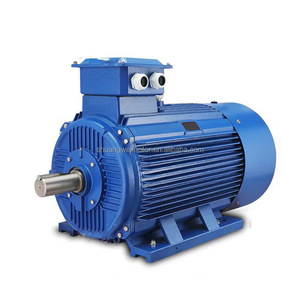
- IC411 / TEFC: Totally Enclosed Fan Cooled. Surface rib cooling ideal for general industrial duties up to 1000 kW.
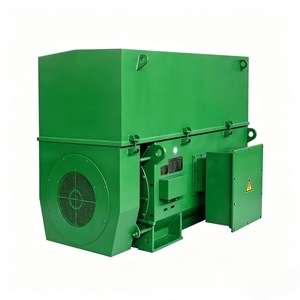
- IC611 / TEAAC: Totally Enclosed Air-to-Air Cooled. Top-mounted heat exchanger tubes designed for dusty mining, cement, and crushing environments.
- IC81W / TEWAC: Totally Enclosed Water-to-Air Cooled. Compact, ultra-quiet cooling utilizing circulating water loop heat exchangers, ideal for marine applications and high ambient environments.
Why Partner with Leading Chinese Wound Rotor Motor Exporters?
Navigating international motor procurement requires selecting a supplier with proven manufacturing capacity, deep engineering competence, and complete transparency during factory acceptance testing.
Full Load Test Field Verification
State-of-the-art megawatt-class motor testing facilities conduct dynamic load testing, temperature rise curves, vibration analysis, and partial discharge diagnostics prior to container shipping.
Custom Engineering Flexibility
Complete mechanical customization including specialized voltage ratings (3kV to 13.8kV), non-standard shaft diameters, dual-shaft extensions, and custom terminal box orientations.
24/7 Global Spare Parts & Emergency Response
Extensive ready-to-ship inventory of carbon brushes, brush holders, slip ring assemblies, bearing kits, and complete backup motors for minimal plant downtime.