Top 10 Continuous Duty Electric Motors Factory & Exporters

2025–2030 Global Engineering Whitepaper: High-Efficiency Heavy Industrial Motors, Technical Duty Cycle (S1) Analysis & Strategic B2B Sourcing Framework

Featured Continuous Duty (S1) Industrial Electric Motors

Below is our curated matrix of heavy-duty industrial electric motors engineered specifically for continuous duty (IEC S1 rating) operations across demanding environments including power stations, mining, cement processing, chemical refining, and heavy machinery automation.

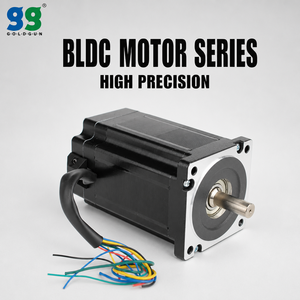
Industrial Automation DC Motor 48V 750W 110mm BLDC
Industrial Automation DC Motors 48V 750W 110mm BLDC Brushless Permanent Magnet Motor 2KW
Voltage Rating: 48V DC Low-Voltage Power Power Range: 750W - 2.0 kW Continuous Motor Architecture: Brushless Permanent Magnet (BLDC) Application: AGVs, Industrial Robotics, Automated Conveyors
Contact Us
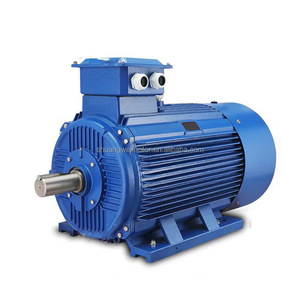
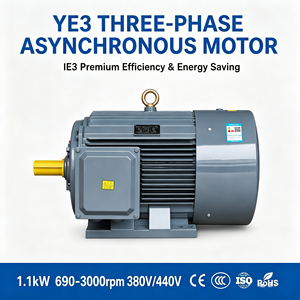
30kw to 200kw High Efficiency Three Phase Induction Motor
30kW - 200kW 2800RPM 380V AC Three-Phase Induction Totally Enclosed High Efficiency Motor
Power Capacity: 30kW, 45kW, 55kW, 75kW, 160kW, 200kW Synchronous Speed: 2800 RPM (2-Pole Configuration) Protection Rating: IP55 / IP56 Totally Enclosed (TEFC) Compliance: IEC 60034 IE3 / IE4 Efficiency Standard
Contact Us
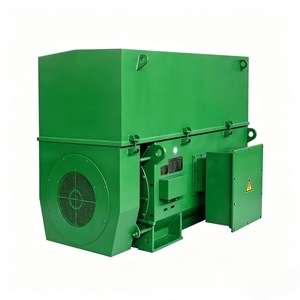
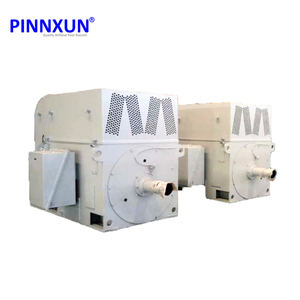
Three Phase Medium Voltage Induction Motor 3kV 6kV 10kV
Three-Phase Medium Voltage Induction Motor 3kV 6kV 10kV AC for Power Plant Boiler Fan
Voltage Classes: 3,000V / 6,000V / 10,000V High Voltage Cooling Standard: IC411 / IC611 Air-to-Air Exchanger Insulation Class: Class F with VPI Resin Impregnation Target Utility: Power Plant Boilers, Heavy Exhaust Fans
Contact Us
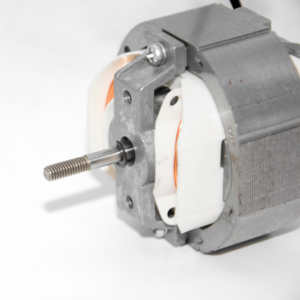
Commercial Kitchen Hood Exhaust Fan Motor Replacement Kit
220V/240V Commercial Kitchen Exhaust Fan Motor Kit Single-Phase Frequency Vent Motor
Supply Voltage: 220V / 240V 60Hz Single-Phase Thermal Protection: Automatic Reset Overload Cutout Enclosure Type: Drip-Proof / Heat Resistant Housing Application: Heavy Ventilation & Kitchen Exhaust Systems
Contact Us
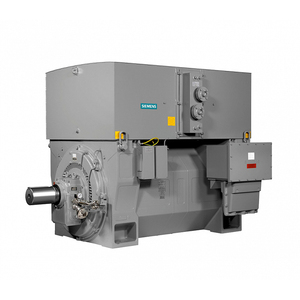
3300V 5500V 6600V Medium Voltage Motor Siemens High Voltage 1000HP
3300V / 5500V / 6600V Medium Voltage High Capacity 1000HP Heavy Industrial AC Motor
Output Rating: 1000 HP Continuous Duty (S1) Operating Voltage: 3.3kV, 5.5kV, 6.6kV Grid Compatible Rotor Type: Heavy-Duty Cast Aluminum / Copper Bar Applications: Crude Oil Pumps, Gas Compressors, Shredders
Contact Us
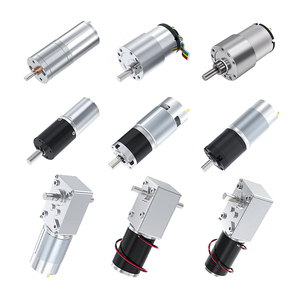
Customize DC Gear Motor 3V to 48V Micro Planetary Brushless Gearbox
Customized Micro DC Planetary Gearbox Motor 3V - 48V Precision Brushless Gear Motor
Input Range: 3V, 6V, 18V, 36V, 48V DC Customizable Gearbox Type: High-Torque Planetary Reduction Gearhead Encoder Integration: Optical / Hall Effect Speed Feedback Target Sector: Medical Devices, Actuators, Precision Drives
Contact Us
YKK YRKK Medium Voltage Slip Ring Motor 150KW to 9000KW
YKK YRKK Series 3300V 4160V 6000V Medium Voltage Induction Motor (150kW - 9000kW)
Power Range: 150 kW up to 9,000 kW Ultra Large Output Voltage Options: 3300V, 4160V, 5500V, 6000V Stator/Rotor Construction: Box Frame Steel Welding / Slip Ring Industry Deployment: Ball Mills, Crushers, Mine Hoists
Contact Us
3 Phase AC Induction Electric Motor 18.5kW to 200kW
3-Phase AC Induction Motor Supplier 18.5kW - 200kW 2800RPM 220V/380V Industrial Motor
Power Spectrum: 18.5kW, 22kW, 30kW, 45kW, 75kW, 200kW Grid Voltage: Dual Voltage 220V Delta / 380V Star 50/60Hz Frame Sizes: Standardized IEC Cast Iron Frame 160M - 315L Operational Duty: S1 Continuous Duty 24/7/365
Contact Us

Enterprise Capacity & Global Sourcing Metrics

With a proud legacy of engineering excellence originating from German industrial roots since 1927, our network represents the pinnacle of large electric motor manufacturing. We combine ultra-heavy custom motor design with rapid stock availability to guarantee zero downtime for critical global infrastructures.

1927 Engineering Heritage
25 MW Max Power Output
13.8 kV Highest Voltage Class
100+ Global Export Markets

Technical Deep-Dive: S1 Continuous Duty Thermal Dynamics & Electrical Architecture

In modern industrial applications—such as mining ventilation systems, municipal water pumps, steel rolling mills, and power station boiler feeds—electric motors operate in S1 Continuous Duty cycle as specified under International Electrotechnical Commission standard IEC 60034-1. S1 duty defines operation at a constant load for an indefinite duration, allowing the machine to reach complete thermal equilibrium.

The Engineering Science of Thermal Equilibrium in S1 Motors

Achieving thermal equilibrium means that the rate of electrical heat dissipation (due to stator copper loss $I^2R$, rotor bar loss, core hysteresis/eddy losses, and stray load losses) precisely equals the rate of thermal dissipation removed by cooling airflow or water circuits. Operating near or at thermal equilibrium without insulation breakdown demands rigorous electromagnetic design, vacuum pressure impregnation (VPI), and precision-engineered cooling topologies (IC411, IC611, IC81W).

VPI Insulation Systems

Utilizing Class H epoxy resin vacuum pressure impregnation (VPI) guarantees zero void formation in stator coils, providing superior dielectric strength withstand up to 13.8kV grid spikes and resisting thermal aging up to 180°C continuous limit.

Advanced Cooling Topologies

From totally enclosed fan cooled (IC411) cast-iron frames to air-to-air heat exchangers (IC611) and air-to-water exchangers (IC81W), specialized cooling ensures winding temperatures remain well within Class B limits (80K rise) even at rated continuous full load.

Bearing Life & Shaft Dynamics

Incorporating insulated sleeve or re-greasable SKF/FAG rolling bearings eliminates electrical bearing currents caused by VFD common-mode voltages, guaranteeing L10h bearing lifespans exceeding 100,000 continuous operating hours.

Comparative Engineering Standard Matrix for Exporters & Plant Procurement

When evaluating global exporters and factory specifications, procurement officers must compare standardized parameters across international regulatory frameworks:

Feature / Parameter IEC Standard (Global) NEMA Standard (North America) High-Voltage Custom Specs
Duty Cycle Rating IEC 60034-1 S1 (Continuous) NEMA MG-1 Continuous Duty S1 Duty with 1.15 Service Factor
Efficiency Class IE3 (Premium) / IE4 (Super Premium) NEMA Premium / e-SUPER Exceeds IE4 across 30kW - 25MW spectrum
Insulation Thermal Margin Class F (155°C) with Class B Rise (80K) Class H (180°C) with Class F Rise VPI Class H with custom mica tape wrapping
Enclosure Protection IP55, IP56, IP65, IP67 Submersible TEFC, TENV, ODP, WPII Pressurized Ex p / Flameproof Ex d
Cooling Configurations IC411, IC611, IC81W, IC511 Frame Equivalent Fan / Exchanger Redundant forced air or water heat exchangers

Future Procurement & Technological Trends (2025–2030)

As heavy industry faces stringent carbon emission regulations, escalating electricity expenditures, and digital transformation mandates, procurement strategies for continuous duty motors are undergoing rapid structural shifts. Key technological vectors reshaping the marketplace include:

1. Transition to IE4 & IE5 Efficiency Standards

Electricity accounts for over 90% of a continuous duty motor's total cost of ownership (TCO) over a 20-year lifespan. Sourcing IE4 Super Premium and IE5 Ultra-Premium efficiency induction and synchronous reluctance (SynRM) motors reduces plant-wide kilowatt-hour consumption by 3% to 7%, generating millions in cumulative energy savings.

2. Integrated IoT & Condition Monitoring

Modern continuous duty motors leave factory floors equipped with smart sensor arrays measuring tri-axial vibration, partial discharge, stator winding thermal gradient, and bearing noise. Real-time predictive maintenance algorithms transmit cloud alerts, preventing catastrophic unscheduled downtime.

3. Wide Bandgap SiC VFD Integration

Variable Frequency Drives (VFDs) utilizing Silicon Carbide (SiC) power electronics operate at higher switching frequencies with minimal harmonic distortion. Continuous duty motors are increasingly spec'd with reinforced magnet wire and insulated shaft bearings to withstand dv/dt voltage pulses without insulation degradation.

Strategic Sourcing Recommendation for EPCs & Plant Directors

When selecting motor suppliers and exporters, prioritize factories offering full-load motor testing facilities capable of performing heat-run tests up to 25 MW with live customer observation lounge or remote digital data streaming. Validating efficiency metrics under actual voltage and torque conditions eliminates performance risk prior to factory acceptance approval (FAT).

Why Partner With Our Motor Manufacturing & Global Export Network?

When standard catalog electric motors fail to meet unique spatial dimensions, extreme ambient temperatures, or demanding voltage tolerances, our manufacturing ecosystem delivers custom-engineered solutions with industry-leading speed:

Custom Mechanical & Electrical Replicas

We produce exact mechanical drop-in replacements for obsolete motors from any brand, replicating historical shaft dimensions, foot hole centers, and flange geometries while upgrading internal electrical efficiency to modern IE3/IE4 standards.

Unrivaled Emergency Stock Holdings

Maintaining one of the largest stock reserves of large industrial electric motors in Europe and Asia—ranging from low voltage 18.5kW units up to 25,000kW high-voltage giants—enables 24/7 immediate dispatch when unexpected motor failure threatens plant shutdown.

State-of-the-Art Test Field & Quality Inspection

Every continuous duty motor undergoes rigorous quality assurance including no-load tests, full-load heat runs, vibration spectrum analysis, impulse voltage testing, and dynamic balancing according to ISO 1940 Grade G1.0 guidelines.

Need immediate technical consulting or an emergency price quotation for high-power motors?

Continuous Duty Electric Motors Sourcing FAQ

What is the difference between S1 Continuous Duty and other IEC duty cycles (S2 to S9)?
IEC 60034-1 S1 Continuous Duty defines operation at rated load for an unlimited duration, reaching complete thermal equilibrium. In contrast, S2 Short-Time Duty operates for a limited period without reaching thermal stability, followed by a rest period. S3 to S8 involve intermittent cyclic loads, starting sequence thermal stresses, or electrical braking duty. S1 motors require heavier copper mass, superior thermal dissipation channels, and robust Class F/H insulation to ensure 24/7 reliability without overheating.
How do ambient temperatures and installation altitude affect S1 motor ratings?
Standard S1 electric motor ratings are calibrated for an ambient temperature up to 40°C and altitudes up to 1,000 meters above sea level according to IEC standards. Higher ambient temperatures reduce the permissible temperature rise limit, while higher altitudes mean thinner air with reduced cooling heat capacity. Operating above these thresholds requires derating the motor output capacity or custom engineering larger frame sizes, higher insulation margins, or forced water-cooling circuits (IC81W).
Why is Vacuum Pressure Impregnation (VPI) critical for medium and high-voltage motors?
Vacuum Pressure Impregnation (VPI) is a process where the fully wound stator core is immersed in a liquid epoxy resin under high pressure and vacuum cycles. VPI eliminates air pockets within the insulation layers, maximizing dielectric strength, preventing internal partial discharge, enhancing thermal conductivity from wire to frame, and protecting the windings against moisture, chemical vapors, and dust contamination.
What protection measures are required when driving continuous duty motors via VFDs?
Variable Frequency Drives generate high peak voltage spikes (dv/dt) and high-frequency common-mode shaft voltages. To prevent insulation damage and fluting breakdown in bearings, VFD-driven continuous duty motors must incorporate: phase-insulated magnet wire, reinforced slot insulation, insulated non-drive-end bearings (or ceramic bearings), shaft grounding rings, and separately powered forced-cooling fans (IC416) to ensure effective cooling at low operating speeds.
How can buyers evaluate the Total Cost of Ownership (TCO) during vendor selection?
TCO is calculated using the formula: $TCO = Capital Purchase Cost + Energy Expenses over Lifespan + Maintenance Costs - Residual Salvage Value$. Because continuous duty S1 motors run 8,000+ hours per year, a 1.5% efficiency improvement often repays the initial motor purchase price within 12 to 18 months of continuous duty. Sourcing higher efficiency classes (IE3/IE4) yields significantly lower lifecycle costs despite a higher upfront purchase price.

Accelerate Your Procurement with Top Continuous Duty Motor Exporters

Whether you require a standard IEC low-voltage motor, a high-voltage 13.8kV plant drive, or a 100% custom mechanical drop-in replacement, our engineering specialists provide fast quotations and technical support worldwide.

Contact Us