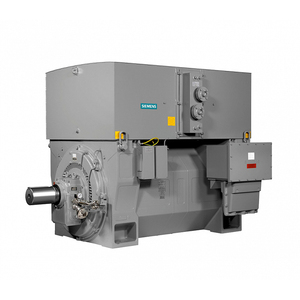
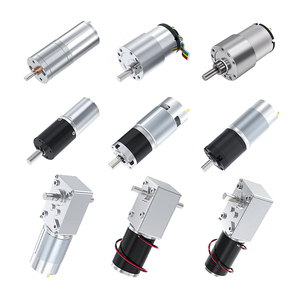
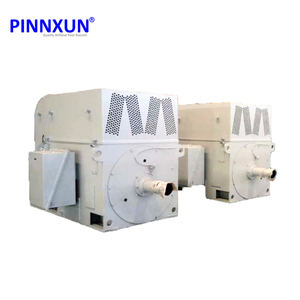
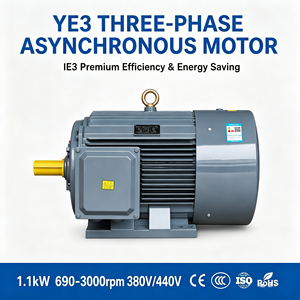
Explore our specialized range of custom-engineered induction, slip ring, permanent magnet, and high-voltage motors built for heavy industrial ambient heat resilience.
An authoritative analysis of thermodynamic challenges, insulation metallurgy, vacuum pressure impregnation (VPI), and derating methodologies in high-temperature industrial environments.
Standard electric motors are rated for a standard ambient baseline of +40°C under IEC 60034-1 guidelines. Operating an electric drive in metal smelters, glass processing facilities, power plant boiler houses, or desert oilfields regularly exposes equipment to ambient temperatures between +50°C and +90°C. Under Arrhenius' Thermal aging theory, every 10°C rise in winding operating temperature above the rated thermal limit cuts insulation thermal lifespan in half. OEM high ambient motors utilize synthetic Class H (+180°C) and Class N (+200°C) resin systems to preserve 100,000+ hour operational lifespans without premature dielectric breakdown.
Preventing turn-to-turn micro-arcing under elevated thermal conditions requires Vacuum Pressure Impregnation (VPI) with solventless epoxy compounds. Furthermore, high ambient OEM/ODM motor frames incorporate enlarged radial cooling fins, external forced ventilation blowers (IC 416), dynamic heat shields, and specialized ceramic-coated or high-temperature C4 radial clearance bearings lubricated with perfluoropolyether (PFPE) synthetic greases capable of withstanding uninterrupted run times at extreme temperatures.
Modern industrial plants rely on Variable Frequency Drives (VFDs) for process control. However, pulse-width modulated (PWM) switching causes reflected voltage waves, high dv/dt spikes, and bearing shaft currents. When coupled with high ambient ambient temperatures, standard magnet wire insulation rapidly degrades. Our custom high-temp motors feature inverter-duty phase insulation, reinforced slot liners, and insulated non-drive end bearings or shaft grounding rings to neutralize destructive discharge currents.
The table below illustrates thermal capacity headroom, allowable winding temperature rise ($\Delta T$), and maximum ambient thresholds across standard vs. heavy-duty custom motor insulation classes.
| Insulation Class | Max Winding Temp Limit | Standard Ambient Limit | Max Hot Spot Allowance | High Ambient ODM Capability | Cooling Method Options |
|---|---|---|---|---|---|
| Class B | 130°C | +40°C | 10°C | Not Recommended (>40°C) | IC 411 (Self-Ventilated) |
| Class F (Standard) | 155°C | +40°C | 10°C | Up to +50°C (With Derating) | IC 411 / IC 01 Open Drip Proof |
| Class H (Custom OEM) | 180°C | +60°C to +75°C | 15°C | Full Output at +60°C Ambient | IC 416 (Forced Air) / IC 611 (Air-Air) |
| Class N / C (Special ODM) | 200°C - 220°C+ | +80°C to +100°C+ | 20°C | Continuous Duty in Kilns/Boilers | IC 81W (Water-Cooled Exchanger) |
Key engineering innovations reshaping thermal management, energy efficiency, and predictive maintenance in high-heat industrial sectors.
Global decarbonization directives and rising electricity tariffs are driving plants to upgrade from IE2/IE3 motors to IE4 Super Premium and IE5 Ultra-Premium efficiency levels. Operating high-efficiency motors in high ambient conditions reduces internal rotor $I^2R$ copper losses and stator iron losses. Lower internal heat generation directly minimizes total thermal stress, permitting higher continuous ambient operation without excessive frame oversizing.
In high ambient facilities where ambient air temperatures exceed +70°C (such as glass furnace halls or steel rolling mills), traditional air-to-air cooling (IC 411 / IC 611) becomes thermodynamically inefficient. The market is shifting rapidly toward closed-circuit water-to-air (IC 81W) heat exchangers and direct liquid jacket cooling, allowing motors to operate at peak output regardless of ambient air temperature spikes.
Modern OEM/ODM high ambient motors are integrated with embedded PT100/RTC resistance temperature detectors, tri-axial vibration sensors, and fiber-optic stator hot-spot monitors. Real-time predictive telemetry transmits temperature gradient analytics to centralized SCADA systems, preventing thermal runaway and allowing plant managers to schedule proactive maintenance prior to insulation failure.
To resist high ambient temperatures without thermal demagnetization, permanent magnet BLDC and Synchronous Reluctance (SynRM) motors now utilize high-coercivity Neodymium-Iron-Boron (NdFeB) or Samarium-Cobalt (SmCo) magnets rated up to +200°C. Concurrently, hybrid ceramic ball bearings with silicon nitride ($Si_3N_4$) balls are becoming the default standard to eliminate electrical pitting and thermal expansion seizing.
Strategic considerations for industrial procurement officers, EPC contractors, and system integrators worldwide.
Leveraging nearly a century of industrial motor engineering heritage to solve complex drive challenges worldwide.
Building upon a foundation established in 1927, our motor engineering practices strictly adhere to EN 60034, IEC 60034, VDE, DIN, and ISO 9001 quality standards. We deliver robust industrial electric motors up to 25 MW output and 13.8 kV stator voltage for the world's most demanding operations.
Quality and reliability are verified under real-world load conditions. Our state-of-the-art motor test fields enable full load testing, heat run testing, and thermal imaging for high and low voltage AC and DC motors. Customers can inspect and witness acceptance tests live from our observation facilities or via remote digital video feed.
When unexpected motor failures threaten plant production, speed is critical. We maintain one of Europe's largest stocks of heavy industrial motors—including high-voltage squirrel cage, slip ring (wound rotor), and DC motors. Our in-house machining shops allow immediate structural modification and dispatch within hours.
Whether you require non-standard shaft extensions, special mounting flanges, altered terminal box positions, heavy-duty IP66/IP67 weatherproofing, or specialized hazardous area certifications (Ex p, Ex ec, Ex tc), our technical design department engineers custom solutions for seamless physical integration.
Detailed technical and commercial answers addressing common engineering and procurement inquiries.
When operating above the standard baseline of +40°C ambient (per IEC 60034-1), a standard motor's continuous nominal output power must be derated to avoid overheating the insulation. Typically, a standard Class F motor operating in +50°C ambient requires a 5% to 8% power derating factor (k ≈ 0.92 to 0.95); at +60°C ambient, derating increases to 15% to 20% (k ≈ 0.80 to 0.85). Alternatively, ordering an OEM custom high ambient motor utilizing Class H insulation allows full 100% rated output at +60°C ambient without oversizing the motor frame size.
Class H (+180°C) and Class N (+200°C) thermal insulation systems employ advanced inorganic and composite dielectrics. These include polyimide (Kapton) wire film wrapping, Nomex slot liners, mica glass tape for high-voltage stators, and 100% solid-content solventless epoxy or silicone-modified VPI resins. These materials maintain structural integrity, electrical dielectric strength, and moisture resistance even during continuous thermal stress.
In high ambient operations (>+50°C), standard lithium grease breaks down and thins out rapidly, leading to bearing seizure. We utilize special high-heat synthetic greases (such as perfluoropolyether or synthetic fluorinated greases) with operating ranges up to +220°C. Mechanically, bearings are specified with C4 radial internal clearance to accommodate differential thermal expansion between the rotor shaft and bearing housing. In severe ambient heat, insulated ceramic bearings or liquid-cooled bearing pedestals are deployed.
Yes. A core strength of our ODM/OEM engineering service is replicating hard-to-find or obsolete legacy motors from original manufacturer nameplates or physical site measurements. We match critical foot-hole centers, shaft center heights (H dimension), shaft diameter, keyways, flange dimensions, and terminal box orientations so the new high-heat motor drops onto existing foundations without structural altering of your machinery.
For ambient air temperatures above +70°C, traditional air-over cooling (IC 411) is ineffective because the cooling air itself is too hot to absorb winding heat. We recommend closed-loop cooling configurations such as IC 81W (Air-to-Water heat exchanger), where chilled process water absorbs heat from internal recirculating air, or forced ventilation systems (IC 416) drawing cool air via ducted inlets from outside the high-heat zone.
High ambient motors driven by Variable Frequency Drives (VFDs) feature reinforced inverter-duty insulation systems. Stator magnet wires are coated with corona-resistant enamel, phase insulation is doubled, and the complete winding bundle undergoes VPI treatment to eliminate internal air voids. To protect bearings from shaft currents induced by VFD common-mode voltages, non-drive end insulated bearings and grounding brushes are integrated as standard.
Every motor undergoes comprehensive testing in our certified motor test fields. Standard documentation includes Routine Test Reports (winding resistance, insulation resistance, high-voltage dielectric withstand test, no-load balance), Type Test Reports (full load thermal rise test, efficiency determination per IEC 60034-2-1), vibration spectral analysis, sound level tests, and ISO 9001 compliance certificates. Live customer-witnessed acceptance testing is also supported.
Because we maintain one of Europe's largest inventories of unmodified heavy-duty motor frames, standard modifications (Class H re-insulation, custom shaft machining, flange adaptations, mounting specialized thermal sensors) can be completed under fast-track delivery programs in as little as 1 to 3 weeks. Complete ground-up engineered custom MV/HV motor builds generally range from 6 to 12 weeks depending on frame size and certification requirements.