OEM/ODM Dual Speed Asynchronous Motors Factories & Suppliers

Global B2B Manufacturing White Paper & Custom Procurement Guide
Featured OEM/ODM Portfolio

Industrial Grade Asynchronous & Synchronous Motor Solutions

High-torque, multi-speed, and custom-engineered induction electric motors built to international IEC, VDE, and ISO standards for demanding OEM applications.

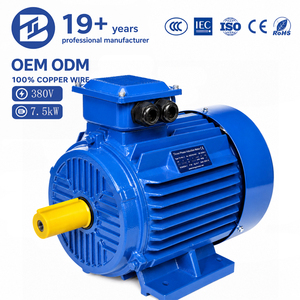
BIOTE YE3-200L2-2 AC Electric Asynchronous Motor

BIOTE YE3-200L2-2 37kW 2950RPM AC Asynchronous Motor

Ultra-high efficiency 380V 2P three-phase induction motor available in 7.5kW to 37kW ratings. Heavy-duty cast iron frame engineered for continuous operation.

Inquire Now
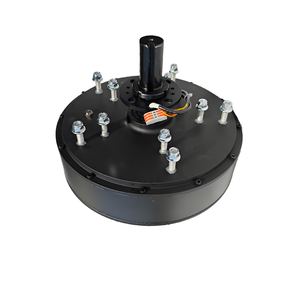
A400 1800W Permanent Magnet Synchronous Motor

A400 1800W 220V 3-Phase PMSM Motor IP65

Precision permanent magnet synchronous drive engineered specifically for 20ft/24ft industrial ventilation fans, offering superior energy savings and variable speed control.

Inquire Now
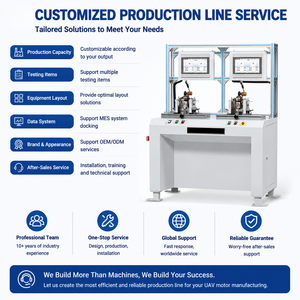
Automatic UAV Drone Brushless Motor Production Line

Automated Brushless Motor Manufacturing Assembly Line

Custom OEM/ODM turnkey production machinery for high-efficiency UAV drone motors, micro brushless drives, and automated stator winding systems.

Inquire Now
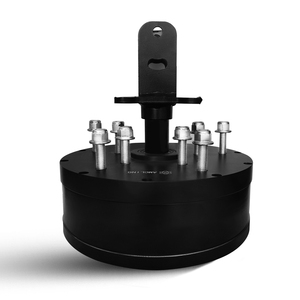
Industrial PMSM Direct Drive Motor Model E265

Industrial PMSM Direct Drive Motor 220V 0.75kW (Model E265)

High-torque gearless direct-drive solution tailored for 4.8m diameter HVLS ceiling fans. Quiet operation, maintenance-free design with a 3-year factory warranty.

Inquire Now
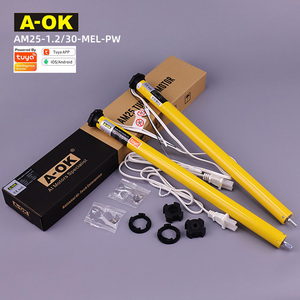
A-OK AM25 Smart Tubular Motor for Blinds

A-OK AM25-1.2/30 Tuya WiFi Smart Tubular Blind Motor

Compact 25mm motorized shade actuator with integrated Tuya smart control, RF remote protocol, and dual-direction speed regulation for commercial automation.

Inquire Now
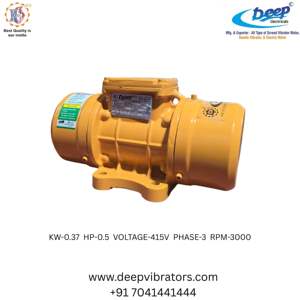
0.5HP 415V Three Phase Asynchronous Motor TEFC

0.5HP 415V 3-Phase Foot Mount TEFC Asynchronous Motor

Heavy-duty industrial induction drive with 110mm frame size, TEFC totally enclosed fan-cooled structure, engineered for continuous pump and conveyor drives.

Inquire Now
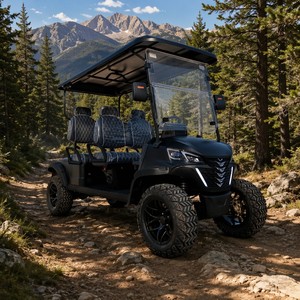
72V Lithium All-Terrain Electric Buggy Drive System

72V Lithium All-Terrain Offroad Electric Drive System

High-power dual-speed asynchronous transaxle drive set designed for 4-seater lifted golf buggies and utility vehicles operating across rugged offroad terrain.

Inquire Now
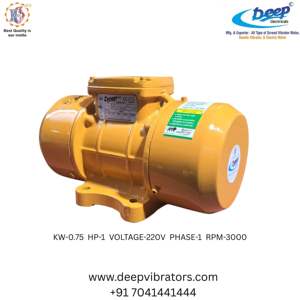
Three Phase Foot Mount Asynchronous Motor 1HP TEFC

1HP 220V 50Hz/60Hz TEFC High-Efficiency Foot Mount Motor

Standardized dual-frequency (50/60Hz) three-phase induction motor enclosed in a rugged cast housing, providing stable speed control under varying thermal loads.

Inquire Now
25 MW
Max Power Capacity
13.8 kV
Max Voltage Rating
ISO 9001
Certified Factory Floor
100+
Years Combined Experience
Technical White Paper & Architecture

Engineering Fundamentals of Dual Speed Asynchronous Motors

An authoritative deep dive into pole-changing topologies, Dahlander winding configurations, and thermal dissipation mechanisms for industrial OEM buyers.

Dahlander Winding Circuitry vs. Separate Stator Windings

Dual-speed asynchronous motors provide two discrete operational speeds without requiring expensive variable frequency drives (VFDs). This is achieved through two primary winding paradigms:

1. Dahlander Pole-Changing Connection (1:2 Speed Ratio): Uses a single stator winding tapped at intermediate points. By switching external contactors between Delta (Δ) and Double Star (YY) or Star (Y) and Double Star (YY), the motor alters its magnetic pole count (e.g., 4-pole to 2-pole), shifting synchronous speeds seamlessly (e.g., 1500 RPM to 3000 RPM at 50Hz).

2. Dual Separate Windings (Arbitrary Speed Ratios): Incorporates two electrically isolated stator windings inside a single slot configuration. This allows non-1:2 ratios, such as 6-pole/8-pole (1000/750 RPM) or 4-pole/6-pole (1500/1000 RPM), ideal for complex ventilation profiles.

Torque Profiles & Mechanical Load Matching

When selecting OEM dual-speed motors, understanding the mechanical torque characteristic of the driven equipment is paramount to preventing thermal overload during pole transitions:

Constant Torque Loads: Required for machinery like positive displacement pumps, cranes, hoists, and machine tool spindles. The motor provides identical output torque across high and low speeds. Operating power scales linearly with speed ($P \propto N$).

Variable Torque (Quadratic) Loads: Tailored for centrifugal pumps, cooling towers, and industrial HVAC blowers. Torque scales quadratically with speed ($T \propto N^2$), while power scales cubically ($P \propto N^3$). Switching from high speed to low speed cuts energy consumption by up to 75%.

Information Gain & Visual Analytics

Dahlander Pole-Changing vs. Dual Separate Winding Motors

Comprehensive engineering comparison matrix for procurement directors and mechanical systems integrators.

Engineering Metric Dahlander Single Winding (1:2 Ratio) Dual Separate Stator Windings VFD-Driven Single-Speed Motor
Speed Ratio Options Fixed strictly to 1:2 (e.g., 2/4, 4/8, 6/12 poles) Flexible non-1:2 ratios (e.g., 4/6, 6/8, 8/10 poles) Infinitely variable from 0 RPM to base speed
Slot Fill Efficiency Optimal (~85% active copper utilization) Reduced (~50-60% per winding utilization) Maximum (~90% optimized winding fill)
Stator Frame Size Impact Standard IEC frame sizes (Compact) 1-2 frame sizes larger due to dual slots Standard compact IEC frame size
Harmonic Heating & EMI Zero high-frequency EMI noise Zero high-frequency EMI noise High dV/dt, requires EMI filtering & insulated bearings
Initial OEM Procurement Cost Low - Medium Medium High (Motor + Inverter + Shielded Cables)
Maintenance & Reliability Extremely robust, simple contactor switching Robust, complete electrical isolation Requires regular drive firmware & capacitor maintenance
Factory Engineering Superiority

Why Global Tier-1 Buyers Choose Our Motor OEM/ODM Facilities

From custom winding designs to rigorous high-voltage testing, our manufacturing ecosystem provides unparalleled reliability and agility.

Advanced VPI Insulation Systems

Our stator windings undergo automated Vacuum Pressure Impregnation (VPI) with high-grade Class H resin. This eliminates air voids, enhances dielectric strength up to 13.8kV, and guards against tropical humidity, chemical vapors, and thermal shock.

In-House Full-Load Test Field

Every dual-speed motor leaving our factory undergoes string testing on our state-of-the-art test bed. We verify temperature rise curves (IEC 60034-1), vibration levels (ISO 10816), noise emissions, and dynamic contactor switching torque spikes.

Tailored Mechanical Configurations

We provide full mechanical customization, including non-standard shaft extensions, special flanges (B5, B14, V1), cast iron or aluminum enclosures (IP55, IP65, IP66, IP67), marine-grade paint systems (C5-M), and built-in PTC thermistors.

Strategic Procurement Analysis

Future Procurement & Technological Trends (2025–2030)

Emerging market dynamics shaping how heavy industrial buyers source, implement, and maintain dual-speed induction motors.

1. Convergence of Dual-Speed Systems with Smart IoT Telemetry

Industrial automation is shifting toward predictive maintenance. Modern OEM dual-speed motors are increasingly retrofitted with embedded IoT sensor suites monitoring tri-axial vibration, stator bearing temperatures, and insulation resistance in real time.

During speed transition (e.g., low-to-high pole switching), transient torque spikes generate brief thermal and mechanical stress. Telemetry integration allows plant engineers to optimize contactor delay times, reducing peak currents and extending bearing life by up to 35%.

2. IE4 / IE5 Efficiency Regulations vs. VFD By-Pass Architecture

As global regulations (such as EU MEPS and US DOE standards) demand higher energy efficiency, plant operators face harmonic losses introduced by VFDs in continuous-duty applications.

Future procurement strategies favor dual-speed motors in applications running predominantly at fixed dual points (e.g., day/night ventilation). By running directly on line power without inverter losses, dual-speed motors deliver higher overall system efficiency (TCO) than VFD-driven single-speed units operating under continuous pulse-width modulation (PWM).

3. Modular Manufacturing & Supply Chain Resilience

Global supply chain volatility has made lead time reduction a critical procurement metric. Factories offering standardized modular castings—where stators can be rapidly wound into Dahlander, separate-winding, or PMSM configurations—are dominating B2B contract wins.

OEM buyers are transitioning toward dual-sourcing models, partnering with flexible Asian factories equipped with rapid prototyping facilities for custom voltage, frequency (50Hz/60Hz), and mounting adaptations.

4. Hybridization of PMSM and Asynchronous Architectures

While standard squirrel-cage asynchronous motors dominate due to low initial costs, high-performance applications (such as HVLS commercial fans and heavy offroad electric vehicles) are embracing Direct-Drive Permanent Magnet Synchronous Motors (PMSMs).

Contractors are specifying hybrid systems: robust asynchronous motors for high-starting-torque industrial pumps and direct-drive PMSMs for gearless, low-noise continuous operations.

Procurement & Technical FAQ

Frequently Asked Questions by Industrial Buyers

Expert answers addressing critical selection, engineering, and manufacturing questions for dual-speed asynchronous motors.

What is the main difference between Dahlander motors and separate winding motors?

A Dahlander motor uses a single tapped stator winding to achieve a strict 1:2 speed ratio (e.g., 4-pole/2-pole or 8-pole/4-pole) through external contactor reconnection. A separate winding motor contains two independent stator windings, allowing flexible pole combinations (e.g., 6-pole/4-pole or 8-pole/6-pole) for non 1:2 speed requirements, though it slightly increases the motor frame size.

Can dual-speed asynchronous motors be powered by Variable Frequency Drives (VFDs)?

While dual-speed motors are typically designed to operate directly across-the-line (DOL) using contactor logic, they can be driven by a VFD if locked into a single winding configuration. However, doing so is generally redundant since the VFD itself provides variable speed. If VFD operation is required, stator windings must be reinforced with VPI Class H insulation to withstand high dV/dt voltage spikes.

How do I select between Constant Torque and Variable Torque dual-speed motors?

Selection depends strictly on the mechanical load profile. For fans, blowers, and centrifugal pumps, choose Variable Torque (VT) motors, where power scales cubically with speed, maximizing power savings at low speed. For machine tools, hoists, crushers, and positive displacement pumps, choose Constant Torque (CT) motors, which maintain full rated torque regardless of whether the motor operates in low or high-speed mode.

What customization options should be specified in an OEM/ODM Request for Proposal (RFP)?

Key OEM specifications include: Operating Voltages (220V/380V/415V/660V/6kV/10kV), Frequency (50Hz/60Hz), Duty Cycle (S1 continuous vs. S3 intermittent), Protection Class (IP55/IP65/IP66/IP67), Insulation Class (F/H), Terminal Box position (Top/Right/Left), Shaft geometry (Keyed/Splined/Tapered), and Thermal Sensors (PTC thermistors/PT100 RTDs).

How does rapid pole-switching impact contactors and motor thermal limits?

Switching from high to low speed causes transient regenerative braking, where the motor briefly acts as a generator, creating voltage and mechanical torque surges. To protect the motor stator and mechanical couplings, a time-delay relay (typically 100ms to 500ms) must be incorporated into the contactor control circuit to allow magnetic flux decay before energizing the second winding set.

What international standards govern the export of your OEM motors to North America and Europe?

Our manufacturing facilities adhere strictly to IEC 60034-1 (Rotating Electrical Machines Performance), IEC 60072 (Dimensions and Frame Series), DIN/VDE standards, CE directives (Low Voltage Directive 2014/35/EU), and ISO 9001 quality management systems. Motors exported to North America can be configured to comply with NEMA MG-1 and UL/CSA certification standards upon request.

Partner with a Leading Electric Motor OEM/ODM Manufacturer

Need custom dual-speed asynchronous motors, high-voltage induction drives, or specialized direct-drive PMSM solutions? Our engineering team provides complete technical support, rapid prototyping, and competitive factory-direct pricing.

Inquire Now