Engineered for extreme continuous operation, maximum energy efficiency, and low Total Cost of Ownership (TCO) across global industrial sectors.
Combining European precision engineering heritage with world-class Chinese manufacturing scale, state-of-the-art test fields, and rapid emergency replacement capabilities.
When legacy electric motors fail or obsolete mounting dimensions are encountered, our engineering team manufactures 100% mechanically and electrically interchangeable replica motors up to 25 MW, eliminating costly plant modifications.
Utilizing advanced high-grade mica tapes, solventless epoxy resins, and automated VPI dipping systems to ensure maximum dielectric strength, resistance to thermal shock, and protection against corrosive industrial atmospheres.
Our state-of-the-art testing facility is equipped with high-capacity load banks capable of conducting full-load vibration, thermal rise, torque-speed curve, and efficiency verification testing up to 25,000 kW and 13.8kV.
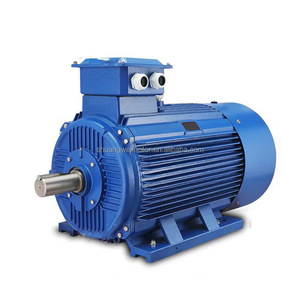
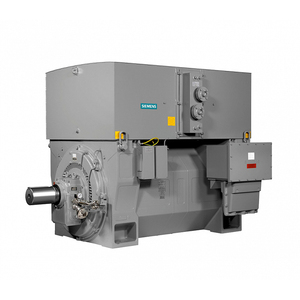
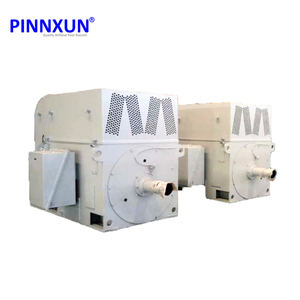
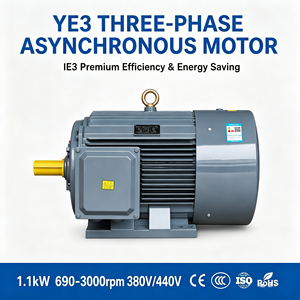
Squirrel cage induction motors represent the foundational drive technology for industrial manufacturing, water utilities, mining infrastructure, power plants, and petrochemical complexes worldwide. Renowned for their rugged structural integrity, self-starting torque capabilities, and low maintenance demands, three-phase asynchronous squirrel cage induction motors convert electrical energy into mechanical rotation through electromagnetic induction between the stationary stator windings and the short-circuited rotor assembly.
The stator core is built from high-permeability, low-loss electrical steel laminations (e.g., grade 50WW470 or 35WW300 silicon steel) stacked under high hydraulic pressure to minimize hysteresis and eddy current losses. Form-wound copper coils, insulated with mica-glass tapes and impregnated under vacuum pressure with high-temperature epoxy resins, are inserted into the stator slots. For medium and high-voltage applications (3kV to 13.8kV), partial discharge suppression coatings are integrated to ensure operational longevity under severe electrical stress.
The rotor of a squirrel cage motor consists of conductive bars embedded in rotor slots and short-circuited at both ends by heavy end-rings. Premium industrial manufacturers utilize two primary rotor technologies depending on power rating and operating environment:
| Rotor Technology | Material & Fabrication | Thermal & Mechanical Characteristics | Primary Application Range |
|---|---|---|---|
| Die-Cast Aluminum Rotor | High-purity molten aluminum centrifugally cast into rotor slots. | Cost-effective, highly reliable, ideal for small-to-medium frame motors (up to 315 kW). | Standard HVAC, commercial fans, light industrial pumps, general machinery. |
| Fabricated Copper Bar Rotor | Oxygen-free copper bars silver-brazed to copper end-rings. | 40% higher electrical conductivity, lower rotor copper losses ($I^2R$), superior thermal withstand during frequent starting. | Heavy industrial drives, high-torque cement mills, mine hoists, power plant fans (>350 kW to 25 MW). |
| Die-Cast Copper Rotor | High-temperature die-casting using specialized copper alloys. | Achieves IE4 / IE5 ultra-premium efficiency within standard IEC frame sizes without increasing motor volume. | Variable Frequency Drive (VFD) intensive processes and energy-critical continuous duty plants. |
Thermal management dictates motor life expectancy. Electric motor insulation insulation lifespan drops by 50% for every 10°C rise above thermal design limits. Leading Chinese manufacturers provide custom cooling configurations compliant with IEC 60034-6 standards:
Strategic insight for global B2B procurement managers, EPC contractors, and plant engineering directors evaluating long-term equipment acquisition.
Electricity consumption accounts for over 92% of an industrial motor's total lifecycle cost, while initial purchase price represents less than 5%. Global procurement strategies have shifted decisively from CAPEX-driven purchasing to OPEX-driven TCO evaluation. China’s motor suppliers are rapidly scaling production of IE4 squirrel cage motors and Synchronous Reluctance (SynRM) hybrid motors to fulfill strict global carbon reduction mandates.
Modern processes demand variable speed control via VFDs (Variable Frequency Drives). However, high-frequency Pulse Width Modulation (PWM) switching causes harmful high-frequency shaft voltages leading to electrical discharge machining (EDM) in bearings. Top suppliers now integrate insulated non-drive-end bearings (insulated ceramic coatings or hybrid ceramic balls) and shaft grounding rings as standard engineering practices.
Unplanned downtime in heavy industries like mining or steel rolling can cost tens of thousands of dollars per hour. Procurement specifications increasingly require embedded PT100 temperature sensors in windings and bearing housings, SPM vibration monitoring studs, and integrated IoT telemetry modules for predictive failure analytics.
Supply chain resilience is now a top priority. Leading Chinese manufacturers maintain massive inventories of standardized stator cores, cast iron frames, and shaft blanks. This enables rapid customization of terminal box positioning, flange shaft extensions, and special voltages (e.g., 3.3kV, 4.16kV, 6.6kV, 10kV, 11kV) with lead times 50% faster than traditional Western OEMs.
The electric motor industry is undergoing a profound technological transformation driven by materials science, precision automated manufacturing, and advanced thermal modeling algorithms.
Traditional electric motors utilize 0.5mm silicon steel laminations. Next-generation high-frequency and high-efficiency induction motors are adopting 0.35mm and 0.27mm ultra-thin cold-rolled non-oriented electrical steel sheets. This reduction in lamination thickness decreases core eddy current losses by up to 25%, enabling higher electrical efficiency under VFD power supplies with high carrier frequencies.
Heat extraction from stator slot end-turns has long been a bottleneck in high-power density motors. Advanced motor foundries are introducing 3D-printed internal cooling jackets and optimized aerodynamic fan blades. By utilizing computational fluid dynamics (CFD) simulation, cooling air distribution across external cooling fins is optimized, reducing hotspot temperatures by 12–15°C.
Industrial expansion in offshore wind support vessels, hydrogen production facilities, and deep-shaft mining requires specialized explosion-proof enclosures. China's top manufacturers now engineer specialized motors complying with ATEX, IECEx, and China GB standards:
Engineered to excel in demanding environments across global infrastructure, energy, and heavy processing industries.
Expert technical answers to essential questions asked by B2B buyers, plant electrical engineers, and international procurement managers.
Efficiency classes are defined by IEC 60034-30-1 standard. IE2 represents High Efficiency, IE3 is Premium Efficiency, IE4 is Super Premium Efficiency (reducing energy losses by roughly 15% compared to IE3), and IE5 is Ultra Premium Efficiency. Upgrading from IE2 to IE4 on a 200kW continuous-duty motor typically pays back the initial capital investment in under 12 to 18 months through electricity savings.
IP (Ingress Protection) ratings specify sealing against solids and liquids. IP55 provides dust protection and water jet resistance (standard for industrial plants). IP65 offers complete dust-tight protection for fine powder environments (cement, flour processing). IP67 protects against complete water immersion, suitable for marine decks, washdown food processing, or subterranean mining operations.
Yes. All our premium squirrel cage motors engineered for VFD operation feature inverter-duty insulation systems (Class H VPI with reinforced phase separators) capable of withstanding voltage spikes up to $dV/dt$ limits specified in IEC 60034-25. For motors above 100kW powered by VFDs, we recommend adding insulated non-drive-end bearings and shaft grounding devices to prevent bearing fluting caused by circulating shaft currents.
Class F insulation is rated for maximum continuous operating temperatures of 155°C. When a motor is designed with a Class B temperature rise limit (maximum 80°K thermal rise above 40°C ambient), the motor operates with a 35°C thermal safety margin. This significantly extends insulation life, allows for temporary overload conditions, and ensures high reliability in extreme ambient temperatures.
Every motor undergoes strict routine factory testing according to IEC 60034-1. Delivered packages include Type Test Reports, Winding Resistance Measurements, No-Load & Locked-Rotor Test Certificates, Vibration Analysis Reports (ISO 1940), Insulation Resistance & HV Flash Test Reports, 3.1 Material Certificates, and ISO 9001 / CE / ATEX compliance documents. Customers are welcome to attend live factory acceptance tests (FAT) in person or via remote video link.
We maintain extensive stock reserves of standard low and medium-voltage motors (up to 10,000 kW). For standard stock motors, dispatch can occur within 24 to 48 hours. For custom mounting foot or flange modifications, our emergency manufacturing team can adjust shaft dimensions, terminal box orientations, and paint systems within 5 to 7 business days, minimizing costly plant downtime.
Need precise technical datasheets, CAD dimensional drawings, or an immediate quotation for high-efficiency squirrel cage induction motors? Speak directly with our senior drive application engineers.
Inquire Now