Exhibiting: Mining Metals Central Asia — 16–18 Sept 2026, Almaty, Kazakhstan | Write for free tickets: [email protected]
China Best High Pressure Blower Motors Manufacturers & Manufacturer
Technical Engineering Whitepaper: High-Efficiency Drive Systems, Aerodynamic Pressure Optimization, and OEM Sourcing Benchmarks for Industrial Blowers
Featured Product Range
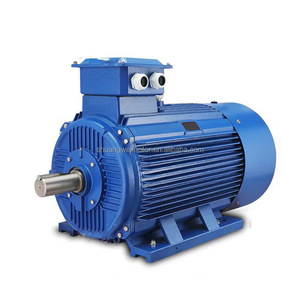
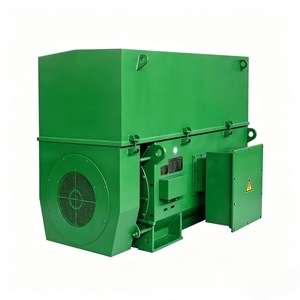
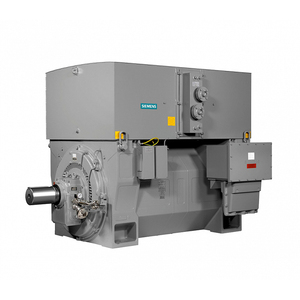
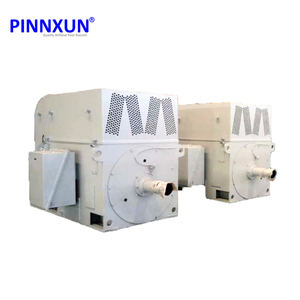
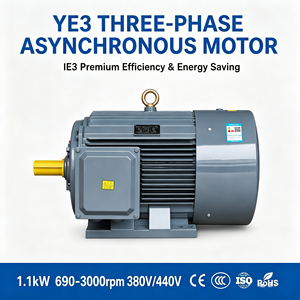
Industrial Electric Motors for High-Pressure Blower Applications
High-performance three-phase induction, medium-voltage, and permanent magnet brushless motors engineered for continuous duty in heavy industrial air movement and pneumatic systems.
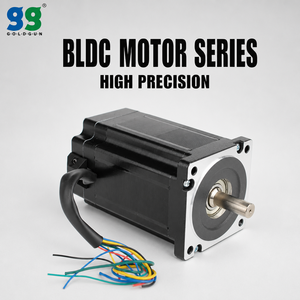
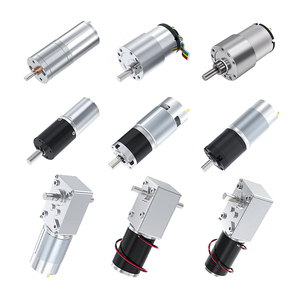
Industrial Automation DC Motors for Electric 48V 750W 110mm BLDC Brushless Motor Permanent Magnet Motor 2KW
Thermodynamic & Mechanical Dynamics of High-Pressure Blower Motors
Industrial high-pressure blowers—including centrifugal turboblowers, multi-stage side-channel exhausters, and positive displacement Roots blowers—operate under unique aerodynamic loading conditions. Unlike standard HVAC fans operating against low static pressures (typically under 2 kPa), high-pressure blower applications subject the electric motor to static differential pressures exceeding 10 kPa to over 100 kPa. Sourcing from top China best high pressure blower motors manufacturers & manufacturer setups requires evaluating core electromechanical parameters to ensure system reliability and thermal endurance under continuous S1 duty cycles.
The total pressure produced by an industrial blower system is directly coupled to the rotational speed ($N$) and shaft torque ($\tau$) provided by the electric driving motor. The mechanical shaft power demand ($P_m$) is calculated via:
Where $Q$ represents volumetric air throughput, $\Delta P_{total}$ is total pressure differential, $\eta_{fan}$ is aerodynamic impeller efficiency, and $\eta_{transmission}$ represents coupling/belt efficiency. When selecting high-pressure blower motors, OEM procurement managers must account for steep torque-speed curves, high initial inertia ($GD^2$ or $WK^2$), and aerodynamic stall conditions that push standard induction motors beyond their thermal limits.
High Starting Inertia (WK²) Capability
High-pressure centrifugal impellers possess substantial rotational mass. Tier-1 Chinese motor manufacturers engineer heavy-rotor squirrel-cage induction systems capable of enduring prolonged acceleration times without exceeding class-H thermal dissipation limits.
VFD Inverter-Duty Insulation
Variable Frequency Drives (VFDs) modulate blower velocity for flow regulation. Premium Chinese motor OEMs utilize Corona-Resistant Magnet Wire combined with Vacuum Pressure Impregnation (VPI) to withstand dV/dt voltage spikes exceeding 1600V/μs.
Vibration Tolerance (ISO 10816-3)
Aerodynamic imbalances in high-pressure air streams transmit radial forces to the motor shaft. Standard motors comply with Grade A balance (RMS < 1.8 mm/s), while specialized blower motors achieve Grade R precision (RMS < 0.71 mm/s).
To assist global procurement officers and system engineers in evaluating high-pressure blower motor options from Chinese OEM manufacturers, the matrix below details key electromechanical specifications across Low Voltage (LV), Medium/High Voltage (MV/HV), and Permanent Magnet Brushless (PM-BLDC) motor platforms.
Technical Parameter
Standard Industrial AC Motor
High-Pressure Blower Motor (LV)
Heavy-Duty MV/HV Blower Motor
Permanent Magnet BLDC Motor
Power Output Range
0.75 kW – 315 kW
18.5 kW – 355 kW
150 kW – 25,000 kW (25 MW)
0.75 kW – 45 kW
Operating Voltage
220V / 380V / 415V
380V / 440V / 690V
3.3kV / 6kV / 10kV / 13.8kV
24V / 48V / 310V DC
Efficiency Standard
IE2 / IE3 (IEC 60034-30)
IE3 / IE4 Ultra-Premium
IE3 / IE4 Equivalent
IE5 Super Premium Equivalent
Cooling Methodology
IC411 (TEFC)
IC411 / IC416 (Forced Air)
IC611 (Air-Air) / IC81W (Water)
IC410 / Natural Convection
Bearing System
Deep Groove Ball Bearings
SKF/NSK C3 Clearance + Grease Nipples
Insulated Sleeve or Rolling Bearings
Precision Shielded Ball Bearings
Protection & Insulation
IP55 / Class F
IP55/IP66 / Class H (VPI)
IP55/IP65 / Class H (VPI)
IP54/IP65 / Class F
Inverter Duty (VFD)
Optional (10:1 Turndown)
Standard (20:1 Turndown + Grounding)
VFD-Compatible Insulated Stator
Integrated/External BLDC Controller
Strategic Procurement & Technology Trends in China's Motor Industry (2025–2030)
As global decarbonization mandates tighten (such as the EU Energy Efficiency Directive and US DOE motor efficiency thresholds), Chinese electric motor manufacturers are aggressively advancing their R&D capabilities. Purchasing teams sourcing high-pressure blower motors must prepare for three critical technology transformations currently reshaping the China manufacturing ecosystem:
1. Shift from IE3 to IE4/IE5 Super-Premium Efficiency Standards
China's GB 18613-2020 energy efficiency standard aligns strictly with international IEC 60034-30-1 norms. Leading Chinese blower motor manufacturers have transitioned production lines toward IE4 (Ultra-Premium Efficiency) and IE5 (Super-Premium Efficiency) ratings. By upgrading stator copper slot-fill ratios, utilizing high-permeability cold-rolled silicon steel laminations (0.35mm thickness), and optimizing air-gap geometry, energy losses are reduced by up to 25% compared to legacy IE2/IE3 motors. For a 200kW high-pressure blower operating 8,000 hours annually, an IE4 motor yields operational electricity savings exceeding $14,000 USD per year.
Traditional high-pressure blowers rely heavily on belt drives or step-up gearboxes to achieve high rotational speeds (3,600 RPM to 20,000+ RPM). Procurement trend data reveals a rapid replacement of mechanical power transmissions with Direct-Drive High-Speed Permanent Magnet Motors. Eliminating belt slippage and gearbox mechanical resistance boosts overall system efficiency by 8% to 15%, reduces footprint by 40%, and eliminates lube oil contamination risks in sensitive pharmaceutical and wastewater treatment facilities.
Industrial IoT (IIoT) sensors are increasingly embedded directly into the end-shields of China-manufactured high-pressure blower motors during OEM assembly. Integrated tri-axial vibration sensors, PT100 resistance temperature detectors (RTDs) in stator windings, and magnetic flux sensors stream telemetry data back to centralized SCADA systems. Advanced predictive analytics detect early bearing flaking, rotor bar cracking, or phase imbalance prior to catastrophic motor failure, reducing unplanned downtime by over 70%.
Selecting the ideal China best high pressure blower motors manufacturers & manufacturer vendor involves auditing technical testing infrastructure, quality control systems, and raw material provenance. Leading Chinese OEM factories combine European design heritage with high-capacity precision manufacturing.
Vacuum Pressure Impregnation (VPI)
Stator coils undergo multi-stage vacuum pressure impregnation with solventless resin, eliminating air voids, protecting against conductive dust, and ensuring dielectric strength exceeding 15 kV.
Full-Load Test Field Infrastructure
Advanced in-house test fields capable of full-load thermal run tests up to 25 MW and 13.8 kV, equipped with digital power analyzers and automated vibration spectral analysis.
Dynamic Rotor Balancing
Computer-controlled dual-plane dynamic balancing machines balance blower motor rotors to ISO 1940-1 Grade G1.0, dramatically extending bearing lifespan under high RPM loads.
Global Certification Compliance
Full compliance with international standards: ISO 9001:2015, ISO 14001, CE, ATEX for hazardous zones (Ex d, Ex ec), CSA, and UL electrical safety certifications.
Below are authoritative technical responses to frequently asked procurement and engineering questions regarding China-manufactured high-pressure blower motors.
What is the critical difference between a standard TEFC motor and a specialized high-pressure blower motor?
Standard TEFC (Totally Enclosed Fan Cooled) motors are optimized for constant-torque or general variable-torque pump/fan duty with low starting inertia. High-pressure blower motors feature reinforced rotor cages (often fabricated copper bars or high-grade cast aluminum) engineered to withstand prolonged start-up thermal stresses caused by heavy blower impellers ($WK^2$). Additionally, blower motors incorporate C3 or C4 clearance precision bearings (SKF/NSK) and specialized end-shields to absorb radial thrust loads imparted by high aerodynamic pressure differentials across the fan housing.
How do Chinese motor manufacturers prevent shaft currents and bearing fluting during VFD operation?
When high-pressure blowers are driven by Variable Frequency Drives (VFDs), fast-switching IGBT pulses create Common Mode Voltage (CMV), leading to high-frequency shaft currents that pit and ruin bearings (fluting). Premium Chinese OEMs mitigate this by fitting non-drive end (NDE) insulated bearings (such as ceramic hybrid or insulated sleeve designs) alongside carbon-brush or conductive micro-fiber shaft grounding rings (AEGIS style) on the drive end. For frame sizes IEC 280 and larger, insulated stators and shielded VFD cables are provided as standard specification.
What thermal class and temperature rise limits should be specified for high-altitude or high-temperature installations?
Procurement specifications should require Class H insulation materials (rated for 180°C maximum operating temperature), but restrict the actual motor temperature rise under full load to Class B limits (80K rise). This "Class H insulation with Class B rise" buffer provides a 45°C thermal safety margin. If the blower operates at high altitudes exceeding 1,000 meters above sea level or ambient temperatures above 40°C, the lower air density reduces cooling efficiency, requiring a derating factor (typically 1% derating per 100m above 1000m) or forced-air external cooling (IC416).
Why are Medium Voltage (3kV/6kV/10kV) motors preferred over Low Voltage motors for large blower systems above 250kW?
Electrical power equation $P = \sqrt{3} \times V \times I \times \cos\phi$ dictates that as power demand rises, operating at low voltage (380V) requires extremely high current ($I$). For a 500kW motor at 380V, full-load current exceeds 900 Amperes, requiring massive copper cable cross-sections, producing high $I^2R$ thermal transmission losses, and causing severe voltage drops during starting. Operating at medium voltage (e.g., 6kV) drops current to under 60 Amperes, enabling smaller cable diameters, lower switchgear costs, higher energy efficiency, and extended motor operating life.
What documentation and factory acceptance testing (FAT) should be demanded from a Chinese OEM motor supplier?
Purchasers should stipulate Type Test Reports according to IEC 60034-2-1 for efficiency measurement. Routine FAT testing prior to shipment must include: Stator Winding Resistance Measurement, No-Load Current & Loss Test, Locked-Rotor Test, High-Voltage Dielectric Insulation Test, Insulation Resistance (IR) & Polarization Index (PI) Test, and Vibration Spectrum Analysis (ISO 10816). For critical medium-voltage installations, third-party inspection (SGS, TUV, Bureau Veritas) and live video-monitored FAT testing are standard OEM offerings.
Partner with China's Premier High-Pressure Blower Motor OEMs
Whether you require custom frame adaptations, high-voltage 10kV boiler fan drives, or compact high-speed BLDC motors, our engineering team provides rapid technical evaluation, complete CAD/BIM models, and factory direct quotes.