Engineering Safety: CE Certified Flameproof AC Motor Architecture
In hazardous process industries such as chemical refining, offshore oil production, underground mining, and grain handling, electrical machinery operates under the continuous threat of explosive atmospheric conditions. A single electrical arc, hot surface, or mechanical spark can trigger catastrophic ignition of ambient flammable gases, vapors, or combustible dusts. As a premier CE certified flameproof AC motors manufacturer and factory, our engineering foundation is governed by strict compliance with European Directive 2014/34/EU (ATEX) and international standard IEC 60079-0 / 60079-1.
Key Engineering Standard: Flameproof protection "Ex d" and "Ex db" dictates that the motor enclosure must contain any internal explosion caused by gas penetration without structural failure, while simultaneously preventing the transmission of internal flames to the surrounding explosive atmosphere through precision-machined flame paths (flame joints).
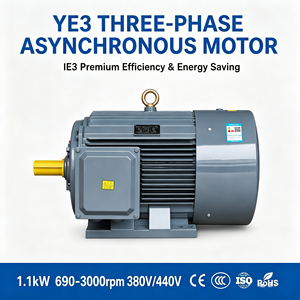
Unlike standard Totally Enclosed Fan Cooled (TEFC) industrial motors, flameproof electric motors undergo severe pressure-blast testing, hydrostatic internal wall testing, and micro-clearance flame path validation. Our manufacturing infrastructure incorporates heavy cast iron (EN-GJL-200 / GJL-250) and fabricated steel enclosures engineered with high mechanical damping factors to withstand internal explosion pressures exceeding 10 bar without permanent deformation.
Flame Joint Engineering & Volumetric Explosive Containment
The core mechanism preventing external ignition is the precision flame path—comprising flanged joints, cylindrical shaft seals, and threaded terminal box entries. The gap distance ($i_a$) and flame path length ($L$) are calculated to sub-millimeter tolerances:
- Flanged Flame Paths: Mating surfaces between end-shields and motor frames are ground to a surface roughness ($R_a$) under 6.3 µm, forcing exploding gas to cool below its Auto-Ignition Temperature (AIT) as it escapes through the joint.
- Cylindrical & Labyrinth Shaft Seals: Dynamic shaft clearances prevent flame propagation along the rotating assembly under high thermal expansion conditions.
- Pressurized & Increased Safety Terminal Boxes (Ex db / Ex eb): Terminal enclosures are physically isolated from the main stator chamber, featuring flameproof bushings and IP66/IP67 double-lip seals to prevent moisture ingress and dielectric tracking.
Technological Innovations in High-Voltage & Medium-Voltage Drives
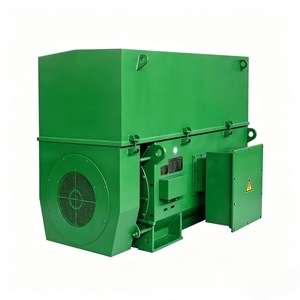
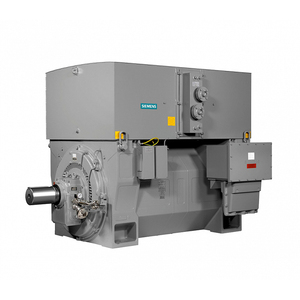
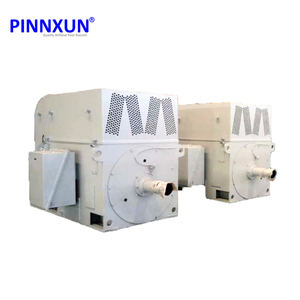
As industrial power demands scale into megawatt capacities, low-voltage systems become impractical due to excessive conductor cross-sections and copper thermal losses. Medium Voltage (3kV, 6kV, 10kV) and High Voltage (up to 13.8kV) AC induction motors represent the pinnacle of heavy industrial drive design.
Advanced Cooling Configurations (IEC 60034-6)
Thermal management dictates the power density, physical footprint, and operational life of heavy-duty motors. Advanced manufacturing facilities utilize specialized cooling methods optimized for severe environments:
- IC411 (Surface Cooled with External Fan): The standard configuration for low-to-medium power motors, utilizing external frame fins and a non-sparking bidirectional shaft fan.
- IC611 (Air-to-Air Heat Exchanger): High-voltage motors equipped with a top-mounted air-to-air cooling radiator. Internal hot air circulates through closed-loop tubes while an external fan forces ambient air over the exterior tube bundle.
- IC81W (Air-to-Water Heat Exchanger): Ideal for high-ambient environments, dusty mining shafts, or restricted space installations. Heat is transferred from internal motor air to a water-cooling loop, providing near-silent operation and thermal decoupling from the ambient air.
Vacuum Pressure Impregnation (VPI) Insulation System
Dielectric breakdown is the primary cause of high-voltage motor failure. Advanced VPI processes utilize specialized solvent-free epoxy resins applied under deep vacuum and high hydraulic pressure cycles. This completely eliminates micro-voids within the stator coil slots, resulting in superior thermal conductivity, extreme mechanical rigidity against electromagnetic forces during full-voltage direct-on-line (DOL) starting, and total resistance to chemical vapors and tropical humidity.
Procurement Intelligence
Frequently Asked Questions (FAQ) for B2B Procurement
Essential technical answers for procurement directors, project managers, and maintenance personnel evaluating flameproof AC motor investments.
Q1 What is the technical difference between "Ex d" and "Ex db" flameproof markings?
Under current IEC/EN 60079-1 standards, "Ex d" is the overarching protection concept for flameproof enclosures, while "Ex db" specifies the Equipment Protection Level (EPL Gb) for use in Zone 1 explosive gas atmospheres. "Ex db" indicates that the motor enclosure has undergone rigorous hydrostatic pressure testing and flame path clearance verification to ensure high operational safety in standard industrial hazardous environments.
Q2 How do Temperature Classes (T1 to T6) impact flameproof motor selection?
Temperature classes define the maximum surface temperature that the motor can reach under worst-case operating conditions, which must remain below the auto-ignition temperature of the ambient gas mixture. For example, a T4 rating limits the motor's maximum outer surface temperature to 135°C, making it suitable for gases like Petrochemical Hydrogen or Ethylene. T6 limits surface temperature to 85°C. Selecting an incorrect temperature class invalidates ATEX safety compliance.
Q3 Can standard AC motors be retrofitted to achieve CE certified flameproof compliance?
No. Flameproof compliance requires an enclosure specifically designed, pressure-tested, and certified by an accredited Notified Body (e.g., TÜV, PTB, DEKRA). Standard motor housings lack the wall thickness, internal reinforcement, certified terminal bushings, and precision flame joints required to contain an internal explosion. Converting a standard motor is unsafe and legally prohibited under ATEX directives.
Q4 What special precautions are necessary when operating a flameproof motor with a Variable Frequency Drive (VFD)?
When connected to a VFD, the motor must be certified for variable speed duty (marked on the nameplate). Thermal overload protection must be integrated directly into the motor windings using embedded PTC thermistors or Pt100 sensors wired to an ATEX-approved tripping unit. Additionally, shaft grounding rings or insulated bearings are required to prevent high-frequency bearing currents caused by drive switching transients.
Q5 What documentation accompanies a CE certified flameproof motor export shipment?
Every certified shipment includes an Official EU Declaration of Conformity, Notified Body ATEX/IECEx Type Examination Certificate, Factory Acceptance Test (FAT) Report, Routine Insulation & Pressure Test Certificates, and a comprehensive Maintenance & Flame-Path Clearance Manual in the specified language.
Q6 How do ambient temperature extremes (-50°C to +60°C) affect motor design?
Standard motors are rated for -20°C to +40°C. For extreme arctic or desert environments, custom metallurgy (e.g., special low-temperature ductile iron), synthetic synthetic greases, dynamic silicone seals, internal anti-condensation space heaters, and thermal derating calculations are mandatory to maintain enclosure ductility and prevent electrical tracking.
Q7 What is the typical service life expectancy of high-efficiency flameproof AC drives?
When operated within design thermal parameters (Class F insulation utilized at Class B temperature rise) and subjected to routine bearing lubrication cycles, heavy industrial flameproof motors routinely exceed 25 to 30 years of continuous service.
Need a Customized Flameproof Motor or Immediate Stock Quote?
Our senior engineering team provides rapid technical evaluation, custom CAD dimension drawings, and competitive commercial proposals for critical projects worldwide.
Get a Quote