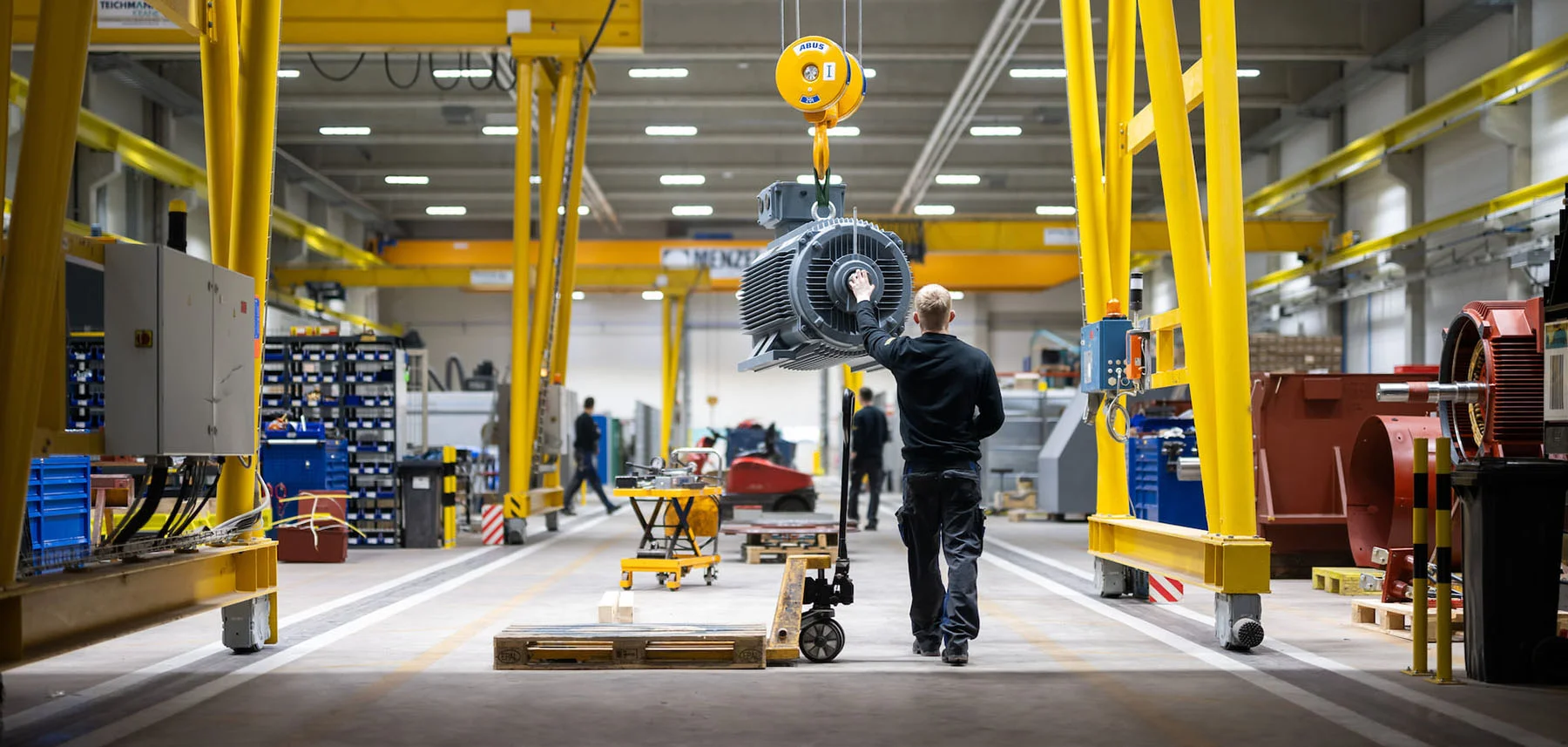
China’s high-voltage motor industry serves demanding applications, including steel mills, power stations, mining sites, cement plants, and water infrastructure. High voltage industrial motors must deliver stable torque, controlled temperature, and dependable insulation under severe operating conditions. A motor may look impressive on paper. Field performance tells the fuller story.
Motor specialist Austin Hughes offers a practical principle: “The motor must be selected for the duty, not merely for its rating.” This idea shapes our review of China’s leading manufacturers. We examine voltage ranges, power capacity, cooling methods, enclosure protection, bearing design, and insulation systems. We also consider factory testing, quality management, service response, spare-parts access, and evidence from real installations. IEC 60034 compliance can provide an important reference, but certification alone cannot guarantee long-term reliability.
Details matter. A dusty workshop, a humid coastal plant, or a motor starting under heavy load can expose weak design choices quickly. Experienced manufacturers usually explain these risks clearly. They should provide test records, efficiency data, vibration results, and maintenance guidance without vague promises. Some suppliers may offer competitive prices, yet their documentation or after-sales support can remain limited. That weakness deserves attention.
This introduction does not claim that one manufacturer fits every project. Selection depends on duty cycles, grid conditions, installation space, environmental exposure, and total lifecycle cost. Our comparison aims to connect technical evidence with practical experience. It also leaves room for correction, because supplier capabilities change, and published information is not always complete. Reliability must be demonstrated repeatedly, not simply announced.
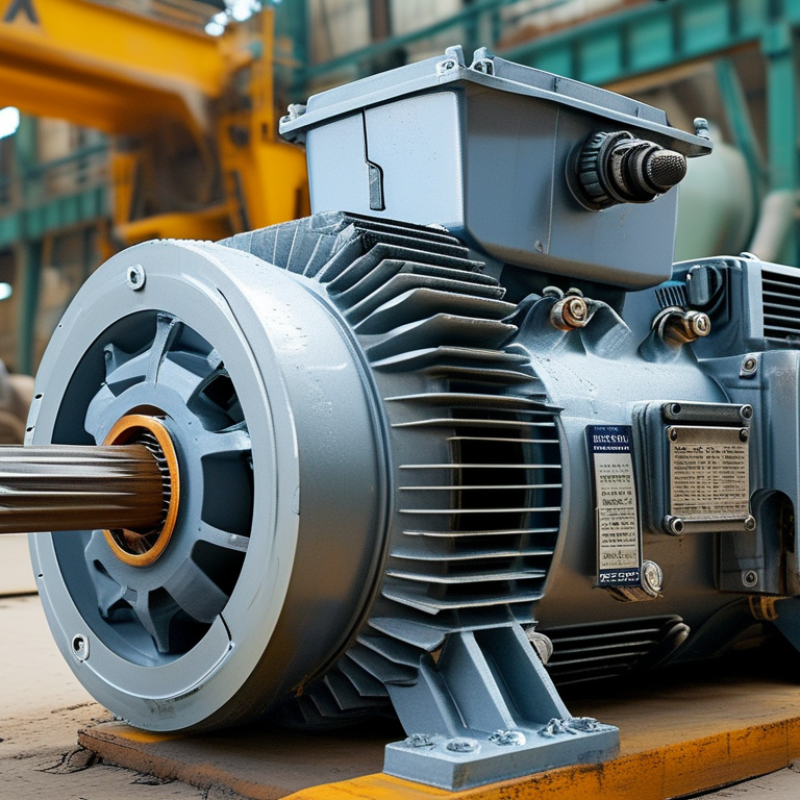
China’s High-Voltage Industrial Motor Market: 3–35 kV Ratings and Core Types
China’s high-voltage industrial motor market commonly serves applications from 3 to 35 kV. Typical ratings include 3.3, 6.6, 10, 11, 13.8, 15, 20, 22, 33, and 35 kV. The selected voltage depends on plant distribution, starting current, cable distance, and load capacity. Large pumps, compressors, fans, mills, and conveyors often require these motors for continuous operation.
The core motor types include squirrel-cage induction, wound-rotor induction, and synchronous motors. Squirrel-cage designs offer simple construction and stable maintenance costs. Wound-rotor motors can reduce starting stress for heavy loads, although their slip-ring systems need closer inspection. Synchronous motors support power-factor correction and suit steady, high-capacity duties. The numbers matter.
Reliable manufacturers should demonstrate expertise in stator insulation, vacuum pressure impregnation, rotor balancing, bearing design, and cooling control. Factory evaluation should include winding resistance, high-voltage withstand, vibration, temperature rise, and no-load testing. In practical projects, protection settings and starting methods deserve equal attention. A strong motor can still fail when the switchgear or ventilation is poorly matched.
I have found that detailed operating data improves selection more than a broad catalog. Speed, inertia, altitude, ambient temperature, duty cycle, and starting frequency must be verified. Some specifications appear complete but omit transient loads. That is a weakness. Buyers should also review test records, material traceability, service response, and documented quality procedures before approving production.
China’s High-Voltage Industrial Motor Market: 3–35 kV Ratings and Core Types
Common high-voltage motor rating points and the core construction types used in industrial drive systems.
High-voltage industrial motors are commonly specified across medium-voltage system ratings from approximately 3 kV to 35 kV. Squirrel-cage induction motors are widely used for constant-speed loads, wound-rotor motors support high starting-torque applications, and synchronous motors are selected where power-factor correction and high efficiency are important.
Leading Chinese Manufacturers: 200 kW–20 MW Power Ranges and Key Specialties
China Best High Voltage Industrial Motors Manufacturers
Chinese high voltage motor manufacturers now cover demanding power ranges from 200 kW to 20 MW. Their product lines support pumps, compressors, fans, conveyors, mills, and large process equipment. A 200 kW motor may suit a municipal pump station, while a 20 MW unit can drive heavy industrial machinery. Selection should begin with load behavior, not brochure ratings.
Common specialties include squirrel-cage and wound-rotor designs, synchronous motors, and brushless excitation systems. Engineers typically examine voltage levels, starting current, insulation class, cooling method, and enclosure protection.
Water-cooled motors can help control heat in restricted spaces. Air-cooled models often simplify maintenance. Bearing temperature sensors, vibration monitoring, and RTDs add useful operating evidence.
Details matter.
During technical evaluations, review test records, rotor balance data, efficiency curves, and factory acceptance procedures. Ask how winding insulation performs under frequent starts or variable loads. Some manufacturers offer strong customization, but documentation can vary between projects. That gap deserves scrutiny. A reliable supplier should explain tolerances, spare-parts support, installation limits, and service response clearly. Energy efficiency is important, yet poor alignment or inadequate ventilation can erase expected savings. A careful site survey remains necessary, even when the motor specification looks complete.
Selection Criteria: 50 Hz Supply, IP55 Protection, Duty Cycles, and Cooling
China Best High Voltage Industrial Motors Manufacturers
Selecting high voltage industrial motors from China demands more than comparing rated power and price. For plants using a 50 Hz supply, verify the motor’s rated voltage, frequency tolerance, starting current, and speed. A 50 Hz motor may not suit a network with unstable frequency or frequent voltage dips. Site measurements matter.
IP55 protection is a practical baseline for many dusty industrial rooms. The first “5” limits dust entry, while the second “5” protects against low-pressure water jets. It is not waterproof. Outdoor installations may need improved sealing, drainage, and a suitable enclosure. Ask for documented ingress tests, not only catalog claims. I have seen installation problems caused by cable glands, not motor housings.
Duty cycle selection should reflect the real load. Continuous S1 duty suits pumps and fans running for long periods. Crushers, compressors, and conveyors may require attention to starts per hour, acceleration time, load inertia, and thermal recovery. Cooling also affects life. IC411 cooling is common for enclosed motors, while larger or heavily loaded units may need independent ventilation or water cooling. Check ambient temperature, altitude, airflow, bearing design, and winding temperature rise. A spreadsheet can miss harsh dust or blocked air passages. That is an imperfect part of selection, but commissioning records and temperature readings can expose it early. Request routine test reports, insulation resistance data, vibration limits, and clear maintenance instructions before approval.
Conclusion
China’s high-voltage industrial motor industry offers a broad range of solutions for demanding applications, with ratings typically spanning 3–35 kV and power outputs from approximately 200 kW to 20 MW. High voltage industrial motors are available in various configurations for pumps, compressors, fans, mills, conveyors, and other heavy-duty equipment. Manufacturers commonly design products according to IEC 60034 and GB/T 755, while IE3–IE4 efficiency classes support lower energy consumption and improved operating performance.
When selecting a motor, buyers should evaluate 50 Hz power compatibility, IP55 protection, duty cycle requirements, installation conditions, and suitable cooling methods. Long-term reliability also depends on the quality of the insulation system, bearing design, vibration control, and factory testing. Comprehensive service support, including commissioning, maintenance guidance, spare-parts availability, and lifecycle assistance, can further improve operational continuity and reduce total ownership costs in industrial facilities.